
Mission-oriented research

Our mission-oriented approach, where researchers across disciplines partner with government, industries and communities to ask bold and ambitious research questions - allows us to make positive change and to share our purpose for impact with stakeholders.
Our approach to mission-oriented research and innovation

The role of universities in addressing societal challenges
Universities are unique hubs of innovation as they are places of inherent curiosity, where serendipity is fostered and supported, enabling a multiplicity of pathways to advance knowledge and its application.
By leveraging their intellectual capital, research infrastructure, and public-purpose underpinnings, universities can serve as catalysts for initiating, leading, and stewarding ambitious grand challenge initiatives aligned with the Sustainable Development Goals (SDGs). Through strategic coordination and collaboration, universities can harness the collective expertise of researchers, students, policymakers, industry, and community partners to address pressing societal issues underpinned by rigour and research excellence.
Over the past three decades, 'grand challenge' research and innovation approaches have emerged as catalysts for addressing societal problems. This paradigm, often referred to as 'challenge-led' or 'mission-oriented' research, prioritises ambitious goals aimed at tackling significant societal challenges such as mitigating and adapting to climate change, reversing biodiversity loss, addressing illness and disease, and reducing poverty and inequalities.
In response to the growing calls for universities to play a more proactive role in addressing societal challenges, Monash University’s strategic plan, Impact 2030, commits to developing ambitious global challenge research programs to achieve a step change in the challenges of the age.
Mission-oriented research
Challenge-led, mission-oriented research endeavours are characterised by their inherent complexity and transdisciplinary nature, and their bold ambition, problem-driven and solutions-oriented focus, and explicit, time-bound impact goals, undertaken through deep, sustained partnerships with non-academic stakeholders.
This approach provides exciting opportunities to crowd-in solutions from multiple areas of expertise. They build on and extend fundamental, curiosity-driven, discovery research models.
Learn more about the 12 case studies our Framework is based on
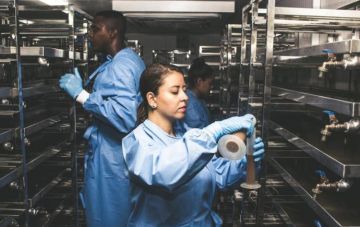
World Mosquito Program
The World Mosquito Program is a not-for-profit group of companies owned by Monash University driven by a vision to protect the global community from mosquito-borne disease, such as dengue, Zika, yellow fever and chikungunya.
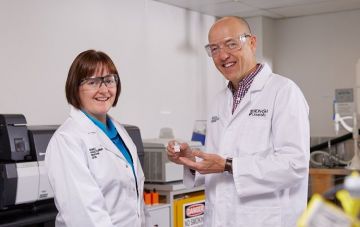
Inhaled Oxytocin Project
A specialist team at Monash Institute of Pharmaceutical Sciences has developed an innovative, heat stable powder formulation of oxytocin that, when inhaled, aims to provide the same protection against postpartum haemorrhage as an intramuscular injection.

ASPirin in Reducing Events in the Elderly (ASPREE)
Aspirin has been the most widely used of all preventive drugs, however lack of knowledge of its risk/benefit profile in older people was of increasing concern. A randomised clinical trial of aspirin in 19,100 healthy older adults investigated whether daily aspirin prolongs survival free of dementia or physical disability.
Climateworks Centre
Meeting our global climate goals requires urgent action, which starts with bridging the gap between research and climate action. Climateworks Centre is at the forefront of accelerating transitions to net zero emissions for Australia, Southeast Asia and the Pacific. This is integral to limiting global warming to 1.5 degrees.
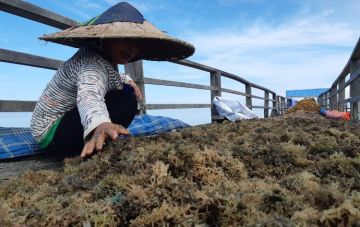
Partnership for Australia-Indonesia Research (PAIR)
Formerly named the Australia-Indonesia Centre (AIC), PAIR is a bilateral collaborative research initiative established by the Indonesian and Australian governments. Its mission is to advance people-to-people links in both countries in research, science, innovation and culture.
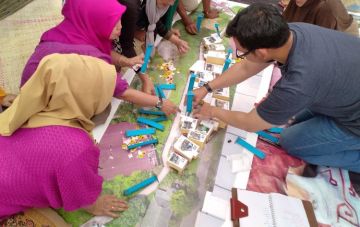
Revitalising Informal Settlements and their Environments (RISE)
RISE is a transdisciplinary research program working at the intersections of health, environment, and water and sanitation. RISE works with communities, governments, local leaders and partner institutions in Makassar, Indonesia and Suva, Fiji to integrate green infrastructure and strengthen the whole-of-life water and sanitation cycle.
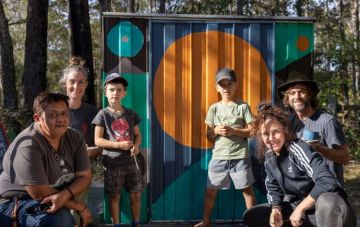
Fire to Flourish
Fire to Flourish is a five-year transdisciplinary program working at the intersection of disaster resilience and community development. Fire to Flourish aims to support communities to lead their own recovery, co-create foundations for long term resilience and wellbeing, and disrupt cycles of entrenched disadvantage.
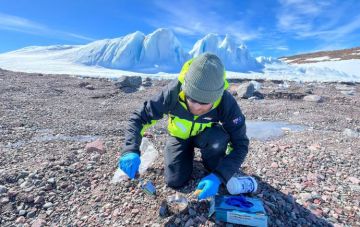
Securing Antarctica’s Environmental Future (SAEF)
SAEF was established to develop innovative ways to forecast, mitigate and manage climate and biodiversity changes in Antarctica. This is achieved through advanced science and data-to-decision support tools to ensure new evidence can be deployed to strengthen Antarctic and broader climate policy and governance in a time of rapid environmental and geopolitical change.
Building 4.0 CRC
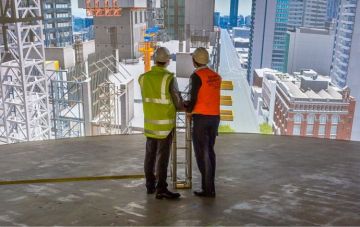
Building 4.0 is a Cooperative Research Centre (CRC) program co-funded by the Australian Government which aims to develop a thriving Australian advanced manufacturing sector. Through research-industry-government collaboration and new technologies of the 4th industrial age, it focuses on four areas: People, Culture and Processes; Sustainability; Digitalisation; and Industrialisation.

National Centre for Healthy Ageing
This partnership between Monash University and Peninsula Health aims to create better integrated care models to promote health and wellbeing across people’s lifespan, and drive improvements in the way people seek out and access care.

Monash Centre for Consciousness and Contemplative Studies
This research and education centre brings together experts in philosophy, neuroscience, medicine and education as well as interfaith and secular dialogues M3CS aims to make contemplative practices central to our conscious connection with each other and our environment, thus enabling us to better solve the many challenges the world confronts.