2023 Publications Performance
View
2023 Publications Performance
View

Monash Research Outputs: 132
Mean Field Weighted Citation Impact (FWCI): 1.8
3 Year Rolling Mean FWCI: 1.87
 Tracking Changes in Consumer Spending
View
Tracking Changes in Consumer Spending
View
Australian Consumer and Retail Studies researchers in the Monash Business School conducted a pulse survey to understand changes in Australian consumer behavior due to cost-of-living increases. The study revealed shifts in spending habits, with a notable increase in conscious shopping, including preferences for lower-priced and environmentally-friendly products.
Further relevant SDGs:


 Exploring Challenges of Low-Waste Living
View
Exploring Challenges of Low-Waste Living
View
Faculty of Arts researchers have been exploring how Australian households can transition to low-waste living. The researchers interviewed consumers about their existing waste management practices, then invited them to each design and implement their own six-week household experiment to transition to a greener lifestyle. The results show that householders were keen to experiment with change, but that low-waste living is not easy.
Further relevant SDGs:


 Researching Home-Compostable Packaging
View
Researching Home-Compostable Packaging
View
Associate Professor Rico Tabor from the School of Chemistry was awarded funding under the ARC’s Mid-Career Industry Fellowships program to develop home-compostable packaging materials. The project aims to reduce reliance on single-use plastics and address environmental issues associated with packaging.

Further relevant SDGs:

 Sustainability Attitudes of Australian Shoppers
View
Sustainability Attitudes of Australian Shoppers
View
Monash Business School’s Australian Consumer and Retail Studies conducted research into attitudes and behaviours of Australian shoppers towards sustainability, focusing on factors such as product durability, repairability, local production, ethical production, and recyclable packaging. The study revealed significant engagement in sustainable practices among Australians, with variations across age groups.
Further relevant SDGs:
 Sustainable Construction Materials
View
Sustainable Construction Materials
View
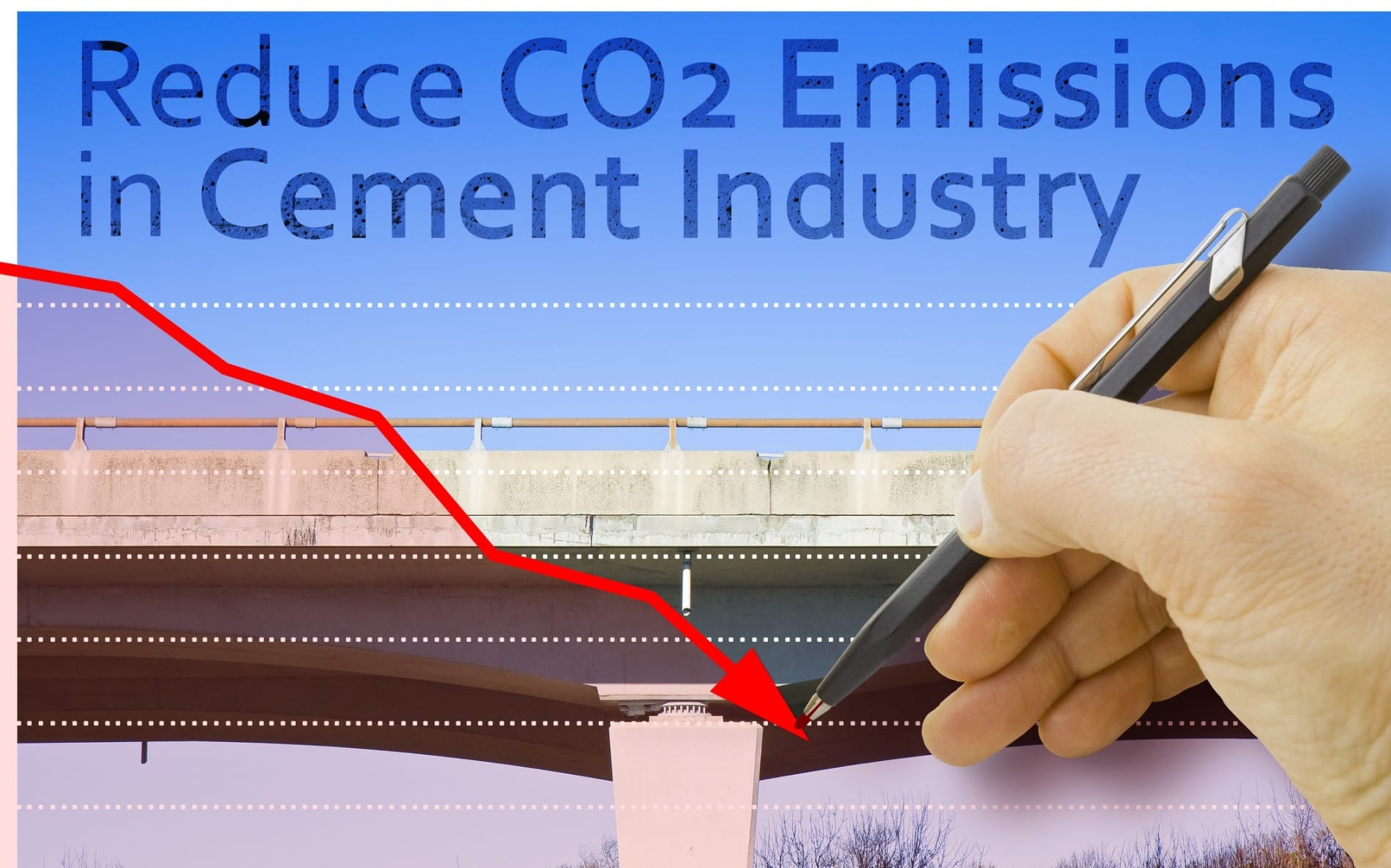
Researchers from Monash University Malaysia’s School of Engineering are exploring how valorisation – the process of adding value to waste or byproducts by converting them into new products, energy, or other resources – can be used to develop novel forms of cement and improve the sustainability of construction.
Further relevant SDGs:
 Unit Statistics and Highlights
View
Unit Statistics and Highlights
View
In 2023, Monash offered 83 units directly related to SDG12 with 7,976 total enrolments.
The units highlighted below are a small sample of the units at Monash relating to responsible consumption and production:
 Student Campaign on Coffee Cup Waste
View
Student Campaign on Coffee Cup Waste
View
Monash Business School students enrolled in Sustainability for Accounting held a ‘Waste on Show’ campaign to raise awareness about the environmental impact of waste from single-use coffee cups on campus. The campaign included a waste audit, artwork from collected cups, and educational activities to promote sustainable consumption behaviors.

Further relevant SDGs:

 Transforming Farm-Stage Food Waste
View
Transforming Farm-Stage Food Waste
View
Monash Business School undergraduates Bridget Lansell, Max Moolman, and Gabe Tucker, participants in the University’s Fastrack start-up program, have launched Wonki, a sustainable alcohol seltzer brand produced from surplus and leftover farm crops. This initiative not only tackles food waste but also partners with various industry leaders to enhance production efficiency.

Further relevant SDGs:

 Cyrcle at the Enactus World Cup
View
Cyrcle at the Enactus World Cup
View
Monash University's Enactus team secured a top four placement in the Enactus World Cup in Utrecht. The Enactus World Cup is a global competition where over 42,000 students from across 32 countries present projects tackling social and environmental challenges. The Monash initiative, Cyrcle, focused on recycling cotton textiles into activated carbon fibre for wastewater treatment.

Further relevant SDGs:
Behavioural Roadmap to Circular Consumption
View
BehaviourWorks Australia developed the Behavioural Roadmap to Circular Consumption, which identifies key consumer behaviours and intervention points for policymakers and industry to foster a circular economy and reduce Australia's material footprint. The roadmap and accompanying online behavioural system map provide tools for understanding and influencing consumer and stakeholder behaviours towards more sustainable practices.
Further relevant SDGs:
 Circular Economy Journey Project
View
Circular Economy Journey Project
View
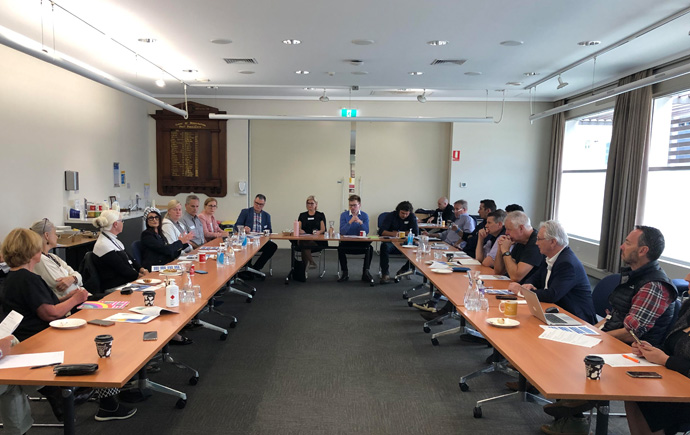
Monash Business School’s Circular Economy and Sustainability Research Interest Group is working in partnership with the South East Melbourne Manufacturers Alliance to increase engagement in sustainable practice among small and medium sized manufacturing companies and local governments in greater Melbourne. The Circular Economy Journey project is funded with support from Sustainability Victoria’s Circular Economy Business Innovation Centre.
Further relevant SDGs:
 Enhancing Sustainability in Business Governance
View
Enhancing Sustainability in Business Governance
View
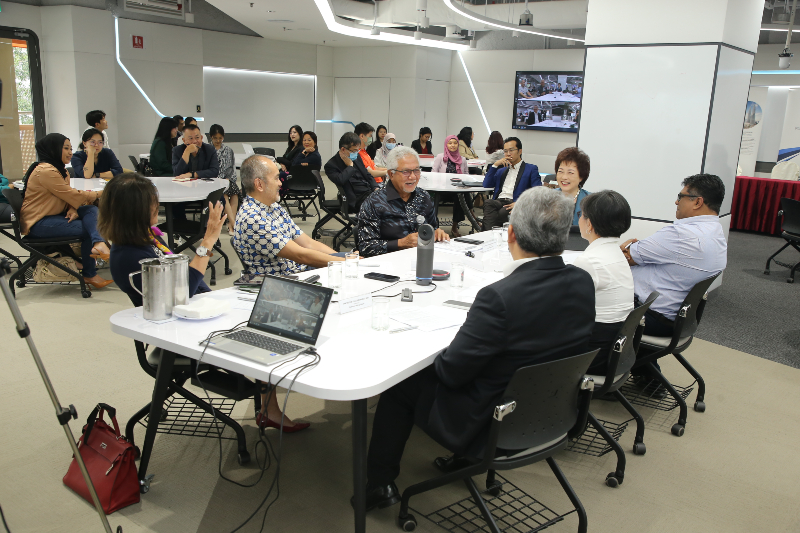
Monash University Malaysia’s School of Business and the UN Global Compact Network Malaysia & Brunei convened a roundtable discussion on enhancing sustainability in business governance. The event focused on how Chairpersons can influence Boards to incorporate environmental, social, and governance practices and the United Nations' Sustainable Development Goals into decision-making.
Further relevant SDGs:
Circular Economy Five-Year Framework
View
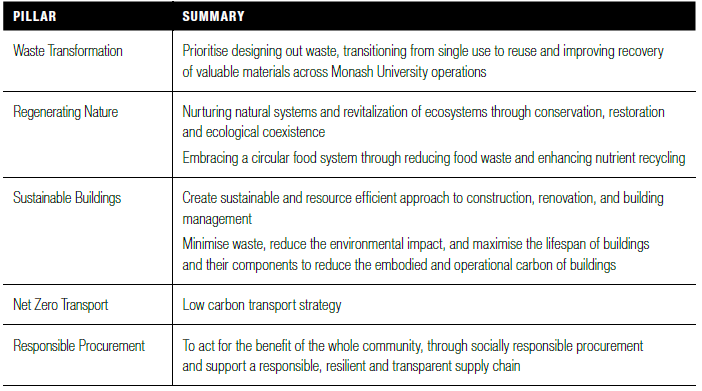
In 2023 Monash University completed the development of its Circular Economy Five-Year Framework and Implementation Plan to lead the transition to a circular economy where resources are used efficiently, waste is minimised, and innovation drives a more sustainable campus. The Framework identifies five key pillars, each underpinned by clearly defined targets and initiatives to achieve them.
Further relevant SDGs:
 Reusing Monash Electronic Assets
View
Reusing Monash Electronic Assets
View
Monash University’s IT Asset Disposal program used Earth Day 2023 to encourage staff to return unused electronic items to reduce waste and environmental impact. Since 2016 more than 65,000 IT assets have been collected for reuse or recycling under the program, with the collective weight totaling in excess of 404 tonnes.

Further relevant SDGs:
 Monash University Reuse Centre
View
Monash University Reuse Centre
View
The Monash University Reuse Centre diverts on average 60 tonnes of office furniture from landfill every year. Monash faculties and departments are encouraged to donate surplus furniture to the centre rather than storing or throwing it away. In turn the initiative offers departments furniture at savings of between 60 - 90 per cent off the recommended retail price. Furniture that is unable to be reused within the University is offered to staff, students and charities.
Further relevant SDGs:
 Reusable Dining Pilot Program
View
Reusable Dining Pilot Program
View
Subsequent to the Victorian ban on single use plastics, a reusable dining pilot program was held from February–November 2023 at the Clayton Campus Centre. The program was supported by Sustainability Victoria funding and involved five food retailers.
In 10 months of the program’s operation, a total of 146,151 reusable items were washed, including 65,331 plates and 1948 bowls. This was equivalent to 67,279 meals served on reusables, subsequently diverting the equivalent volume in single-use packaging from landfill.
Further relevant SDGs: