accordion
Monash Research Outputs: 221
Mean Field Weighted Citation Impact (FWCI): 1.84
3 Year Rolling Mean FWCI: 2.34
DAC2Bio, a project led by Faculty of Engineering researchers that focuses on advancing Direct Air Capture (DAC) technology to produce carbon dioxide and water from atmospheric air, was awarded funding under the Department of Education’s Australia Economic Accelerator Seed Grant. The funding, supported by university and industry partners, will help to scale up DAC technology for commercial use in bioindustries, promoting sustainability and contributing to net-zero 2050 targets.

Further relevant SDGs:


Climateworks Centre completed Phase 1 of the Southeast Asia Framework for Ocean Action in Mitigation (SEAFOAM) project. The SEAFOAM project explores climate change mitigation options based on Indonesia’s marine and coastal resources. In 2023 the project identified significant emission reduction opportunities in sectors like blue carbon ecosystems, offshore renewable energy, and maritime transport. It aims to integrate these sectors into Indonesia's NDCs to enhance the country's commitment to achieving net-zero emissions.

Further relevant SDGs:


New research by the Monash Climate Change Communication Research Hub (MCCCRH) revealed more than 80 per cent of Australians surveyed were either Cautious, Concerned or Alarmed about climate change, but many were reluctant to change their diets to help address the problem. The research showed women were more likely to adopt climate-friendly diets than men, with 32 per cent of women surveyed had having already changed their diet compared to just 18 per cent of men.

Further relevant SDGs:


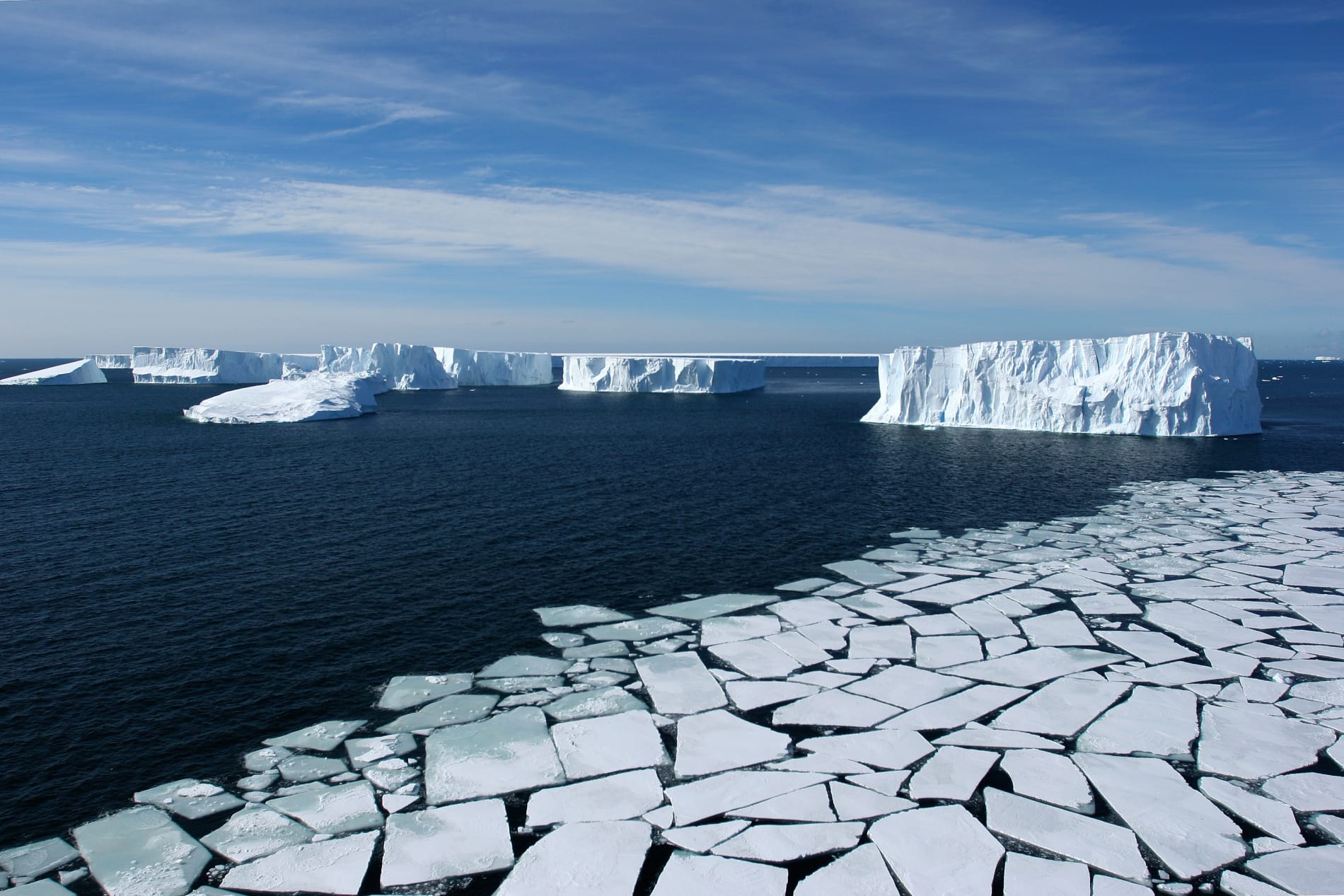
Research by the Faculty of Science in collaboration with the University of Tasmania and published in Communications Earth & Environment has revealed a significant, possibly permanent reduction in Antarctic sea ice coverage, marking a shift from historical patterns. The findings, which links the changes in sea ice coverage to subsurface ocean warming, has serious implications for global climate regulation, ocean circulation and wildlife habitats.
Further relevant SDGs:
The Fiji Government announced it would provide $2 million in funding to the Pacific Action on Climate Transitions (PACT) partnership between Fiji National University and Monash Business School. PACT focuses on integrating business strategies with climate change mitigation and adaptation. The funding will facilitate co-designed projects between academia, civil society and the Fiji ministries that will build resilience in response to climate change, strengthen the Fijian economy and contribute to Fiji's regional leadership in addressing climate change.
Further relevant SDGs:

A team led by researchers in the Faculty of Engineering and published in Nature Communication have developed a new method to produce acetic acid from captured CO2 using an economical solid catalyst. This innovative approach replaces less efficient liquid catalysts and could significantly reduce industrial carbon emissions and environmental impact of acetic acid production.

Further relevant SDGs:
Civil engineers at Monash University, led by Associate Professor Ha Bui, have developed GeoXPM, a pioneering software capable of predicting and modeling climate-induced geo-disasters like landslides and mine tailings dam failures. The software is also capable of suggesting design changes to mitigate geo-disasters, potentially saving lives and reducing environmental impact.

Further relevant SDGs:
Researchers from the School of Public Health and Preventive Medicine contributed to a paper discussing the health impacts of climate change in Australia, including heatwaves, bushfires, floods, and droughts. The paper criticised the inadequate response by Australia’s government and called for greater inclusion of Indigenous Australians in developing mitigation measures.
Further relevant SDGs: