Monash Report 2023 – Goal 7

Close

 2023 Publications Performance
View
2023 Publications Performance
View

Monash Research Outputs: 259
Mean Field Weighted Citation Impact (FWCI): 1.9
3 Year Rolling Mean FWCI: 1.84
 Enzyme Turns Air into Electricity
View
Enzyme Turns Air into Electricity
View
Monash Biomedicine Discovery Institute research published in Nature discovered a common enzyme capable of converting atmospheric hydrogen into electricity, potentially offering a new, sustainable source of clean energy. Derived from a soil bacterium, the enzyme, identified as Huc, was studied for its unique ability to generate electrical current from very low hydrogen concentrations.

Further relevant SDGs:


 Forecasting Future Consumer Energy Needs
View
Forecasting Future Consumer Energy Needs
View
Monash University's Emerging Technologies Research Lab (faculties of Art, Design & Architecture and Information Technology) conducted a four-year research project to explore future scenarios of Australian households' energy use. The study, developed in partnership with Energy Consumers Australia, Ausgrid, and AusNet Services, aims to inform energy forecasting by incorporating consumer behavior and needs into industry models.
Further relevant SDGs:

 Jupiter Ionics Finalist in the Spinoff Prize 2023
View
Jupiter Ionics Finalist in the Spinoff Prize 2023
View
Monash University spinoff Jupiter Ionics was named a finalist in The Spinoff Prize 2023 for pioneering a method to manufacture carbon-neutral ammonia and its derivatives using renewable energy. The technology, developed by researchers from the School of Chemistry, is capable of decarbonising ammonia production, a significant contributor to global CO2 emissions.

Further relevant SDGs:
 Monash Engineering Research to Help Stabilise National Energy Grid
View
Monash Engineering Research to Help Stabilise National Energy Grid
View
Faculty of Engineering researchers were awarded half a million dollars in funding by the Australian Renewable Energy Agency (ARENA) to investigate the nature and origin of periodic variations in the national energy grid. The team’s work involved developing a tool for use by the Australian Energy Market Operator and Transmission Network Service Providers to further boost connection of renewable energy sources, including solar and wind-generated electricity, to the national grid.

Further relevant SDGs:

 ARC Funding for Chemical Sustainability Research
View
ARC Funding for Chemical Sustainability Research
View
Three Faculty of Science Early Career Researchers were awarded more than $1.3 million under the Australian Research Council’s Early Career Industry Fellowships as part of the Industry Fellowships Program for their research relating to development of ammonia electrosynthesis devices; phase change materials for renewable energy storage, and scalable high performance electrolytic hydrogen generators, in collaboration with industry partners.

Further relevant SDGs:

 enyGy Advances in Energy Storage
View
enyGy Advances in Energy Storage
View
Monash University spin-out company enyGy reported it had developed advanced graphene technology for ultracapacitors, enabling them to achieve up to double their energy density. This advance, building on Faculty of Engineering research, has the potential to benefit a number of areas, including cost savings for public transport systems, enhanced use of personal technology devices and reduced environmental impact.

Further relevant SDGs:
 Advances in Lithium-Sulphur Battery Design
View
Advances in Lithium-Sulphur Battery Design
View
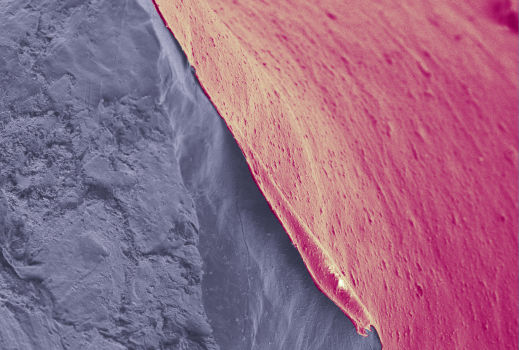
Researchers from the Faculty of Engineering, in collaboration with RMIT University, have developed a new lithium-sulphur battery design that uses less lithium, is more energy-efficient, and is cheaper and easier to recycle than traditional lithium-ion batteries. This technology could lead to significant advances to the electric vehicle, drone, and electronic device markets.
Further relevant SDGs:
 Eureka Prize for Economic Fairways Mapper
View
Eureka Prize for Economic Fairways Mapper
View
The Economic Fairways Mapper, a collaborative project between Faculty of Engineering researchers and Geoscience Australia, won the 2023 Eureka Prize for Innovative Research in Sustainability. The online platform developed by the team enables the creation of accurate resource maps, supporting decisions in development projects and significantly influencing Australia's hydrogen energy strategy.

Further relevant SDGs:
 Unit Statistics and Highlights
View
Unit Statistics and Highlights
View
In 2023, Monash offered 55 units directly related to SDG7 with 4232 total enrolments.
The units highlighted below are a small sample of the units at Monash relating to affordable and clean energy:
 Renewable Energy Engineering Specialisation
View
Renewable Energy Engineering Specialisation
View
Monash Engineering launched a new specialisation in Renewable Energy in its Master of Engineering program. With an emphasis on practical applications and industry relevance, the Renewable Energy Engineering specialisation is designed to help students acquire comprehensive knowledge of renewable energy technologies and gain a comprehensive understanding of the design, implementation and integration of renewables-based systems into the energy landscape.

Further relevant SDGs:

Electric Power Innovation for a Carbon-Free Society Centre
View
Monash is a key partner in the Electric Power Innovation for a Carbon-free Society (EPICS) Centre, a global initiative between Australia, the United States, the United Kingdom and led by CSIRO, Australian Energy Market Operator, the University of Melbourne and Monash University. The EPICS Centre aims to develop transformative computing, economic strategies, engineering solutions, and policy for a renewable energy power grid. Monash's involvement is led by the Department of Electrical and Computer Systems Engineering.

Further relevant SDGs:
 Report on Benefits of Electrification
View
Report on Benefits of Electrification
View
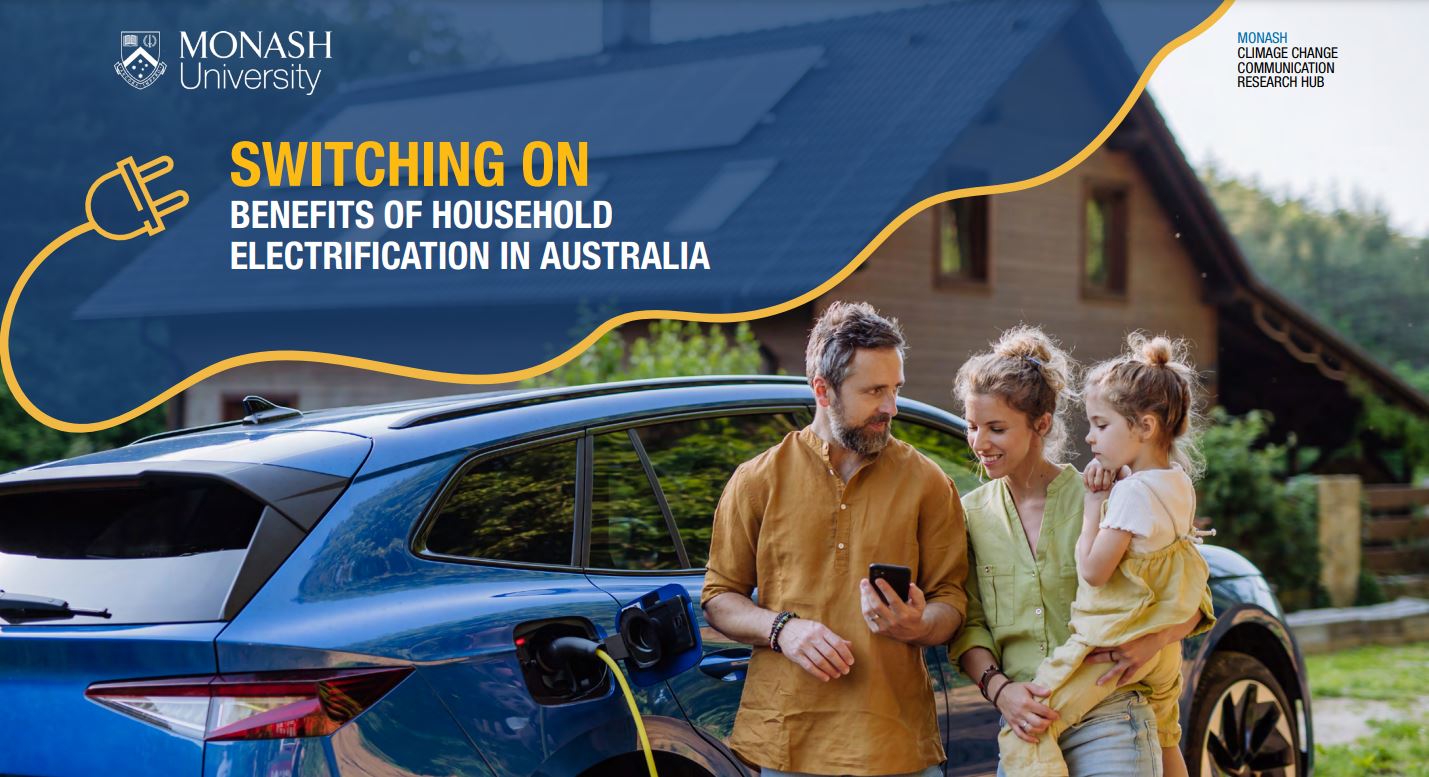
Monash Climate Change Communication Research Hub, Faculty of Arts, released a new report revealing that switching away from gas towards fully electrifying Australian homes could save households $4.9 billion annually, approximately $450 per household. The report provided an analysis of the diverse benefits of electrification of Australian homes, including health improvements, reducing emissions, job creation, and reduced living costs.
Further relevant SDGs:

 Upgrading Homes to Reduce Energy Costs
View
Upgrading Homes to Reduce Energy Costs
View
A new report by Climateworks Centre showed how Australian households could save up to $2,200 a year on energy bills by upgrading homes built before 2003 with better insulation and electrifying appliances and heating. The report found that improving the energy performance of homes would also contribute to reducing Australia’s emissions as well as improving the health of Australians by protecting against extreme weather, poor air quality and energy poverty.
Further relevant SDGs:

Energy Upgrades for Australian Homes
View
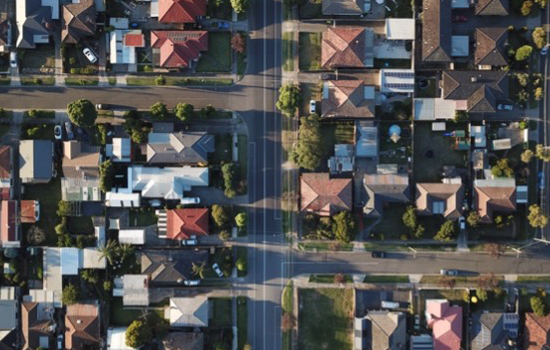
The Energy Upgrades for Australian Homes (EUAH) project launched at the All Energy Conference in Melbourne in October 2023 to enhance energy efficiency in existing Australian homes. The initiative, led by the Monash Sustainable Development Institute and involving an array of academic and industry partners, focuses on overcoming barriers to energy upgrades through community engagement, policy enablement, and innovative solutions.
Further relevant SDGs:
 Exploring the Priorities for Australia’s Emerging Hydrogen Industry
View
Exploring the Priorities for Australia’s Emerging Hydrogen Industry
View
Monash researchers undertook a study funded by the Woodside Monash Energy Partnership to explore the challenges and priorities of Australia’s emerging hydrogen industry. The study, which involved interviews with 38 stakeholders across industry and government, revealed contrasting perspectives on priorities and focus areas for hydrogen development while also revealing unanimous agreement on the pivotal role of the government.
Further relevant SDGs:
 Net Zero Initiative
View
Net Zero Initiative
View
Monash is committed to achieving net zero emissions across its Australian campuses. During 2023, activities undertaken by the University to help realise its Net Zero commitments included:
Further relevant SDGs:
 Campus Energy Use
View
Campus Energy Use
View
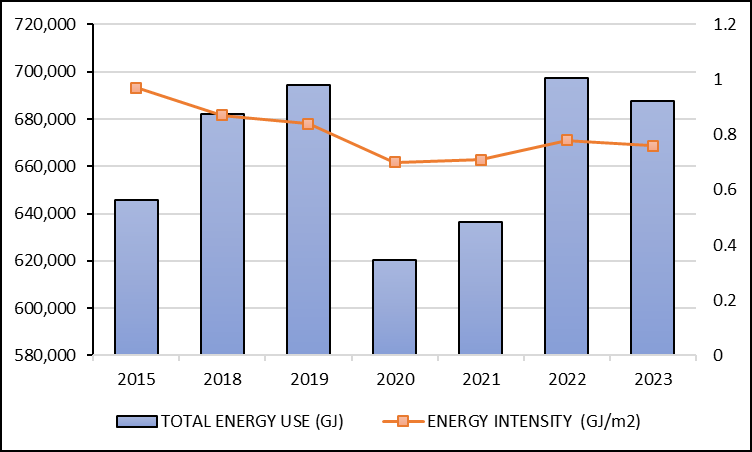
Building improvements and the roll out of energy efficiency programs such as LED lighting upgrades have helped Monash to improve the efficiency of its campus spaces and further reduce energy use. Total energy use for 2023 was 1.4 per cent lower than 2022. Energy intensity (GJ/m2) has also reduced 2.6 per cent from 2022 to 2023 and is now 21.7 per cent below the 2015 baseline.
Further relevant SDGs:
Renewable Energy on Campus
View
Monash is increasing its use of renewable energy to power its campuses every year. In 2023, solar and wind energy generated 67 per cent of Monash University’s electricity use (compared to 62 per cent in 2022). Renewable energy is sourced from rooftop solar photovoltaics across the four Australian campuses, as well as off-site wind energy from the Murra Warra Wind Farm.
Natural gas still accounts for 49 per cent of total energy use on Monash campuses. To achieve Net Zero, the University is working to replace its legacy gas-fired hot water and heating systems with all-electric heat pump technology.
Further relevant SDGs: