Enterprise in academia
Enterprise in academia
Discover the enterprising journeys of Monash researchers and educators working in diverse fields.
Bringing industry into innovation
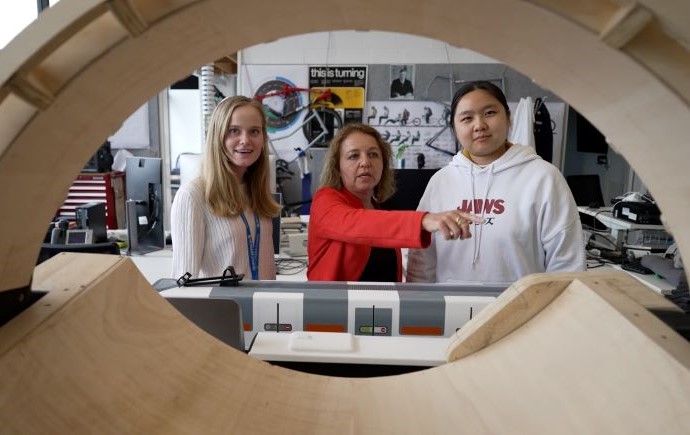
Professor Daphne Flynn and the Monash Design Health Collab team work alongside industry partners to create pathways to commercialisation and community impact.
Forging enterprising avenues to better mental health
Professor Christopher Langmead explains why he turned to enterprise to tackle complex mental health conditions and advance next-generation therapeutics.

New stories for a nation
By forging strategic partnerships, Associate Professor Tony Moore’s Conviction Politics project has brought an invigorated national narrative to content-hungry audiences.
Get inspired
Monash academics share their top tips for using our enterprise ecosystem to make an impact.
 Emeritus Professor Bill Charman, Sir John Monash Distinguished Professor
View
Emeritus Professor Bill Charman, Sir John Monash Distinguished Professor
View

 By embracing strategic industry collaborations, and a global mindset, Emeritus Professor Bill Charman from the Faculty of Pharmacy and Pharmaceutical Sciences has built an academic career defined by real-world health outcomes for communities in need. His multidisciplinary and collaborative approach has significantly advanced drug discovery, particularly for neglected diseases like malaria, as well as drug delivery and the pharmaceutical sciences.
What does it take to be an entrepreneurial researcher?
A recognition that it may not – and probably won’t – come naturally at first.
You need to be open to competently learning new information about finance, value, returns, accounting and structures. If this is not for you then that’s ok, but you need to find colleagues who can assist. Teamwork is fundamental and essential.
You also need to be aware it will put some of your ‘basic’ and traditional career activities at risk, and be willing to take that chance.
What were the stand-out moments in your career that spurred enterprising collaborations with industry?
Recognising that the real impact was for, and via, patients – and the only effective way of having such an impact is through partnerships.
My drug discovery research in malaria was brought into sharp focus when I went to a village in Africa and met young kids affected by the disease. The voice of the patient (in this case the kids) was fundamental to what we do, regardless of their economic circumstances.
What challenges did you have to overcome at the beginning of your journey?
I quickly learnt that I needed to master the different ‘languages and customs’ of research, commercial entities, university groups and funding agencies to create successful teams able to produce impactful outcomes.
What advice would you give to your young self on how to have an enterprising mindset?
Don’t assume you will initially ‘know’ what you should be doing – engage, talk, understand and listen, especially to those outside your immediate network.
Be open to learning about a whole new ecosystem – this is essential and enjoyable.
Tasks that may initially seem insurmountable, when broken down into the component parts, are more readily undertaken. It’s a bit like good experimental design!
What’s the best lesson you’ve learned on your journey?
Be relevant, be trusted, be valued. Under-promise and over-deliver. You need to differentiate your value proposition from your colleagues around the world, otherwise you are just one of many.
Your focus must be beyond Australia – your objective should be to remain the go-to person in a specific field, globally.
Associate Professor Sarah Jones, Lab Head and Founder, GILZRx
View
 Associate Professor Sarah Jones’ lifelong passion for immunology has driven her to make impressive strides towards revolutionising treatment options and health outcomes for inflammatory and autoimmune disease patients. Armed with an understanding of the viability and value of her research, Associate Professor Jones is now leveraging Monash’s enterprise expertise to commercialise her work and reach for the greatest impact possible.
What drew you to medical research, and to driving innovative approaches to combating lupus in particular?
I always knew I wanted to work in science – when I was 15 years old, I was quoted in my local paper declaring that I wanted to be an immunologist.
I was attracted to the complexity of the field. It’s an incredibly stimulating space to work in, and my particular research has the potential to have far reaching applications that can make a real difference to people’s lives – especially the lives of young women in their prime.
Currently, the treatment of inflammatory and autoimmune diseases, including lupus, is part of the burden of the disease. Due to a lack of other treatment options, patients overwhelmingly rely on glucocorticoids, or steroid hormones, and are heavily affected by side-effects that have the potential to shorten their life expectancy.
As the Lab Head and Founder of Monash spinout GILZRx, I lead a team seeking to isolate the good elements of glucocorticoids to develop an anti-inflammatory therapeutic small molecule that can treat inflammatory and autoimmune diseases without the side-effects.
The product we're working to develop has the potential to make a substantial impact across medicine, including the treatment of conditions like rheumatoid arthritis.
Can you tell me about your experience of working with the Enterprise and Engagement portfolio to commercialise your research through your spinout?
The involvement from the Enterprise and Engagement portfolio has become more and more important as things at GILZRx have gotten busier and increasingly exciting.
In particular, the Research Commercialisation team has helped me to both learn and be very, very involved in the business development side of things.
You can't successfully run a spinout in isolation – you especially can't do it without the support of people who can make sure everything is taken care of from a legal and contracting perspective. Through their insights, I’ve been able to upskill and really know what I'm talking about when it comes to business.
Commercialisation experts also have a long-term outlook that can help with planning and goal setting. When you're aiming for commercialisation, you're already looking to the end game when you're at the start. They’ve helped ingrain this into the way I work.
From your experience, what’s the benefit of engaging industry in health research?
The key thing for me is that the value of the research has always been clear – I’ve always had that as a stable base.
From this base, I committed to interrogating the science. I knew that if I interrogated the science enough, I’d have the confidence to advocate for it.
I'm always pushing the boundary of what I know and what I'm comfortable with, but I realised very early on that I needed to do the prep work to feel confident enough to put myself out there and advocate for the immense potential of this project. To succeed in this kind of endeavour, you need to be as prepared as possible – and then as convincing as possible.
In my position, I have been able to get to the point of foundational preparedness and confidence by meeting with and presenting to industry, and using these meetings as a starting point for building relationships with different people and learning from them.
It was intimidating at the start, but I reached out to companies working in aligned fields and set up the meetings myself. Through these meetings, I established genuine relationships within the broader sector, which in turn has led to ongoing and invaluable feedback and advice.
What are your best tips for researchers on effectively engaging with industry?
I knew it was important to meet the people who would be both interested in and passionate about what I was doing – I wanted to know what they wanted to see from the science. You’ll never know when a product is viable until you seek feedback.
I recommend having conversations with industry early, where you can present your work and establish your track record and reputation with future allies in the health space. It’s always valuable to say, “Here's the research I think you might be interested in, but please tell me what would make it even better?”
What does it take to be an entrepreneurial researcher? And how can adopting an entrepreneurial mindset set you apart in academia?
I’m not going to lie – it does take grit. You need to be able to embark on major learning curves and have the humility to receive a lot of feedback, because that's a vital part of it.
Sometimes so much feedback can be hard to hear. At the same time, it's important to have the confidence in yourself that you can do this – notwithstanding all of that learning. What's the worst that can happen if the science is good?
Entering an entrepreneurial endeavour means walking through a different world, and that world gives you the chance to have thrilling and sometimes terrifying learning curves. If you’re trying to do something wonderful, it's worth carrying that fear with you and doing it anyway.
I haven’t existed in a comfort zone in five years. It’s an adventure.
What are the best lessons you’ve learnt throughout your career?
Building a strong team is vital. There isn’t space for big egos without substance. You need to find people who are willing to learn and receive feedback, but also bring a loud enough voice to the table to champion good ideas. I’m grateful for the group I have around me, including my clinical collaborator Professor Eric Morand.
Your team needs to complement each other as well. I'm a fast mover – I make decisions quickly based on my experience and research expertise. I also rely on people in my team who are more analytical and want to invest in creating a supportive framework for these decisions.
To cultivate the kind of grit needed to succeed in this space, I recommend stopping worrying about how you fit in your field, and work with determination towards your goals. I had to stop focusing on how I fit into my field when I started having my family, because you can't compare yourself to your peers when they're not mothers raising children.
When I was coming up through the world of research, I kept hearing that women who make it through to a more senior stage have a lot of support at home, whether that took the form of family acting as childcare or their partners taking a backseat in their careers. But that has not been the case for me. I've figured out how to take the lead role in all parts of my life by committing to doing the best that I can do within my time constraints.
There is no substitute for hard work, but it doesn't have to be long work – it can be smart work. With enough practice, I'm now able to quickly understand which things need to be moved forward to keep the whole project rolling.
I might be a fast mover, but I’ve learnt that it's important to have patience, and measure progress in years rather than meeting by meeting or month by month. I’ve created a culture in my team where we celebrate the smallest of achievements, and they feel like big achievements because that progress is often so slow to come to fruition.
Finally, I’ve learnt that it’s important to have a baseline of a decent amount of financial security for the research. You might want to focus on the lab work, but you also need to be able to afford the time to focus on having meetings and changing the way you're thinking about the research.
What advice would you give to your young self on how to have an enterprising mindset?
I’d tell myself to be patient when creating my own pathway, because there's no rulebook for it. Some days you can't measure progress, other days you can – either way, stop counting metrics and comparing yourself to other people. Just keep the patients front-of-mind, dust yourself off after a set-back and continue on the journey.
I’m passionate about providing support for like-minded researchers wanting to translate their work into commercial outcomes, and invite anyone looking to start on this adventure to reach out today.
Professor Christopher Porter, Director, Institute of Pharmaceutical Sciences
View
As the inventor of over 15 patent families, Professor Christopher Porter knows a thing or two about pursuing enterprising avenues to optimise research outcomes. By stepping outside of academia to leverage industry knowledge and expertise, Professor Porter has both supported the development of trailblazing innovations in the Monash Institute of Pharmaceutical Sciences and advanced his own efforts to find solutions to problems surrounding the absorption of poorly water soluble, highly lipophilic drugs.
What does it take to be an entrepreneurial researcher?
Firstly, be an excellent researcher.
My experience has been that our best entrepreneurial researchers are our best researchers, full stop. The idea that researchers are either entrepreneurs or fantastic basic scientists is – I think – a furphy.
Entrepreneurial researchers often have an additional lens that they look through when thinking about their data and ask slightly different questions on top of the fundamental science. Often this requires them to look at much longer timescale and much broader audiences.
Planning and forethought are really important alongside the spark that can identify and be passionate about product opportunities that no one has thought of before.
What were the stand-out moments in your career that spurred enterprising collaborations with industry?
I was lucky to be engaged with industry early – my post doc was sponsored by GSK. I was also pre-conditioned in some respects to work with industry as my career ambition through degree and graduate school was always to go and work in Big Pharma (as most of my PhD peers did).
As I advanced in my academic career, I moved from working with industry on their challenges, to looking to invent new technologies and then work with industry to progress them.
When it comes to entrepreneurship, it’s very true that you can’t be what you can’t see. I was inspired to see innovation and spin outs happen from within the Monash Institute of Pharmaceutical Sciences relatively early in my career. When I was establishing my own lab, I shared space with the group that spun out Acrux in the late ‘90s and it was fascinating talking to the scientists that were taking that path.
What challenges did you have to overcome at the beginning of your journey?
When I started my career as a drug delivery scientist, there was the perception that working with industry was ‘soft science’ and not what the smart people did. That attitude was wrong then and still is – and thankfully is less prevalent now.
Having worked with Pharma for 30 years, I can tell you they are very smart, and academics who always think they are the smartest voice in the room are usually wrong! A little humility goes a long way.
What advice would you give to your young self on how to have an enterprising mindset?
Getting outside the typical academic bubble is very important, otherwise it can become all consuming.
I was lucky to build my networks outside of academia and within industry pretty early in my career – but if I was to give myself one piece of advice it would be to talk more to the folks in the start up sector and build those networks. They will help provide the advice and encouragement to look seriously but carefully at innovation opportunities.
What’s the best lesson you have learned on your journey?
Your reputation is everything. You need to be brutally honest with yourself about whether something really works and does so robustly. Validate everything.
The first thing most external groups will do if they are thinking about licensing, partnering or investing is to go repeat your experiments in another lab. Your whole program is then dependent on how reproducible it is. This is a long pathway and you don’t want to get to the end of it and realise something was flawed early and you didn’t push because you were so keen for it to succeed.
There are many studies that have shown that the majority of ‘breakthrough’ findings published in the top journals were not able to be reproduced when industry took them on board. This is not to say that they were wrong or made up – but that they were probably dependent on variable models. That can be enough to get a paper published - but a company looking to invest upwards of $10 million on an idea is going to prod it very hard before taking the leap.
That said, if you are very rigorous with your data, and in building confidence in your students and postdocs to give you the bad news as well as the good, then you can build a reputation that will pay off time and again.
Professor Yiannis Ventikos, Dean, Faculty of Engineering
View
Professor Yiannis Ventikos’ career-long history of entrepreneurship and tech transfer success – including his role as Co-Founder and Non-Executive Director of First Light Fusion – both informs his deep understanding of the benefits of industry engagement and strong networks and underpins his amplification of enterprising activity within the Faculty of Engineering.
What does it take to be an entrepreneurial researcher?
In the not-so-distant past, entrepreneurship in academia was the premise of a limited set of specialisations – engineering, surgery, maybe parts of physical sciences.
This doesn’t apply any more – it’s possible for academics and researchers from across the entire spectrum to engage in entrepreneurial activities, if they want to.
These two words – ‘want to’ – are, as far as I’m concerned, key to the approach individuals and institutions must assume regarding the translation of academic work.
On one hand, there are great benefits in pursuing such activities – excitement, novelty, financial rewards and, most importantly, seeing the fruits of one’s research put to good use. On the other hand, it must be recognised that time and intellectual commitment are needed, and these types of commitment, parallel to more traditional academic activities, are not for everyone.
The indispensable perspective that must be in an academic’s mind to start engaging in entrepreneurial activities is that the effort and time necessary are worth it, because the outcomes are worth it. Once this mind set is firmly in place, the additional building blocks can always be incorporated in the picture.
What were the stand-out moments in your career that spurred enterprising collaborations with industry?
Before I answer this question, I would like to put a disclaimer in place: working closely with industrial partners, especially for engineering academics, should be a particularly important element of one’s activities portfolio - enterprising or not.
It provides a source of interesting, challenging and relevant problems, can provide resources (not only money) that can be difficult to access otherwise, and can introduce a valuable partner in the trail to translation of technologies and ideas to practice. As such, in many if not most cases, it is advisable to try to forge such links and forge them early in the trajectory of a research endeavour.
However, there is an exception to this adage – sometimes, when the circumstances dictate, it may be advisable to keep third parties at an arm’s length, because of the nature and stage of a particular research activity. The most common scenario where this happens is with very early stage, high risk and high reward research that could lead to the establishment of spinout activity that would compete with a dominant corporate entity in a specific sector. In such cases, there is a ‘too early’ element – such research should be kept within the University until it reaches a volume of evidence that is protectable as disclosures.
That being said, and out of a few interesting examples, I will highlight one personal experience that has been seminal and transformative in my academic career; one that is also quite atypical.
Most of my research involves computational modeling of physical and technical processes and phenomena, including the establishment of computational simulation models that mimic the behavior of a system of interest. A very common example of this type of work is the computer simulation of fluid flow, such as the evaluation of interesting engineering characteristics, like the lift and drag of the wing of an aircraft.
There are great practical advantages in having such models. For example, in the aircraft wing case, you would avoid the need of a large and costly wind tunnel to evaluate these important parameters.
The computational modeling sector is dominated by a few major international commercial software houses, and there’s also an endless series of individual code developers (mostly academics), plus bigger open-source communities.
Very early in my career, through a personal contact, I developed an interesting symbiotic relationship with one such major commercial scientific software manufacturer. This partner gave me access to their simulation platform – a resource of substantial financial value if it were to accessed commercially.
Then, my research group explored computer modeling of problems that were outside the current range of capabilities of that platform, by developing code that could be used together with the commercial platform and extend its capabilities in domains that were – originally – of deep scientific interest to me and my research group.
These algorithmic adventures were high risk. Sometimes the outcomes were not what we expected or wanted. More often however, we showcased that something deemed very difficult to compute algorithmically was feasible with the right approach. Demonstrators of this type included cavitation, arbitrary grid remeshing and multicompartmental poroelasticity in a finite element framework.
In those cases – and when the commercial interest justified the resource – the external academic rough code would be incorporated into the main commercial platform, while for us these first-of-a-kind methods resulted in interesting publications.
This mutually beneficial arrangement survived changes of ownership and a significant turnaround of technical staff for the commercial partner, and three changes of affiliation for me over the span of almost twenty-five years. It has been one of the most transformative elements in my research trajectory.
What challenges did you have to overcome at the beginning of your journey?
Perhaps contrary to the experience of most young academics attempting to explore technology commercialisation, the initial raising of funds was not the biggest challenge for me.
Instead, I was challenged by my underestimation of how important it is to deeply understand the commercial domain within which our technology would eventually operate.
This indispensable step is not different in its essence to what a researcher would do when writing a paper: you’d always do a thorough literature review and write an introduction that maps the landscape.
In a very similar mindset, you need to do the same thing regarding the commercial landscape within which your technology will need to function, and compete. This is not the business plan per se, but it is an absolute prerequisite to a business plan.
Size and share of market, competing technologies, investment habits and practices and other elements of this nature need to be addressed in parallel with the technology questions.
Being more of a technologist than an entrepreneur, I quickly realised I was hindered by having a ‘not invented here’ attitude towards the ‘what else is happening’ question. I had to work hard over the years to train this kind of thinking out.
What advice would you give to your young self on how to have an enterprising mindset?
There are three essential ingredients, and you need to put these in place as early as possible.
The idea, the market and the network.
The ‘idea’ is the core element that you are trying to port from an academic to a commercial setting. There must be clarity of what that is, and why it is worth pursuing this translation. Not all ideas are.
The ‘market’ is the recipient of this idea – what is the need, existent or emerging, who else is fulfilling this need and what is the possible share of that market you could hope for.
The ‘network’ – sometimes underestimated – is the group of people you know, and by extension their connections – that you can pick up the phone and ask for help. This needs to include the technology transfer office of the University of course, but you also need to have the flexibility and ease to talk directly to patent specialists, fund managers, policy and government executives. This can save you from many mistakes and false starts.
I have two exercises to propose to up-and-coming academic entrepreneurs:
Firstly, write your company’s (or you company founder’s, i.e., yours) Wikipedia page as it would look five, ten and fifteen years into the future.
Secondly, script and ‘direct’ the first 30 second TV advertisement of your product. The more Hollywood the better.
You will find that these thought experiments – the acid tests of public scrutiny – focus your mind and suddenly you become your best critic.
What’s the best lesson you have learned on your journey?
It has been an important realisation for me that, in spite of what is said, most things are negotiable.
When parties present rules and procedures as written in stone, they usually are not – they are effectively the starting point for a negotiation. That being said, it is also a fact that different parties enter negotiations with different levels of receptivity and different degrees of open-mindedness. The real lesson for me here has been that if you are not ready to walk out of the discussion regarding commercialisation, then it is not a discussion at all.
It must be appreciated that the multiple challenges of building up an academic career do not necessarily prepare us for the commercial thinking that tech transfer necessitates and as such, academics need – and should seek – all the help, advice and training they can get.
As a parting thought, I would like to advocate again for open-mindedness, awareness and flexibility by quoting something a very experienced and highly successful businessperson, entrepreneur, CEO, Chairman and friend once told me: “The first business plan is always wrong”.
Associate Professor Sudha Mokkapati, Materials Science and Engineering
View
An interview with an innovator: Sudha Mokkapati researcher and entrepreneur
Associate Professor Sudha Mokkapati of the Department of Materials Science and Engineering in the Faculty of Engineering has invented a world-first electronic sensor technology which can detect ultra-low concentrations of proteins and gases in minutes.
Professor Mokkapati recently received $422,886.00 in seed funding from the Australian Economic Accelerator (AEA) for this all-electronic sensing platform for real-time stand-off detection of toxic gases. This sensor technology will ensure the safety and efficacy of environmental monitoring undertaken by workers across a range of industries from mining, chemical processing to food safety.
The Monash Innovation commercialisation team has been working with Associate Professor Mokkapati to commercialise the sensor technology in these fields and beyond, including sensing of disease biomarkers for healthcare. We spoke with her about her journey from researcher to innovator.
Monash Innovation (MI): Was it always the plan to patent your research?
Sudha Mokkapati (SM): No - absolutely not. I was just interested in physics and the science of sensors. Never before have I considered how to trademark a name or get set up as a business. We didn’t consider commercialisation as a goal however when the research results indicated such a robust technology we wanted to put it to good use. We thought ‘WOW this can really make a difference’, and we started to look around for opportunities.
MI: At what stage did you realise the commercial potential in healthcare?
SM: Actually, I wasn’t really considering the commercial aspects, rather the human health benefits. It’s not that I am against progressing the research into a business but rather I want my reasons to be ethical. My research shows that as well as detecting gases, it could be possible to get an early detection of disease biomarkers for conditions like Alzheimers which could improve the care of many people around the world. I feel really good about that.
MI: How did you go about setting the foundations for commercialisation?
SM: When I realised that my research had potential, I started to enquire about protecting the IP through a patent in consultation with the MI commercialisation team. I started talking to other people I work with and that’s when I looked into The Generator program - Researcher to Innovator. The Program was detailed and thorough and I learned a lot about IP, commercialisation, startups and spin offs.
MI: How did the Monash Innovation commercialisation team help you?
SM: It has been such an amazing experience. They have helped me with everything. In fact, without their advice, the research would not have progressed to this stage. It was Karanbir (Karan) Singh, Commercialisation Associate who first saw the potential in my work and guided me through my options.
Now that we have a proof of concept, Karan, Dr Philip Lewis, MedTech Commercialisation Manager, and Michael Angliss, Head of Commercialisation - Physical Sciences have joined in to progress my technology. On my behalf they are calling MedTech companies and setting up appointments to secure a commercial pathway for the technology.
I want to continue my research and see how the commercialisation opportunity develops. I’m motivated and excited to become an entrepreneur, but I have to remind myself that I am a scientist and that is my priority.
MI: What advice or encouragement would you give to other researchers considering this path?
SM: I’ve discovered a great deal of self-satisfaction knowing that commercialising my research will have an impact on a person’s daily life. I never felt this when I was doing the fundamental research.
My advice to other researchers is to explore the options available through Monash Innovation. Yes, it will get busy, and your research time will be stretched, but it is worth it, you are still a scientist, and your work has even more integrity.
I am deeply grateful to Karan, Phil and Michael for their unwavering support, immense knowledge, and steadfast belief in guiding me through the commercialisation process. Their dedication and expertise have been instrumental in bringing this project to fruition. Thank you for making this journey possible and for your commitment to making a difference.
Professor Maria Garcia de la Banda, Co-Chair, Monash FutureLab
View
Professor Maria Garcia de la Banda is a leader in collaborative innovation and an expert in bridging the gap between academia and industry. Her work with major partners like Agilent and Woodside Energy focuses on tackling complex, real-world challenges through cutting-edge technological solutions.
Professor Garcia de la Banda's commitment to interdisciplinary collaboration has led to groundbreaking systems that drive both academic breakthroughs and industry advancements, reinforcing her belief in the power of partnerships to create lasting, impactful change.
How has your life experience and career in academia informed your passion for technological innovation and collaborative problem solving?
My passion for problem-solving and collaboration has been central to my career in academia. From the very beginning, I loved the challenge of tackling complex problems and discovering solutions. The more I progressed, the larger and more intricate the problems became, and that’s when I started to really understand the power of seeking out others with different and complementary skills to my own.
Working with others not only makes problem-solving more fun, but also results in quicker, better solutions. This has been especially true when working with industry partners, where different perspectives are essential.
My academic journey began in Spain, where I completed a seven-year software engineering degree followed by a PhD in computer science. My work initially focused on program analysis and transformation, exploring how to make programs faster, more efficient and more reliable.
After I completed my PhD, I was offered a research fellowship in Australia – a place I quickly grew to love. Melbourne’s multiculturalism, vibrant culture and openness captivated me, and I decided to stay. During my fellowship, I worked alongside brilliant researchers, which further fuelled my enthusiasm for interdisciplinary problem-solving.
As I evolved in my career, I began to engage more with industry, and these collaborations opened my eyes to new possibilities outside of strictly academic settings. Working with companies like Agilent and Woodside Energy has shown me the value of applying academic knowledge to industry problems.
I’ve been fortunate enough to engage in partnerships that are often exploratory, where the companies present challenges and rely on us to innovate solutions.
What industry collaborations throughout your career have excited you the most?
The major industry partnerships I work on at present are with Agilent and Woodside Energy, both of which have been unique in the enthusiasm for co-development fostered by all parties.
In particular, I’ve enjoyed working on cutting-edge projects like hydrogen and ammonia network optimization through the Monash FutureLab. One of the most innovative aspects of this work is developing a tool that helps Woodside determine plant locations, size, production capacity and carbon incentives. The tool is adaptable, evolving as new technologies emerge. This flexibility allows Woodside to future-proof their operations, which is something a typical software company might struggle to offer.
Our interdisciplinary approach enables them to explore multiple potential networks, compare options and make informed decisions. This is all part of a co-development process that fosters trust and innovation – and trust in innovation.
Both Agilent and Woodside invested in multi-year partnerships from the start, allowing us to explore more sophisticated solutions to very interesting problems. This trust-based model has allowed us to create systems that not only serve industry needs but also lead to academic breakthroughs, including publishing award-winning research.
It took key people in both Agilent and Woodside to have the imagination to see what we could do for them. Connecting with these leaders and having these experiences alongside them has reinforced my belief in the power of deep, sustained partnerships between academia and industry, driving technological innovation for impactful outcomes that can create real change.
How has the Enterprise and Engagement portfolio helped amplify your enterprising activity?
The Enterprise and Engagement portfolio played a big role in boosting my teams’ partnerships with Agilent and Woodside through the FutureLab.
After we connected with the portfolio, the team jumped in and became key connectors between us and our partners. They spent a lot of time building relationships, understanding what our partners needed, and navigating both Monash’s processes and the internal dynamics of those companies. It wasn’t just about big tasks like contract negotiations—they were involved in everything, even making sure our presentations looked great.
Most importantly, they made sure everyone felt heard, which made the partnerships stronger and more effective.
What does it take to be an enterprising academic? And how can adopting an enterprising mindset set you apart in academia?
Being an enterprising academic doesn’t necessarily mean being entrepreneurial. I’m not interested in selling products or building companies. For me, it’s more about partnerships—collaborating with industry in meaningful ways. My work with companies like Agilent and Woodside is about developing solutions, not commercialising them, and that’s what excites me.
One key piece of advice for academics interested in enterprise is to involve someone from Enterprise and Engagement’s Business Development team early on, especially when things start to get serious. They know the ins and outs of contracts and can handle the business aspects, allowing you to focus on what matters most to you—your research and interests.
It's also helpful to be clear in initial meetings about your goals and what you're interested in. Not all collaborations are equal—some might just want a quick fix or a student, but others could offer exciting opportunities for innovation.
It’s a learning process, but starting with a strong partnership and clear goals can set you up for success.
What are your best tips for academics and university educators on effectively engaging with industry?
When engaging with industry, it's important to strike a balance—don’t set your expectations too high or too low, and don’t undersell yourself, but also don’t focus solely on the company’s investment. Be clear about what you want to achieve and ensure the partnership offers you something valuable, even if it’s just a small win at first.
Time is crucial. Ask for time and expect to receive it. You need to make sure you give the collaboration enough time to evolve, and enough time for you to deliver meaningful results.
One key tip is to communicate effectively. Avoid jargon but still convey your high-level ideas in a way that resonates with different audiences, whether you're talking to senior leaders or technical experts. You’ll often need to adjust your language on the fly depending on who’s in the room.
Lastly, don’t try to build an empire. Be generous with your connections—if someone else is better suited to help, point a potential partner in that direction. Respect the expertise of both your industry partners and your academic peers, and focus on building positive relationships.
This approach will not only serve you well in industry collaborations but also strengthen your academic network – you can never have too many friends in your community!
Connect with Professor Garcia de la Banda on LinkedIn
Professors Julia Choate & Ramesh Rajan, Co-Leads, Monash Physiology laboratories
View
By taking their physiology labs virtual, Professors Julia Choate and Ramesh Rajan are ensuring that their students are both benefiting from a hands on-education and finding joy in their academic pursuits.
Recently nominated for a 2024 Australian Financial Review Higher Education Award, their open-access education innovation tool addresses challenges like limited lab time and large class sizes – while also speaking to both academics’ passion for facilitating dynamic and democratic learning opportunities.
Fuelled by the support of the Monash Biomedicine Discovery Institute and the Faculty of Medicine, Nursing and Health Sciences, the Monash Physiology open-access virtual laboratories have empowered students and educators worldwide, creating a lasting impact on science education.
How have your careers in academia informed your passion for innovation in education?
Professor Choate: We’re both passionate educators, focused on enhancing the student experience by aligning our curriculum with how students actually learn. In science, observation and experimentation are central – getting practical lab experience isn’t just an extra activity, it’s where students truly develop critical thinking and problem solving skills by manipulating variables and seeing real outcomes.
Professor Rajan: Julia realised that large class sizes and limited lab time were becoming barriers to students fully engaging with complex equipment.
We both started as researchers, driven by a love for discovery, and along the way found teaching to be just as rewarding. But as labs became shorter and more focused on assessments, we found students were losing the joy of exploration.
That’s why we developed virtual labs – to let students practise before coming to the physical lab. This removed the stress of assessment and gave them the freedom to experiment, make mistakes and enjoy learning.
Professor Choate: As an undergrad, the lab experiments were the highlight of my education, and we wanted to bring that same excitement to our students.
Tell me more about the needs you were answering with the Monash Physiology open-access virtual laboratories.
Professor Rajan: The initial goal of the virtual labs was to overcome time constraints with equipment in physical labs. But they also allow us to simulate scenarios we can't replicate in real life. For example, in our hearing lab we study the effects of ageing, but it's hard to demonstrate that with 18-20 year olds.
With virtual labs, we can simulate conditions like hearing loss, vision issues like glaucoma, or complex gut functions that would otherwise be limited by ethics or cost. This way, each student can fully engage rather than just observing.
Professor Choate: By using virtual labs before the physical lab, students come in better prepared, which lets us push the boundaries of their learning. We can then move towards inquiry-based research, where they develop their own questions and experiments. The virtual labs also have built-in progress checks and variability – this means each student gets different results.
Professor Rajan: The human body is full of natural variability, and it's important for students to experience that early on. These labs give them a better sense of how science works in practice.
Professor Choate:The virtual labs are just part of a broader set of tools we've developed, including eBooks, puzzles and quizzes. We've been innovating in online learning for years, especially since 2012, and COVID has only accelerated this shift.
We’ve had so many colleagues jump on board with this initiative. The key to our broader success is that most academics have great ideas for teaching—our role has been to provide them with the technical tools to bring those ideas to life.
What does it take to be an innovative and enterprising academic?
Professor Choate: As educators, we're more innovative than entrepreneurial. Having our product be publicly available is so important to us.
Two companies have approached us to offer our labs for a fee to other universities, but while we got pretty advanced in our negotiations, we turned them down because we believe these resources should be available to those who lack access, not limited to those who can afford it.
Professor Rajan: I experienced firsthand the challenge of studying theory without hands-on experience, as my university in India couldn't afford advanced equipment. We’ve always made our labs open-access so students worldwide can gain practical experience, even in resource-limited environments.
Our unwillingness to commercialise our product doesn’t mean we don’t share our innovations – we actively network with fellow educators. During the pandemic, I formed a global group of physiology educators, and many of them used our virtual labs to teach when students couldn't come to campus. They’ve since shared them widely with other colleagues. It’s fantastic to know we’re making an international impact.
What are your best tips for academics and university educators thinking about taking an innovative approach to education? And how can adopting this kind of mindset set you apart?
Professor Choate: To be innovative, you need both financial and departmental support – there's no way we could have succeeded without it, and we’re grateful for it.
For us, it’s not really about taking risks; it's more about pursuing what excites us and what we’re passionate about in teaching and enhancing student learning. We wanted to recreate the joy we experienced as students but with modern tools, keeping curiosity and discovery at the centre.
Professor Rajan: Having the right people on hand to manage the practical and technical side of the operation is crucial – our programmer is indispensable. I wouldn't have pursued virtual labs without someone with the expertise guiding me. Building a team with the right skills is essential for any academic thinking of taking an innovative approach.
What’s been the impact of your innovative education endeavour?
Professor Rajan: Our project started small, with just one lab, but as it proved more and more successful, we expanded. Soon, other staff saw the potential for their own teaching.
Having technical support made all the difference – many academics have great ideas but lack the technical expertise to implement them. Once we had a few labs up and running, more colleagues saw the value, gained confidence and got involved. The project’s grown from there.
What are the best lessons that you've learned throughout your career as you've started to become more innovative and creative in the way that you facilitate student experiences and success?
Professor Choate: One big lesson for me has been not getting stuck on failures. Early in my career, I thought everything had to be perfect, and I needed to appear as an expert. Over time, I learned it’s important to model imperfection – students need to see that it's okay to fail and learn from it. In labs, we emphasise that it's fine if results aren't perfect; that’s part of the process.
Another key lesson is finding the bravery to try new things, including figuring out the structures and people you need to help implement innovation. Find your people, get them on board and have the courage to get going.
Professor Rajan: Our success wouldn't have been possible without strong departmental support, particularly from Professor John Carroll, Dean of the Sub-Faculty of Biomedical Sciences, who saw our vision and provided initial funding.
The students’ positive feedback has also been crucial in motivating staff to continue innovating. It’s been a collaborative three-way process, with staff, leadership and students all playing a part.
Connect with Professor Rajan and Professor Choate on LinkedIn