
Alumni show the power of long term collaboration
Hazel Edwards and Meredith Fuller studied at Monash, Meredith as a full-time student following her HSC and Hazel as a part-time mature age student.
They didn’t meet until Meredith was working at Rusden State College as the careers counsellor and Hazel became a board member. That was 1979, and Hazel was the first female on the board.
From that moment, they kept bumping into each other.
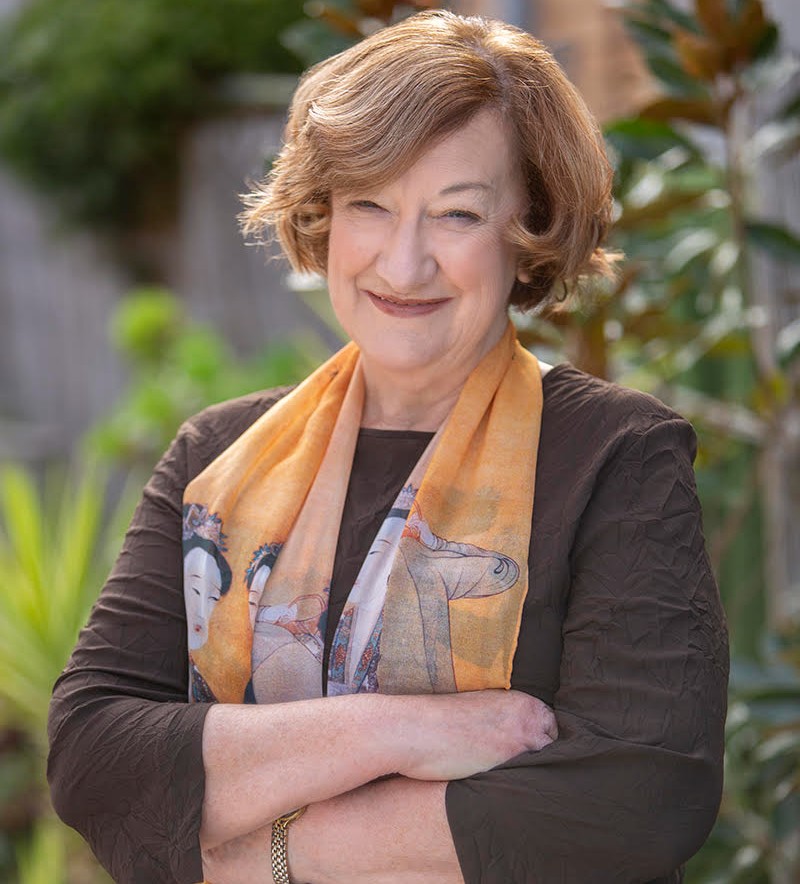
During the 1990s, while Meredith ran a private practice in vocational counselling, she also spent several years as a consultant to Monash Staff Development, conducting group training. When she enrolled in a Diploma of Professional Writing and Editing, Meredith ran into Hazel again.
“I was delighted to find Hazel teaching on the course. She was confronting and challenging and pushed for excellence from the class, while also being encouraging and supportive,” Meredith says.
Both from working-class families that valued and prioritised education, Hazel and Meredith have collaborated intermittently since their first meeting in 1979, increasing each other’s community reach on critical social issues. They believe having similar ethics, integrity, and persistence to achieve the outcome is vital.
“Meredith blends concurrent careers as a psychologist, author and documentary maker, and I’m a children’s and adult mystery writer,” says Hazel, who celebrated 50 years as a published author last year. Her books cross genres, from picture books to young adult, plays, adult fiction and non-fiction, and teaching resources.
“Our projects are extended by anticipating and answering each other’s questions. So, our skills are complementary.”
“Our first dynamic collaboration came from my lecture about neurodivergence, where Hazel was a staff member,” says Meredith.
“We spoke about her innovative work on the young adult novel she’d just written with Ryan Kennedy about gender transition. Creating new methods of problem identification, solving and education can be risky as people may fear change. I thought her work was fabulous and suggested that we make a doco for psychologists.
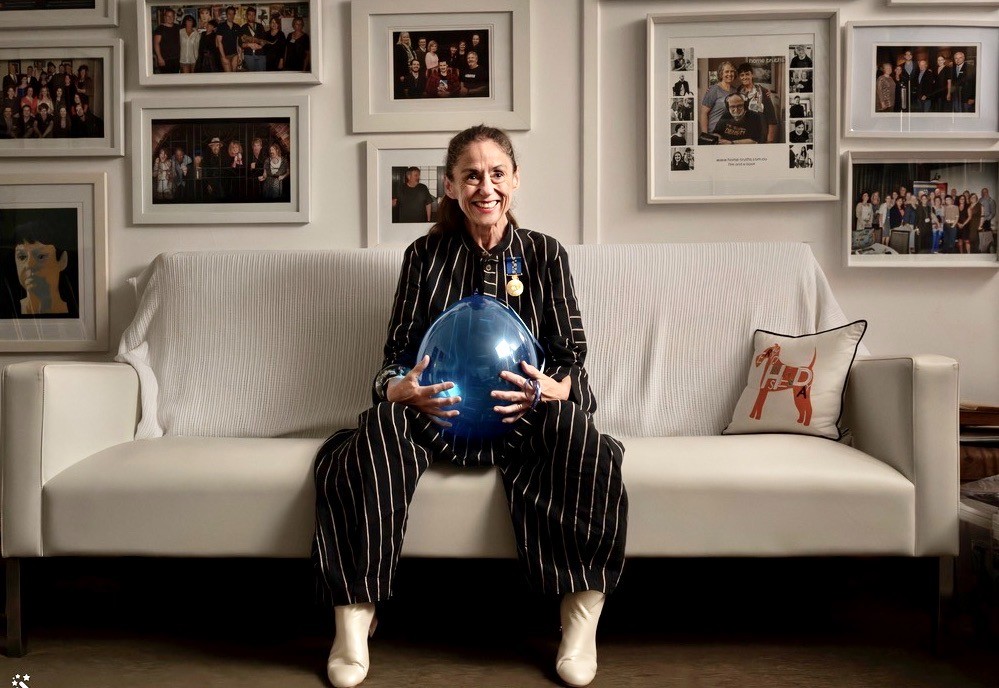
“While some creatives may be reluctant, collaboration can accomplish far more and more quickly. Hazel is a dynamo, and the cross-fertilisation of our ideas and networks is helpful.
“Spearheading emergent social themes is holding up a mirror to society, and it’s easier with collaborative support to make a difference.''
They have connected on several projects, including idea salons for age and skills range and raising candid concerns about new technology.
“Meredith interviewed me for her 100,000-word eBook, Understanding Family Violence, with short videos. Her eBook evolved from her collaboration with Mystical Dog Productions on the film Home Truths. Meredith wanted my comments about therapeutic writing and trauma, and my workshops on memoir narrations,” Hazel says.
The fundamentals of collaboration
“When collaborating, we recommend discussing the ‘how’ of working together and agreeing on where you’re going. Clarify how to get the best out of each other and recognise there may be unexpected outcomes,” says Meredith.
“If surrendering your intellectual and creative property, only do it with people you trust… this is your soul work.
“You need to know you are safe emotionally. Agree on the protocols of how you’ll work together and check in continually. Have a timeline! We keep our deadlines.”
“Have a letter of agreement,” Hazel says. “Some people think you can’t be a creative and be business-like, but you need to have a working legal and accounting knowledge to survive as a creator.”
Meredith adds, “If you haven’t, get advice. You need loyalty and an appreciation of knowing what you don’t know.”
Intellectual and emotional support from their husbands has enabled Hazel and Meredith to accomplish so much more. “You do need supporters,” Hazel says.
Despite numerous projects in their collective vaults of work that span more than 45 years, neither of these nationally-recognised creatives is slowing down.
Hazel has recently worked with a producer to experiment with child safety online with AI-generated drawings in family picture books, and she became the subject of art, with Deborah Niland entering her portrait of Hazel into this year’s Archibald Prize. The children’s book, There’s a Hippopotamus on Our Roof Eating Cake, written by Hazel and illustrated by Deborah, turned 45 this year.
Hazel and Meredith’s next project is designing strategies for vintage women to develop start-ups in new areas.
“Mature women innovate and are the highest growing self-employed demographic. It makes economic sense to encourage new work. Women are great at leadership and followership. Let’s support and encourage each other,” Meredith says.
“People talk about being creative, but you’ve got to be self-starting. Take risks. Continually update your skills to deal with putting new ideas into practice,” Hazel says.
“Stay curious; engage with a broad age range of people for fresh information where you can play with ideas,” Meredith says.
----
Hazel Edwards, OAM, M.Ed, B.Ed, B.A. (Monash) T.P.T.C is an author, educator, speaker, and patron of the Society of Women Writers, Victoria.
Meredith Fuller, OAM, B.A. Grad. Dip. Voc. Couns. M. Soc. Sci. is a psychologist, psychological spokesperson for the media, author, creative collaborator, Fellow of the Australian Psychological Society (FAPS), member of the Counselling Board of the Australian Psychological Society and Life Member of the Australian Association of Psychological Type (AUSAPT).
- Photographs by Say_Heidi Photography (Hazel Edwards) and Dinil Abeygunawardane (Meredith)