Research Excellence by an Early Career Researcher
This Award recognises research excellence by early career researchers who are within five years of the start of their research careers.
The nominees are:

This Award recognises research excellence by early career researchers who are within five years of the start of their research careers.
The nominees are:

Dr Cameron Bentley earned his PhD from Monash University and later worked as a Senior Research Fellow at the University of Warwick, supported by Endeavour, Marie Skłodowska-Curie, and Ramsay Memorial Fellowships. Currently a lecturer and ARC DECRA Fellow at Monash University, Dr Bentley’s research combines electrochemical imaging with co-located microscopy and spectroscopy to solve structural problems in electromaterials science. He has published over 60 peer-reviewed articles and received the 2020 Early Career Analytical Electrochemistry Prize and the 2023 Alan M. Bond Medal.
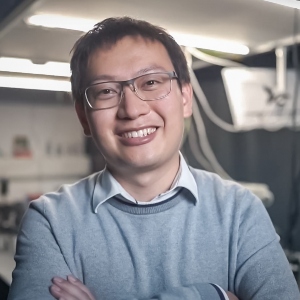
Dr Haoran Ren is a DECRA Fellow and leads the Structured Nanophotonics Group at Monash University. Over the past five years, he has secured more than $2 million in research funding, including Monash Uplift Grants, a DECRA Fellowship, a Discovery Project, and fellowships from Macquarie University and Humboldt. Dr Ren is also an Associate Investigator for the ARC Centre of Excellence for Transformative Meta-Optical Systems. He has published 30 first- and corresponding-authored papers in leading journals such as Science, Nature Photonics, and Advanced Materials. His numerous awards include the SPIE Best Paper Award, Rising Stars of Light, and the ANZOS Geoff Opat Early Career Researcher Prize. Dr Ren has delivered over 30 invited talks at major international conferences and serves as Chair of the OPTICA Photonic Metamaterials Technical Group.

Dr Matthew Snelson is an Accredited Practicing Dietitian and National Heart Foundation Postdoctoral Fellow, currently based in the Hypertension Research Laboratory at Monash University since 2023. His research focuses on the role of diet and intestinal permeability in hypertension. Prior to this, Dr Snelson worked in the Department of Diabetes at Monash University, where his research explored how diet impacts diabetic kidney disease through gut microbiota modulation. He completed his PhD in 2019 at Monash University and has published 35 peer-reviewed articles. He has received 19 national and international awards and delivered numerous presentations at conferences. Dr Snelson is also the immediate past president of the Australasian Human Microbiome Research Network.
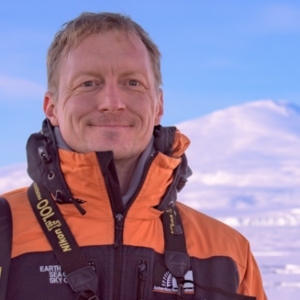
Dr Matthias Dehling’s research explores species community diversity and their responses to environmental changes. He applies innovative analytical approaches, blending cutting-edge techniques with deep knowledge of natural ecosystems, from the Amazon rainforest to Antarctica. Dr Dehling has pioneered the integration of network ecology with functional, phylogenetic diversity, and macroecology, improving understanding of species' roles in ecosystems and how disturbances impact ecological communities. His work appears in top-tier journals such as Science and Nature Communications. Dr Dehling joined Monash University in 2022 as a Research Fellow in the ARC Special Research Initiative “Securing Antarctica’s Environmental Future,” applying his unique methodology to study Antarctic diversity.

Dr Yuval Sadeh is a research fellow at the School of Earth, Atmosphere and Environment, and is affiliated with NASA-Harvest. His work focuses on global food security through advanced remote sensing technologies. Specialising in crop yield forecasting, segmentation, and change detection, he has developed an innovative approach to yield prediction, particularly for data-scarce environments. His research provides critical insights into agricultural yields in conflict zones like Africa and Ukraine, reshaping how satellite data informs food security decisions. Yuval’s work offers both scientific advancements and practical solutions that can profoundly impact global agriculture.
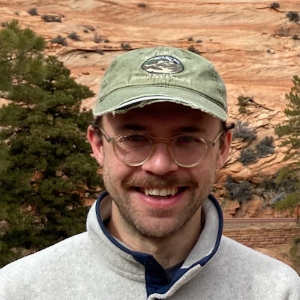
Dr Andrew Gunn specialises in the evolution of planetary surfaces, with a focus on Earth and Mars’ wind-blown landscapes. His work combines theory, simulations, experiments, and remote-sensing to decode how sand dunes reflect millennia of climate history in places like Australia’s red centre and Mars' north pole. Dr Gunn completed his PhD at the University of Pennsylvania in 2021, followed by a postdoctoral fellowship at Stanford University. He joined Monash University in 2022 and is a Chief Investigator on three ARC grants. His research has been published in top-tier journals and covered by The Conversation and the Smithsonian Magazine.
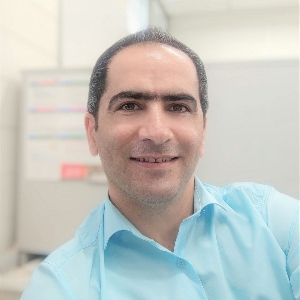
Dr Yousef Zoleikhaei is a postdoctoral research fellow at Monash University. His expertise lies in geochemical and geochronological methods applied to sedimentary basins and paleogeography. Completing his PhD in 2023, Dr Zoleikhaei’s research has significantly refined tectonic models for Gondwana’s northern margin and advanced sediment recycling methods. His work, published in leading geoscience journals, has bolstered Monash’s research profile. Beyond his research, Yousef plays a key role in managing the mineral processing and analysis laboratory, supporting postgraduate students in their work.

Dr Melissa Lee is a Lecturer and ARC DECRA Fellow at Monash University, specialising in group theory, the abstraction of symmetry. Since obtaining her PhD from Imperial College London in 2021, her research has resolved several longstanding open problems. Her work, including collaborations on the Monster group, has been widely cited. Dr Lee serves as the President of the Australian Algebra Group and is an editor for two peer-reviewed journals. Her research and leadership have established her as a significant contributor to the field of mathematics.
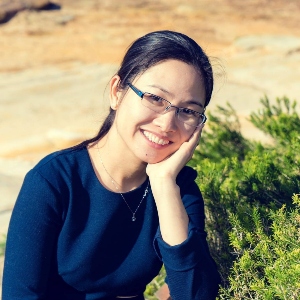
Dr Ngan Le is a mathematician specialising in partial differential equations (PDEs) and stochastic PDEs. Her research addresses gaps in traditional PDE models, building new mathematics for non-linear and irregular systems. Dr Le’s work has broad applications, including in magnetism and turbulence. She integrates tools from analysis, probability, and computational mathematics. Her outstanding publication record and citation counts reflect her impact, and she has secured significant external funding, including three ARC Discovery Projects since completing her PhD.
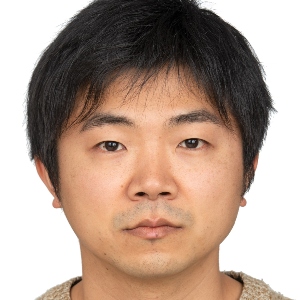
Dr Ryosuke Hirai is a stellar astrophysicist known for his work on binary systems, core-collapse supernovae, and stellar mergers. His development of advanced numerical tools, including a 3D magneto-hydrodynamics code, has been widely adopted. Dr Hirai completed his PhD at Waseda University in 2017 and has held prestigious fellowships at Oxford and RIKEN. He is a rising leader in Australian astronomy, serving as Program Chair of the ARC Centre of Excellence for Gravitational Wave Discovery and a member of several national committees. His research continues to make significant contributions to astrophysics.