Impact Labs
View
Impact Labs
View

Monash Business School launched Impact Labs in 2023, a network of six research hubs designed to bridge the gap between academic expertise and industry through interdisciplinary collaboration. The six Impact Labs hubs – Digital Lab, Energy Lab, Green Lab, Mutual Value Lab, Opportunity Tech Lab and SoDa Labs – partner with government agencies, local business, not-for-profits and multinational organisations to accelerate industry transformation and positive change for sustainable societal benefit.
Further relevant SDGs:
 MSDI Evidence Review Service
View
MSDI Evidence Review Service
View
The Monash Sustainable Development Institute’s Evidence Review Service (ERS) is a specialist team of review scientists who provide policymakers with credible research on the impact and effectiveness of different SDG programs and policies relating to issues of ‘real world’ relevance and impact.
In 2023 the ERS conducted a global snapshot of successful government responses to public health challenges to understand their success factors. This review was funded by The Victorian Health Promotion Foundation (VicHealth) and contributed to a global effort to help governments around the world optimise impact of their public health efforts. The ERS also conducted 10 rapid evidence reviews and two qualitative studies on breaking cycles of social disadvantage in Australia for The Paul Ramsay Foundation.
Further relevant SDGs:


 United Nations Global Sustainable Development Report
View
United Nations Global Sustainable Development Report
View
Associate Professor Shirin Malekpour from the Monash Sustainable Development Institute was the first and only Australian among 15 global experts appointed by the UN to write the Global Sustainable Development Report 2023 (GSDR), which was co-presented to the Deputy UN Secretary-General early and launched by the UN in September.
Professor Malekpour has been working on the GSDR for four years. The report marks the beginning of a new phase of accelerated implementation of the 2030 Agenda and helped shape discussions on the state of the planet and human society at the UN SDG Summit 2023.

 Unit Statistics and Highlights
View
Unit Statistics and Highlights
View
In 2023, Monash offered 55 units directly related to SDG17 with 3,506 total enrolments.
The units highlighted below are a small sample of the units at Monash relating to partnerships for the goals:
 Global Immersion Guarantee
View
Global Immersion Guarantee
View
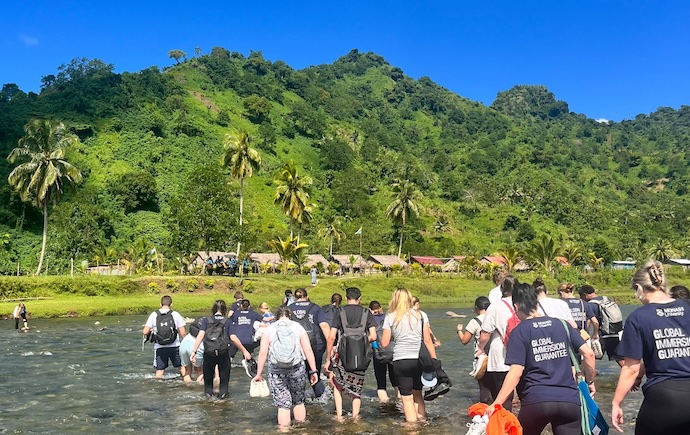
The Global Immersion Guarantee (GIG) is Monash University’s flagship international study initiative bringing students together with sustainability practitioners in Asia, the Pacific and Europe to understand the impact of human activities on environments and to implement actions to advance the SDGs.
Participation in the Global Immersion Guarantee program expanded further in 2023, with the support of unprecedented funding under the New Colombo Plan. In total, 1245 students took part in GIG in 2023. Aligning with the University’s endeavour to advance its engagement with the Pacific, the GIG program also expanded to two new Pacific locations: Samoa and Vanuatu.
Further relevant SDGs:
 Monash Innovation Guarantee
View
Monash Innovation Guarantee
View
Monash delivered the Monash Innovation Guarantee (MIG) for the first time in 2023. One of the University’s Flagship Rich Educational Experiences, the MIG is a three-week, credit-bearing industry experience that enables students from 93 degrees to work together with industry leaders and Australian innovators in developing solutions to major global challenges. Students are allocated to a small team to deliver solutions to challenges experienced by industry partner organisations, gaining hands-on, job-ready skills and the ability to collaboratively lead positive change through innovation.
The MIG program attracted 17 industry partners and students across eight faculties during its inaugural year, adding to the depth and breadth of industry-based experiences available to students. Students surveyed following completion of the MIG overwhelmingly saw themselves as entrepreneurs, innovators and changemakers, and reported substantial improvements across a range of key employability skills. All partner organisations intend to participate again in 2024.

Further relevant SDGs:
 Research, Experimentation and Discovery
View
Research, Experimentation and Discovery
View
Monash University launched the Research, Experimentation and Discovery (RED) unit in 2023, an interdisciplinary study program available to undergraduate students at Australian campuses. One of the University’s Flagship Rich Educational Experiences, the RED program enables students to embed research in their degree and acquire skills to make a positive, transformative impact in their future careers. The RED program attracted an inaugural cohort of 78 students from seven faculties, with students being assigned to interdisciplinary teams.
The RED curriculum combines research narratives with theories of change and transformation, empowering students to explore how to make a genuine impact in the world. To achieve this, RED draws upon participatory practices and co-design, design thinking and Indigenous ways of knowing that connect learning to specific locations, experiences and groups of people.
After completing the unit, RED participants reported increased confidence across a range of key employability skills, a greater understanding of the research Monash is undertaking to address global challenges and a markedly stronger sense of belonging to the University.

Further relevant SDGs:


 360info Awarded Perfect Trust Rating by NewsGuard
View
360info Awarded Perfect Trust Rating by NewsGuard
View
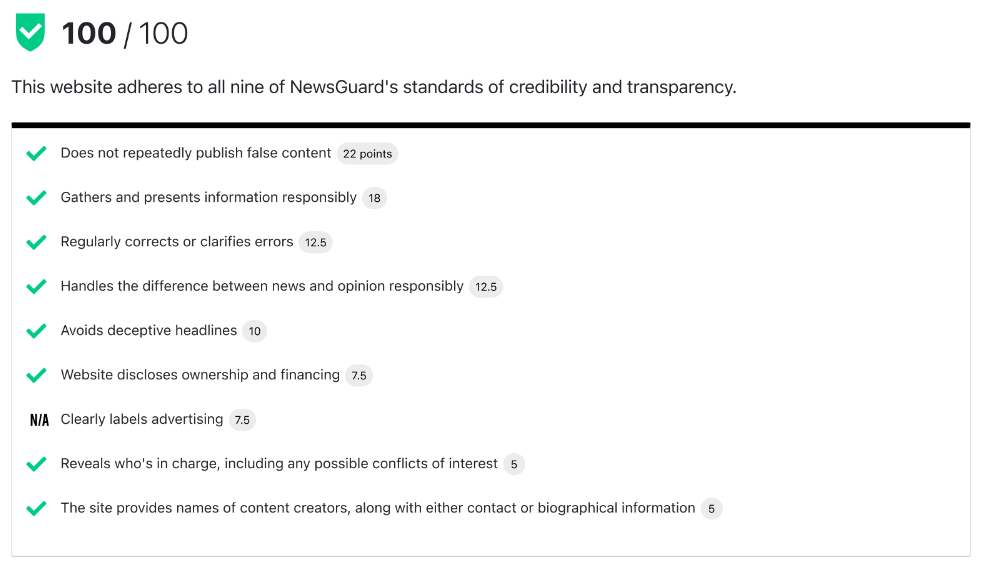
360info received a perfect 100/100 trust rating by independent ratings agency NewsGuard in 2023. 360info is an independent nonprofit public information service, hosted with foundational funding by Monash University, to deliver verified and reliable information to publishing, broadcasting and civic society outlets. The organisation’s focus is to address the world’s key challenges as broadly defined by the UN’s Sustainable Development Goals, going further by providing research-driven solutions. 360info operates as a “wire agency” supplying contextual and explanatory news features ready-for-publication on other publisher’s outlets at no cost under Creative Commons.
360info reached another significant milestone in 2023, gaining its first non-Monash partners in Australia: the University of Sydney and UNSW Sydney. Hosting two new commissioning editorships, these partnerships have enabled 30 percent additional commissioning capacity.
Further relevant SDGs:
 AUSNZPAC Youth SDG Index
View
AUSNZPAC Youth SDG Index
View
The Sustainable Development Solutions Network AusNZPac Youth initiative, which is hosted by Monash University, launched the ‘Towards an AusNZPac Youth SDG Index’, a youth-led report that was the first in the world to use the SDGs framework to measure young people’s progress towards sustainable development. The report found that young people were lagging behind the general population on progress against many of the SDGs, has been used as an advocacy and education tool across the country by Australia’s UN Youth Ambassador to ensure that no one is left behind.

 Jeffrey Sachs Public Lecture
View
Jeffrey Sachs Public Lecture
View
Monash Sustainable Development Institute and Sustainable Development Solutions Network (SDSN) AusNZPac co-hosted SDSN president and globally eminent leader in sustainable development, Professor Jeffrey Sachs, in October 2023, where he delivered a public lecture co-hosted by the City of Melbourne. Over 500 people attended the lecture and over 3000 people watched the online recording of the event. During his tour, Professor Sachs also met with around 300 key stakeholders in industry, government, academia and civil society to strengthen conversations in Australia on progressing climate action, the SDGs and wellbeing.

Further relevant SDGs:

 Monash Commitment to the SDGs
View
Monash Commitment to the SDGs
View
Monash University was one of the first signatories to the University Commitment to the Sustainable Development Goals in 2016. As a signatory, Monash is committed to support and promote the principles of the SDGs through its world leading research, innovation and education, and strives to ensure our campuses and major programs are environmentally sustainable and socially inclusive.
Monash University’s ESG Statement 2021-2025 also includes a commitment to introduce a more coordinated approach to the capture and reporting of SDG advances, and to fold implementation of these into the University’s business as usual planning and reporting processes. In line with these commitments, the University introduced a centrally managed, whole-of-University SDG Report for the first time in 2023.
 University Living Labs for Sustainable Development
View
University Living Labs for Sustainable Development
View
Monash researchers co-authored a report, “Governing University Living Labs for Sustainable Development,” featuring key recommendations and drivers to help university ‘living labs’ stimulate innovation and drive sustainable practice. The study, funded by the Monash-ENGIE Alliance, identified common challenges faced by university living labs, including insufficient governing structures and siloed institutional cultures, and provided practical recommendations for overcoming these obstacles through flexible coordination, investment, facilitation, and communication.

Further relevant SDGs:
 Monash Community Volunteering Program
View
Monash Community Volunteering Program
View
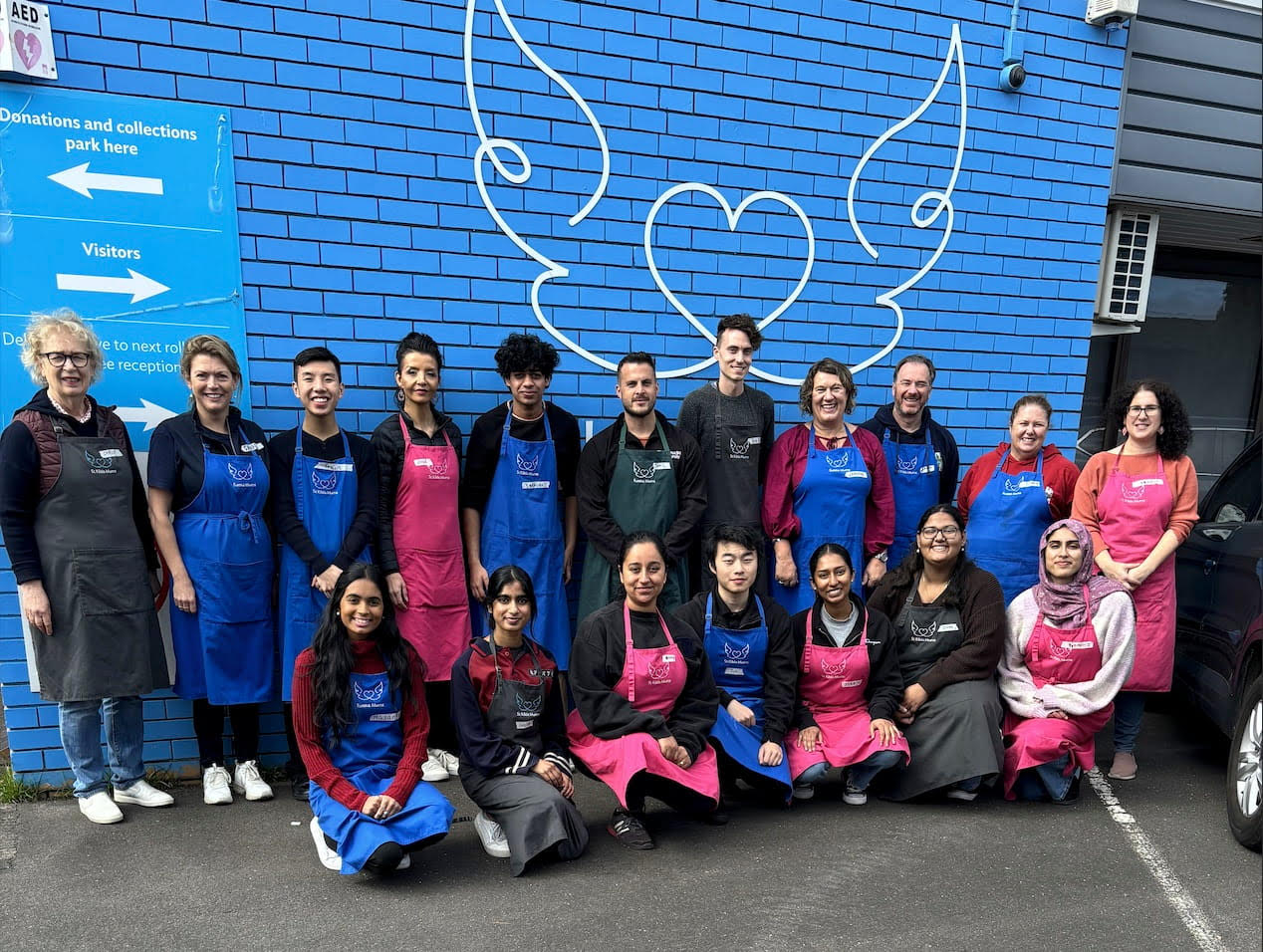
The Monash Community Volunteering Program was launched in 2023. Open to all students and staff, the program aims to develop deep links in the communities that immediately surround the Monash campuses by establishing ongoing volunteering partnerships with not-for-profit organisations. The Monash Community Volunteering Program has both a co-curricular and an in-curriculum model, enabling students who may face barriers to participation in extracurricular activities (e.g. those with carer or family responsibilities, paid work, etc.) to build their graduate profile.
Further relevant SDGs: