Lighter, stronger and more damage-resistant titanium alloy
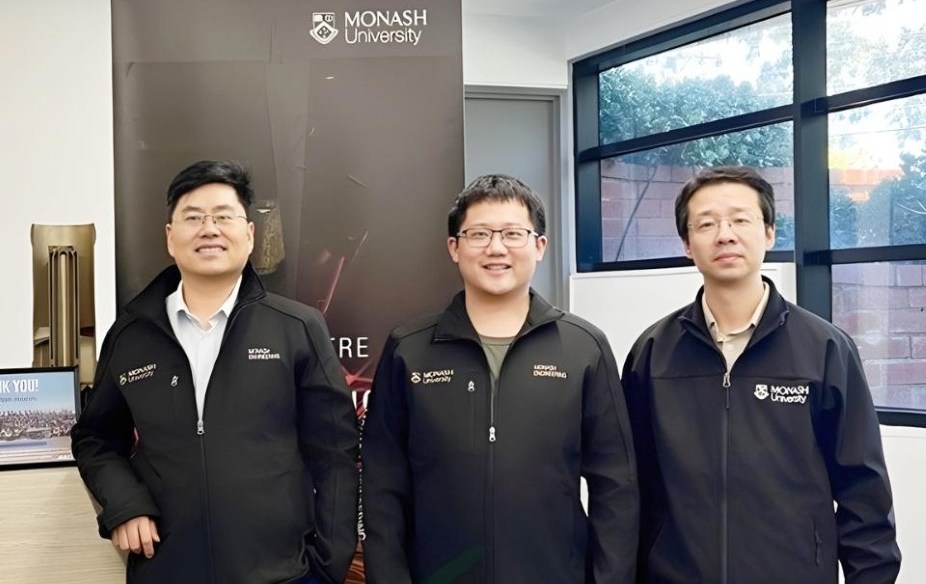
(L-R): Professor Aijun Huang, Dr Huizi Peng and Dr Yuman Zhu
Since the Bronze Age, metalworkers noticed that the more a metal is hammered/deformed, the harder it becomes - the earliest recognition of work (strain) hardening.
In the modern era, only three strain-hardening mechanisms have ever been firmly established including TRIP and TWIP. Each has rewritten industrial capabilities and reshaped sectors such as the Japanese automotive and Korean shipbuilding industries.
While titanium alloys are widely embedded in everyday life, they're fundamentally limited and lack the sustained, strain-hardening capacity essential for advanced structural applications.
In a new study, Monash Centre for Additive Manufacturing (MCAM) corresponding authors Professors Aijun Huang and Dr Yuman Zhu, and first author Dr Huizhi Peng have discovered an entirely new strain-hardening mechanism.
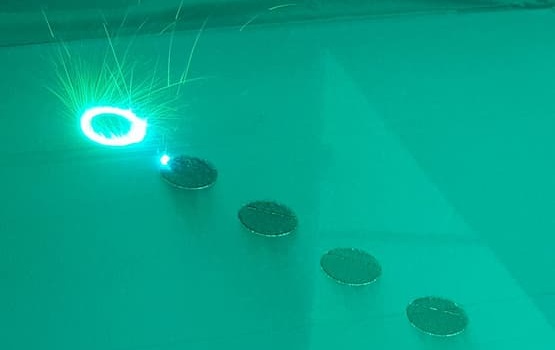
By using laser powder bed fusion to generate a nanoscale triple-twinned martensitic structure, the team uncovered an entirely new strain-hardening mechanism, revealing a distinct strain hardening process that fundamentally departs from conventional pathways.
This signals the potential for next-generation structural components that are lighter, stronger and dramatically more damage-resistant, with far-reaching implications across aerospace, energy, marine engineering and advanced manufacturing.
Read the full article in Springer Nature Communications here Achieving high strain hardening and strength in an additively manufactured titanium alloy