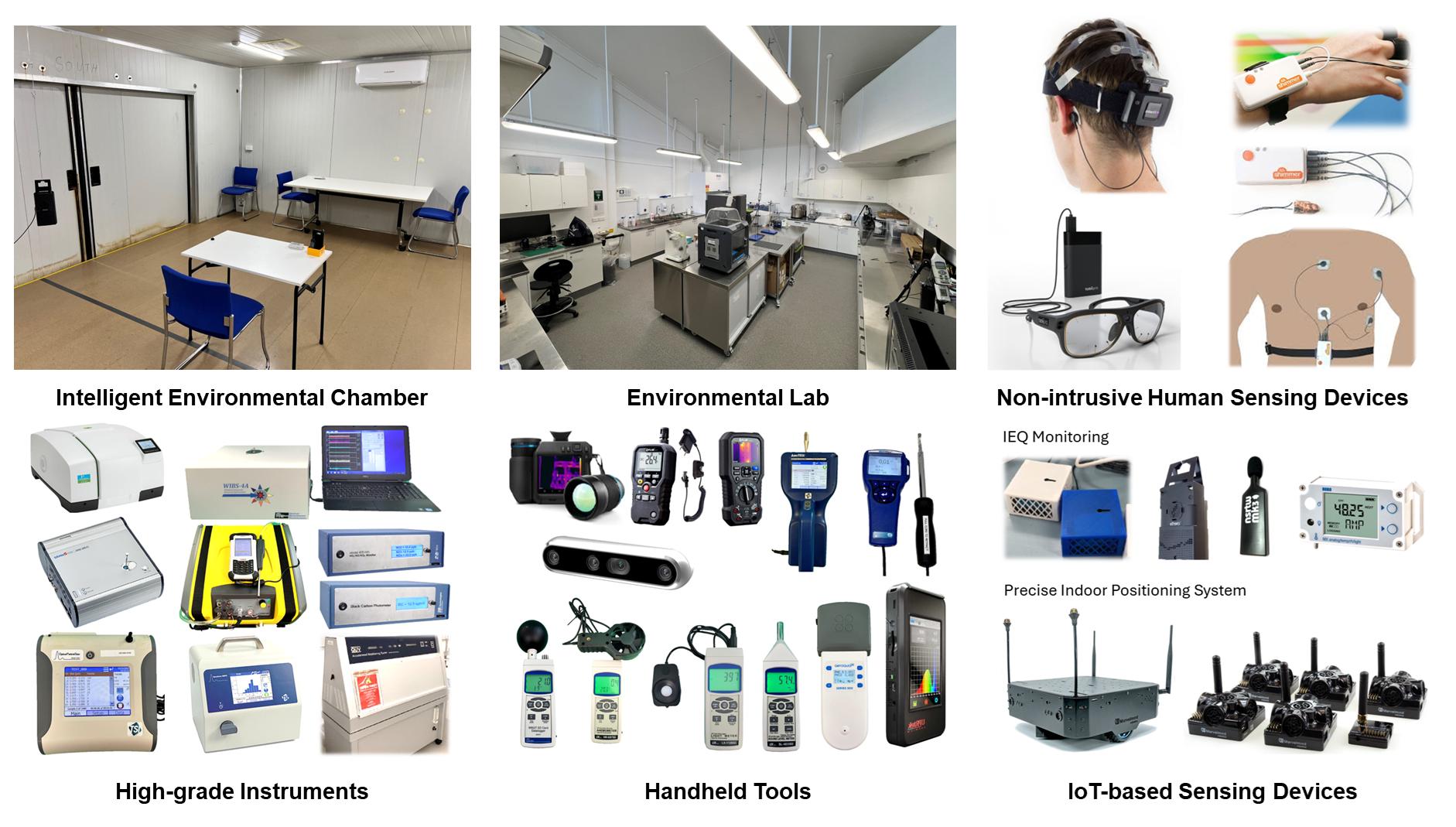
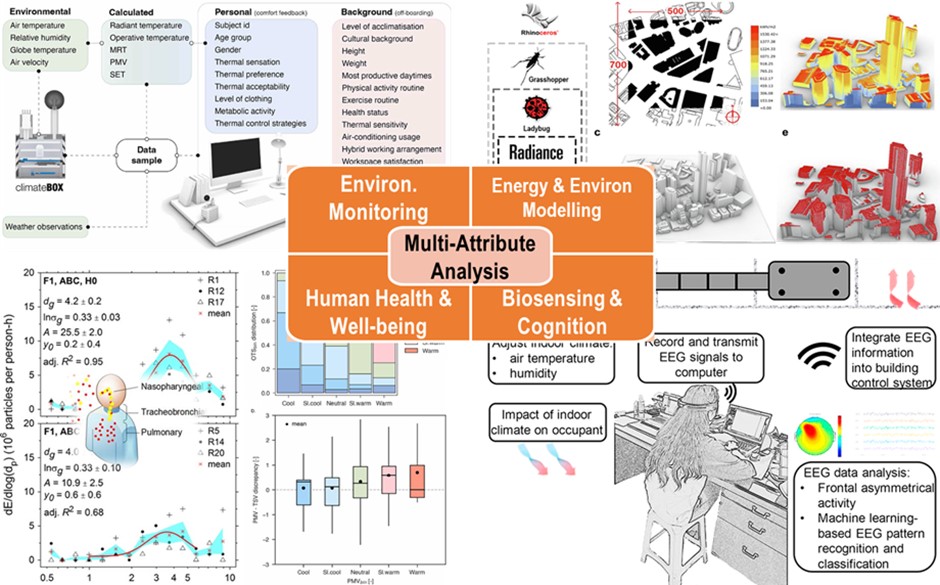
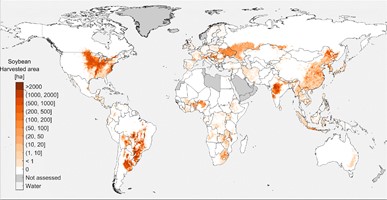
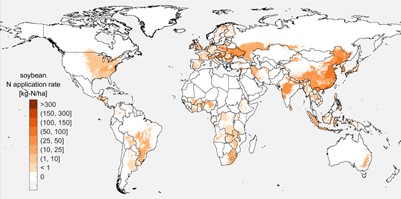
We categorise the lab's capabilities into five key areas, each accompanied by a research project and a scholarly output to demonstrate the lab's practical applications (note that the research project and scholarly output may originate from different studies). While these examples offer a glimpse of our lab, they are not exhaustive. Our lab continues to expand its capabilities each year. For the most up-to-date information on NBH Lab and its ongoing projects, please contact Jenny.Zhou@monash.edu.
1. Environmental Monitoring
Description: Our lab is equipped with a wide array of technologies, including IoT-based systems and nationally accredited instruments, for precise and reliable environmental data collection.
Example Project: Monash Smart Manufacturing Hub (mSMH) – A Digital Twin Living Lab. This project evaluates the performance of a digital twin using energy-efficient thermal comfort in the built environment as a case study. The multimodal sensing network integrates environmental and human sensing to enhance the digital twin model.
Example Scholarly Output: Performance Evaluation of Low-Cost Air Quality Sensors: A Review (DOI: 10.1016/j.scitotenv.2021.151769)
2. Energy and Environmental Modelling
Description: We provide advanced software tools and databases for energy and environmental simulations, ranging from individual buildings to entire cities.
Example Project: Modelling the Human Factors of Energy Use in Melbourne Houses. This project aims to develop a digital suite to fully represent the “human dimension” in building energy and carbon performance. The goal is to refine an accredited model for energy and environmental simulations in residential dwellings.
Example Scholarly Output: Performance Gap in a Multi-Storey Student Accommodation Complex Built to Passivhaus Standard (DOI: 10.1016/j.buildenv.2021.107704)
3. Human Health and Well-being
Description: Our lab combines specialised instruments for tracking bioaerosols and other problematic substances with advanced data analytics to provide comprehensive assessments of human exposure and well-being in various environments.
Example Project: Mass Timber Wellness in Workplaces. This project collects environmental data, surveys, and interviews to develop metrics that measure workplace wellness and productivity in mass timber buildings.
Example Scholarly Output: Influence of Moisturizer and Relative Humidity on Human Emissions of Fluorescent Biological Aerosol Particles (DOI: 10.1111/ina.12349)
4. Biosensing and Cognition
Description: We utilise medical-grade biosensing tools alongside established methods for evaluating human physiological and cognitive responses in diverse built environments..
Example Project: Age-friendly Built Environment: Physical and Perceptual Gaps in IEQ. This study investigates the link between experience design and environmental psychology, using a case study from an aged care facility in Victoria, Australia.
Example Scholarly Output: A Systematic Review of Human Experience in Indoor Thermal Environments through Electroencephalogram (EEG) (DOI: 10.1016/j.buildenv.2024.111533)
5. Multi-attribute Analysis
Description: Our lab offers methodologies on multi-attribute decision analysis to guide decision-making and optimization in complex research and industrial projects..
Example Project: A Multi-Attribute Decision Analysis for Decommissioning Waste Management. This research develops a comprehensive framework to support decision-making in decommissioning waste management, enabling systematic comparisons of waste management strategies.
Example Scholarly Output: Multi-Criteria Decision Analysis for Sustainable Oil and Gas Infrastructure Decommissioning: A Systematic Review (DOI: 10.3390/su16167205)