New research reshapes how we think about EV battery recycling
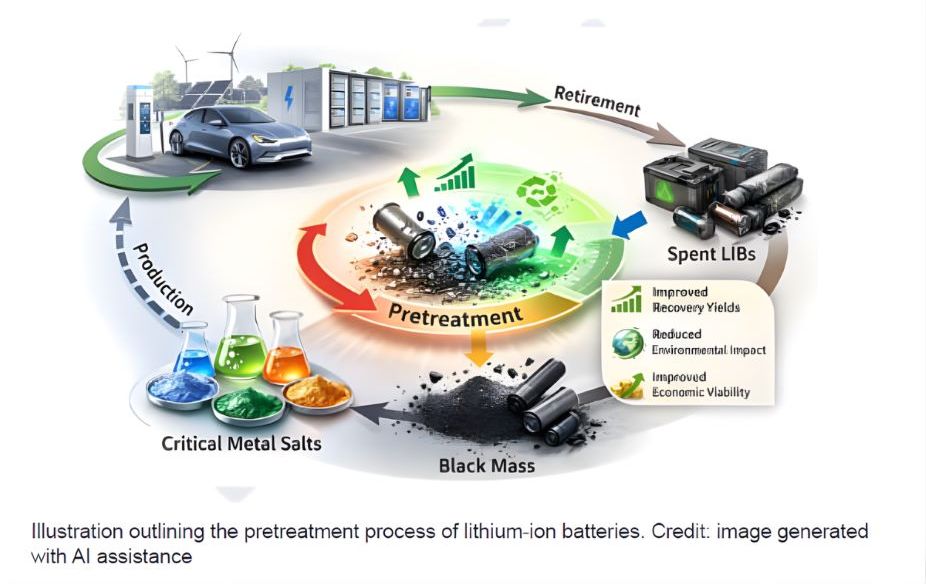
In a Nature Sustainability paper, a team led by Ben Liu and Professor Victor Chang of Civil and Environmental Engineering analysed what happens when lithium-ion batteries reach end-of-life.
Their findings show the very first recycling step - breaking batteries down into “black mass” - drives most material losses and roughly 16–38% of the process’s environmental impact.
The team compared mechanical, thermal and chemical processing methods and found each involves trade-offs between environmental footprint and how much valuable metal can be recovered.
They also identified practical upgrades - like improved emission capture and solvent recovery - that could cut impacts from this stage by up to half.
Of the research, Professor Chang says "“While many countries are planning to invest in and scale up battery recycling industries, our work highlights an important aspect of the process – the pre-treatment stage.
He continued “This step is often overlooked, but it can be critical in determining the efficiency, safety, and overall effectiveness of downstream recycling processes.”
As electric vehicles scale globally, making battery recycling sustainable will depend not just on recycling more batteries, but on improving the very first step.
View the full research paper here Impacts of pretreatment routes on spent lithium-ion batteries recycling
Read an article in Green Review here.