Tackling climate change with energy “right under our feet”
Geothermal energy expert Professor Ranjith Pathegama Gamage of the Department of Civil Engineering was recently elected as a Foreign Fellow of the Indian Academy of Engineering, a professional body of India’s most distinguished engineers, engineer-scientists and technologists covering the entire spectrum of engineering disciplines.
Also a Fellow of the Australian Academy of Technology and Engineering, Professor Gamage is passionate about addressing climate change through the development of new technologies to extract deep-earth energy sources. In this Q&A, he discusses his research, his experience as a former international student now a professor in Australia, and as a supervisor and mentor to the next generation of geothermal energy experts.
Congratulations on your election as a Foreign Fellow of the Indian Academy of Engineering. What does achievement mean to you?
The underlying theme of all my work includes doing things in a healthier way to improve the environment and contribute to Australia’s net-zero emission targets. Being elected as a Foreign Fellow is an incredible honour for me, my current and past students, and the colleagues I’ve worked with over the years. It gives me immense satisfaction to receive this encouragement and recognition of the work we’ve been doing over the last couple of years.
You’re an expert in geothermal energy. In light of the recent COP27 conference, why is geothermal energy important to consider and what needs to happen to make it a feasible solution?
We’re at a critical transition away from conventional energy sources like oil, gas and coal, which still contribute around 80 per cent of global energy emissions, to renewable energy if we’re to achieve ambitious targets of carbon neutrality by 2050.
We need to consider all forms of renewable energy, including geothermal energy, which I consider the truest form of clean energy. We have a significant amount of energy trapped right under our feet, however, the challenge arises in extracting large quantities of this heat from very tight rocks cheaply and easily.
We’ve now developed a technology for this purpose, using supercritical Co2 as a rock-breaking fluid and circulation fluid in geothermal conditions instead of the more commonly-used water-based fracking method. We’re the first researchers to do so and it’s still in the early stages, specifically at technology readiness level 3-4.
This approach can break tight rocks much better than current water-based fracking. Co2 allows us to achieve high fluid flow rates and therefore high energy recoveries, in addition to some storage potential of Co2 in those formations. So, it’s a win-win technology.
We’re now looking for investors to bring the technology to technology readiness level 8. We must bring our attention to policymakers, investors and media to discuss the importance of geothermal energy as part of the mix of renewable energies.
You moved to Australia to pursue a PhD and have had a long and successful career here. What advice would you give to a student considering studying in Australia?
I arrived in Australia to pursue my PhD at the University of Wollongong. It was my very first trip overseas so it was quite overwhelming! However, I very quickly adjusted and settled down in the community. Australia is truly beautiful. The people here are friendly and welcoming, and ultimately convinced me to stay permanently.
As a previous international student and now as a professor, my experience is that Australian university graduates are rich with knowledge and leadership skills. Australia is a huge country to explore, and is expanding at a fast rate. Therefore, we need skilled people, in particular in the STEM areas. Once they graduate, there are huge opportunities for students to develop their careers and stay on. Melbourne in particular is a lovely place to work, raise a family and live.
You have mentored and supervised many postgraduate students throughout your career. What are some recent success stories?
I am a passionate advocate for significantly reducing our carbon footprint and developing sustainable energy and mineral extraction technologies-contributing to achieve net zero emission. I commit significant time and energy to encouraging my PhD students to become exceptional citizens able to create technology that will improve lives globally.
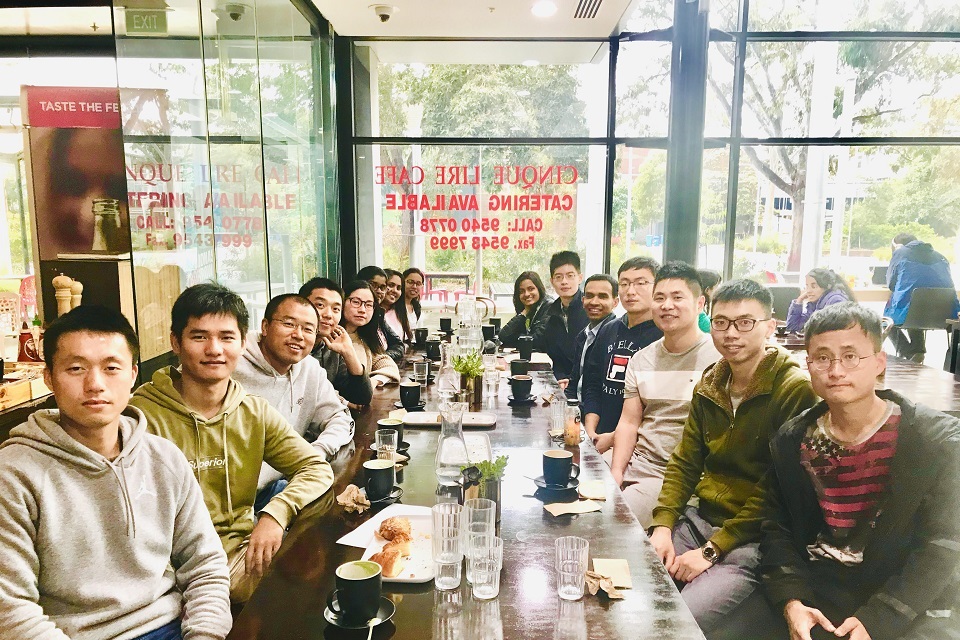
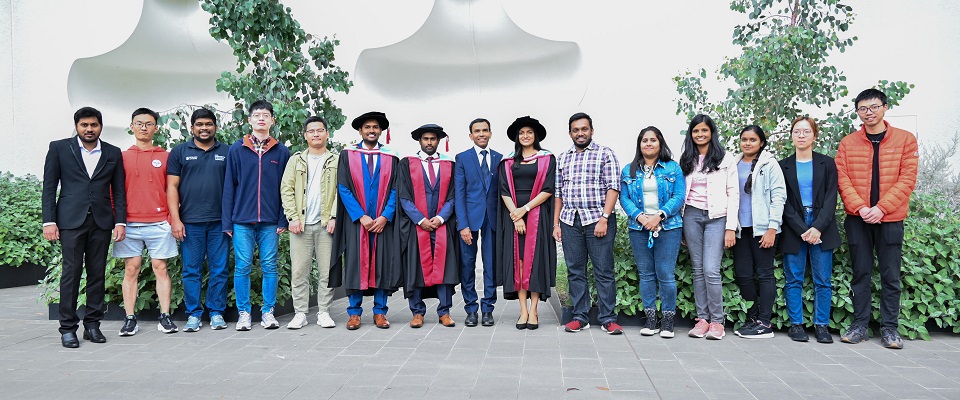
My PhD students (53 graduates in all!) have been awarded many local and international awards for discovering advanced sciences and breakthrough technologies for solving significant global challenges. Some of these awards include the Vice Chancellor’s Award for Best PhD Thesis, and the Royal Society of Victoria’s Young Scientist Research Prize.
Internationally, two of my PhD students (in 2014 and 2022) were awarded the International Society for Rock Mechanics’ Rocha Medal for the world's best PhD thesis in rock mechanics, a solid testament to the dedication, energy and commitment of my supervision excellence. I am proud to say that I am the first supervisor in Australia to have two students awarded this prestigious medal since its inception some 30 years ago.
My sense of reward from mentoring and inspiring next generation science leaders has steadily increased, and I am constantly inspired by my students’ and alums’ capacity to think critically and act in the interest of real-world change.
How have you been involved in the IITB-Monash Research Academy? What opportunities has this partnership provided to you and your students?
I’m one of the founding supervisors of the academy, and I’ve stayed closely involved with supervision and other activities since its inception in 2008. Through this, I was able to make a measurable impact over the past ten years as a passionate advocate for significantly reducing carbon footprints and sustainably developing energy and mineral extraction technologies in India.
I enjoy working to prepare a new generation of young Indian researchers to become world leaders in the overlapping areas of Sustainability and Earth Sciences. Some of these graduates have since joined the Indian workforce based in Indian universities (IIT Bombay; IIT Madras, Visvesvaraya NIT; IIT Dhanbad, Central University of Tamil Nadu) and industries (Oil and Natural Gas Corporation; Geological Survey of India). I have enjoyed working with colleagues from IITB and other institutions across India.
How have you worked with industry in Australia and internationally to achieve outcomes?
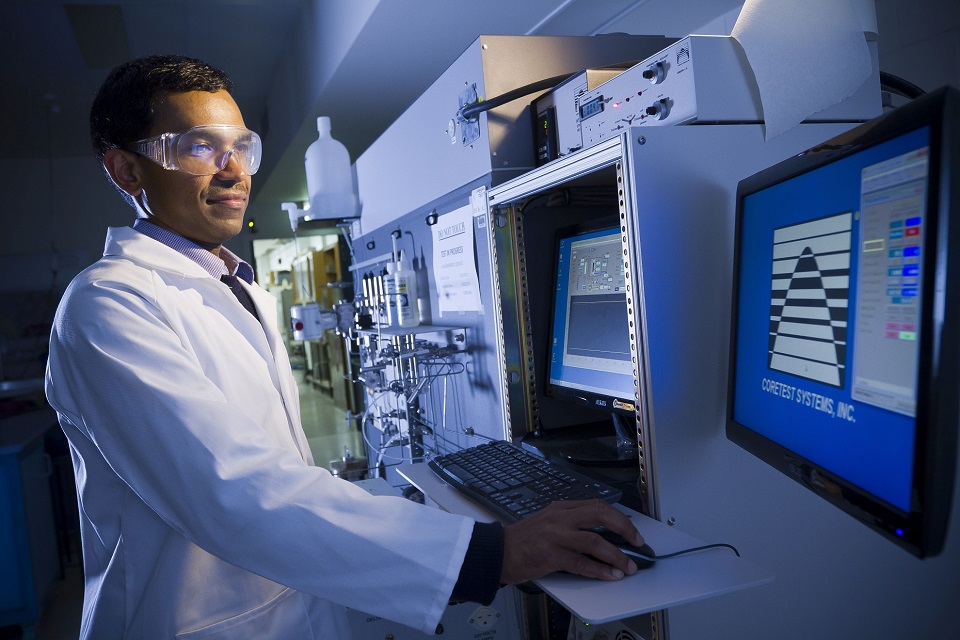
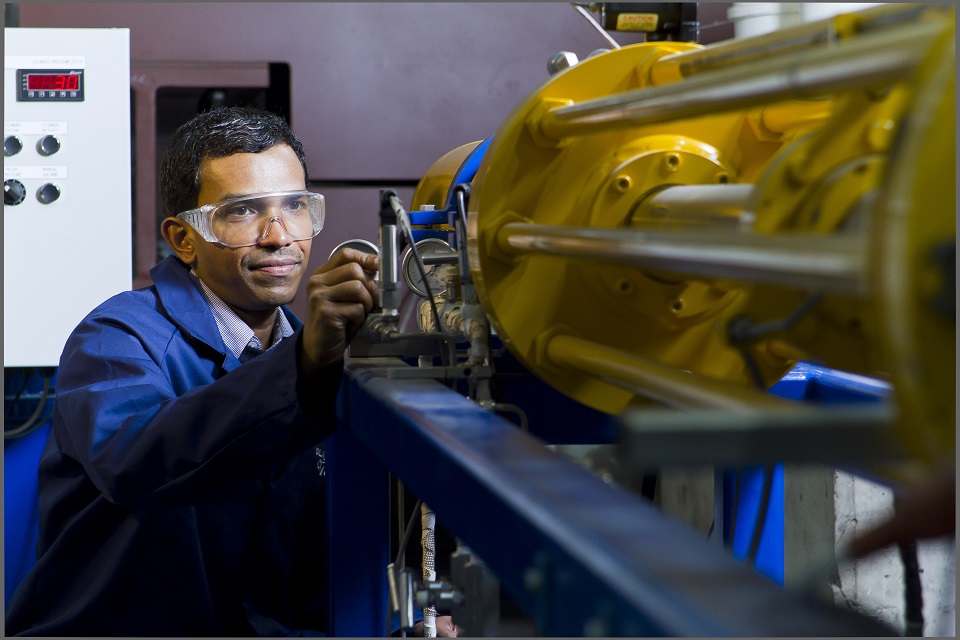
My career has always been in academia but I’ve of course worked on numerous projects supported by both local and international industries. The research and technological development that we do are very much relevant to society and industry. Therefore, naturally many mineral and energy industries are keen to get engaged with our work. We’ve also developed a unique world-class laboratory consisting of equipment first in the world, including the super deep stress reactor, simulating deep earth over 10km for rare earth minerals. We’ve also recently developed ‘green cement’ which uses waste materials from the energy and mining industries. This product has the potential to make a significant contribution to achieving net zero emissions.
What is your proudest career achievement so far?
As a supervisor and mentor, I am proud to have developed a community of students and alumni from ten countries and to have fostered an open and transparent community with respect for diversity. My dedication drives creativity and innovation among younger generations and inspires them to contribute solutions to pressing contemporary issues such as climate change.
Interested in becoming a geothermal energy expert, or keen to explore other ways you can make positive change by studying Engineering at Monash? Explore our undergraduate course with ten specialisations and double degree options, our Master's programs or be mentored by an expert researcher like Professor Gamage while undertaking postgraduate research.