Impact of harassment on women’s safety on public transport
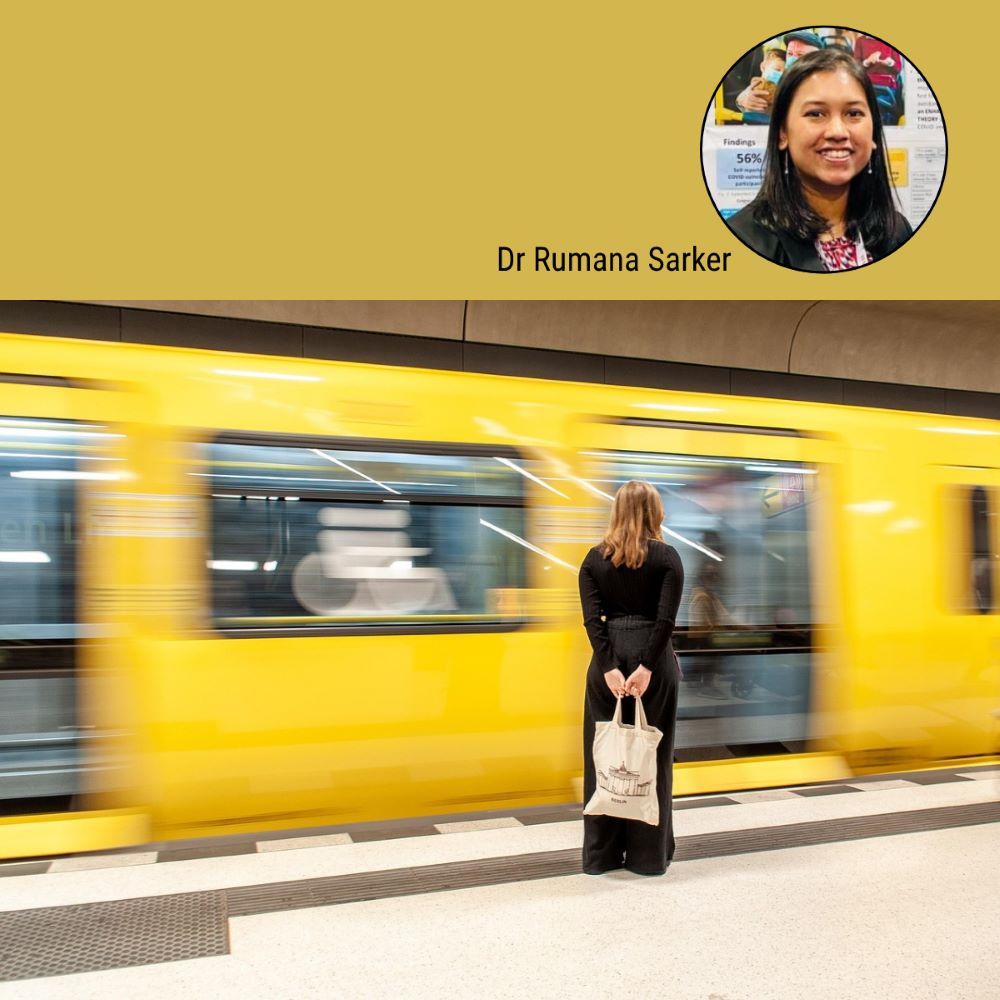
Women’s feelings of safety on public transport are profoundly shaped by past experiences of harassment, according to new research from Monash University.
The study - Women’s Perceived Precautionary Safety on Public Transit: A Life Course Perspective on Harassment Experiences, Anxiety, and Coping Behaviour - surveyed 528 women rail users across Melbourne to examine how harassment influences perceived safety, anxiety and coping behaviours while travelling.
Researchers found that both verbal and physical harassment significantly impact women’s sense of safety, often prompting precautionary measures such as careful route planning, avoiding travel after dark or changing modes of transport.
Dr Rumana Sarker, a Research Fellow at the Public Transport Research Group in Civil and Environmental Engineering, explains.
"Our findings showed that verbal harassment was found to be more common than physical harassment, often triggering greater precautionary behaviour. However, physical assault had a stronger negative effect on perceived safety and left deeper, more lasting effects on overall mental well-being, even when women took steps to protect themselves."
Supported by the Monash Advancing Women's Success Grant (2024) and the Department of Transport and Planning (Victoria), the study offers valuable insights for policymakers, urban planners and transport authorities aiming to create safer and more inclusive transit environments for women and gender-diverse passengers.
Read the full research paper here.