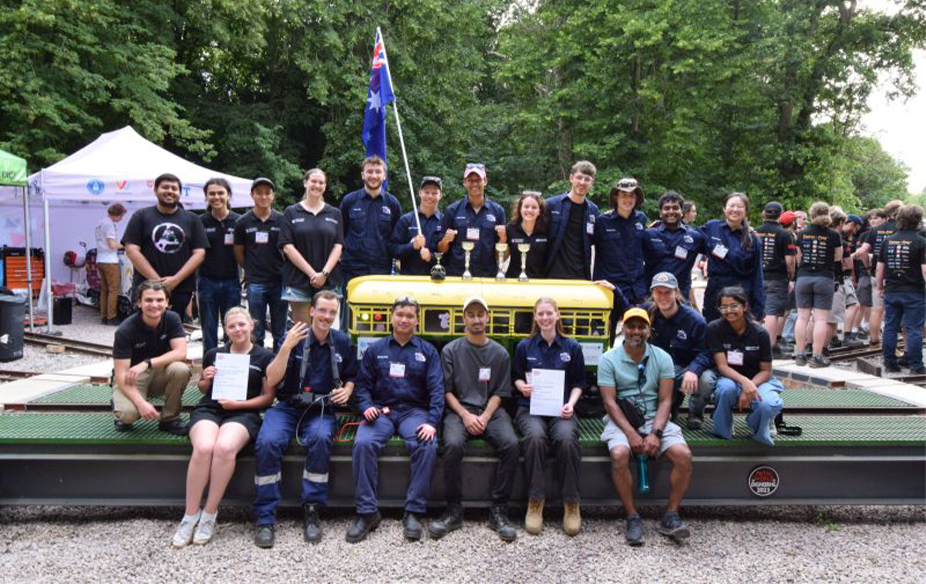
Monash student team wins in global autonomous vehicle competition
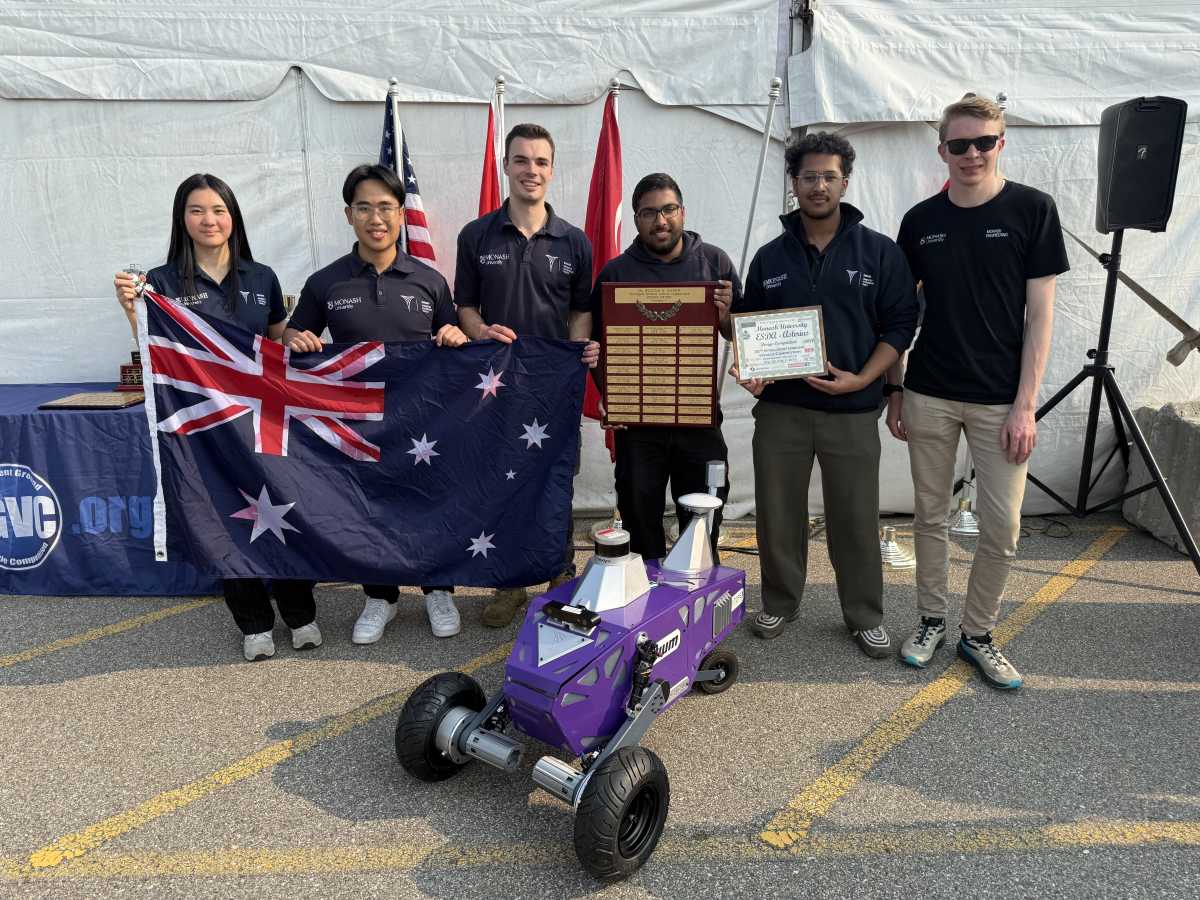
MCAV team members with their winning vehicle design Asterius MkII. L to R:- Pellegrina Nheu, Richard Quan, Matt Lowe, Hari Guggilam, Yoonus Nazeem, Matthew Willaton (staff)
Monash University’s student-led Monash Connected Autonomous Vehicle (MCAV) team has taken out first place in the Design Competition at the prestigious Intelligent Ground Vehicle Competition (IGVC) 2025, held at Oakland University in Detroit, Michigan, USA.
The team travelled to the United States on 27 May 2025, marking their first-ever participation at IGVC, a world-renowned event that challenges university teams to develop and demonstrate autonomous ground vehicles capable of navigating complex, unmapped environments.
Triumph against the odds
Despite facing many technical challenges—including a critical hardware failure just before departure—the team’s determination never wavered.
“We arrived as underdogs,” said Yoonus Nazeem, Monash Connected Autonomous Vehicle team CEO. “Things didn’t go as planned when we first arrived in the U.S, but thanks to the incredible effort from both our team on the ground in Michigan and our support crew back in Melbourne, we turned things around and achieved something truly special.”
The team quickly implemented a 24-hour development cycle, with students in Melbourne working while the U.S. contingent slept, and vice versa. The combined global effort was instrumental in not only assembling and preparing their vehicle—Asterius MkII—but also developing a winning design presentation that outshone teams from across the world.
Asterius MkII: An innovation powerhouse
The team’s vehicle, Asterius MkII, is a showcase of cutting-edge engineering. Equipped with a state-of-the-art wheel-hub motor actuation system, the vehicle integrates a powerful onboard computer and a suite of advanced sensors, including LiDAR, Depth Perception cameras, and GPS, allowing it to navigate complex and previously unmapped environments.
The vehicle was also designed with modular autonomy, capable of executing lane detection, obstacle avoidance, and manual driving. Unfortunately, due to integration delays and GPS-related issues, the team was unable to compete in the Navigation component of the competition. Despite this, the performance in the Design category was more than enough to cement their place among the competition's elite.
The competition journey
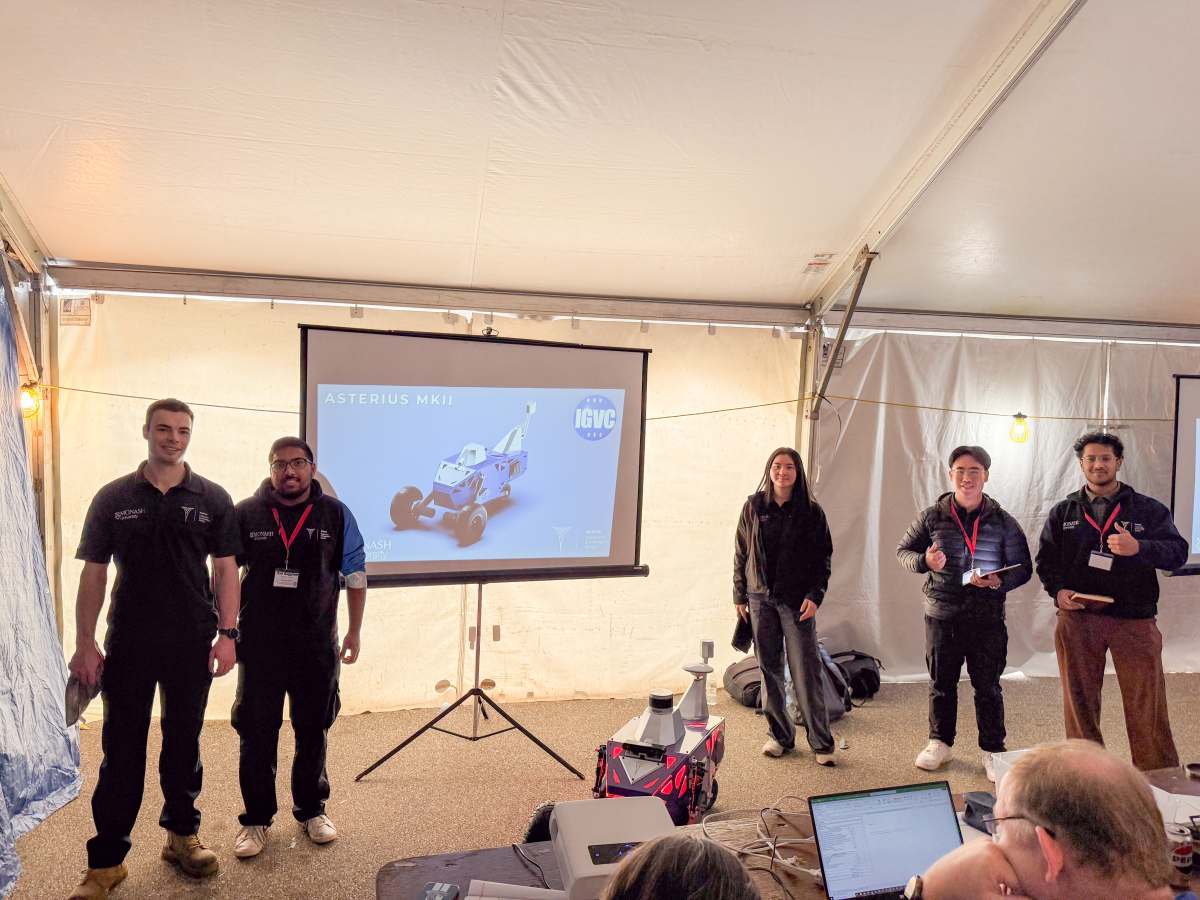
IGVC’s Design Competition is a rigorous, three-stage event. The first stage required a comprehensive design report, followed by a 10-minute presentation and Q&A to a panel of three technical judges, alongside a vehicle inspection.
Only the top six teams progressed to the final round, where they delivered a revised 15-minute presentation to nine judges from non-technical backgrounds.
MCAV ranked third after the initial rounds, securing their place in the finals. With just hours to spare, the team reworked their speech, integrated new visuals and props, and delivered a confident, engaging final presentation that earned them the top prize.
Professor Hai Vu, Deputy Dean Research and one the MCAV team’s academic supervisors, praised the group’s grit and technical excellence:
“This was more than just a competition—it was a real-world engineering challenge, and the students delivered under immense pressure. Their ability to adapt, collaborate across continents, and still produce an award-winning result is something Monash can be incredibly proud of.”
Learning through experience
The IGVC is a globally recognised competition that blends multidisciplinary engineering theory with hands-on application. Designed to reflect the rapidly evolving needs of industry, it fosters innovation in technologies such as computer vision, AI, robotics, and mechatronics.
For the MCAV team, this was not only a triumph but also a major learning opportunity. “We made some mistakes,” admitted Yoonus. “We underestimated the role of GPS and didn’t complete our system integration in time. But we’ve learned more in the past few weeks than we could’ve imagined—and we’ll come back stronger.”
A global team effort
Only a portion of the MCAV team was able to travel to the U.S. This group included Richard Quan, Pellegrina Nheu, Matt Lowe, Hari Guggilam, Yoonus Nazeem, and supervisor Matthew Willaton.
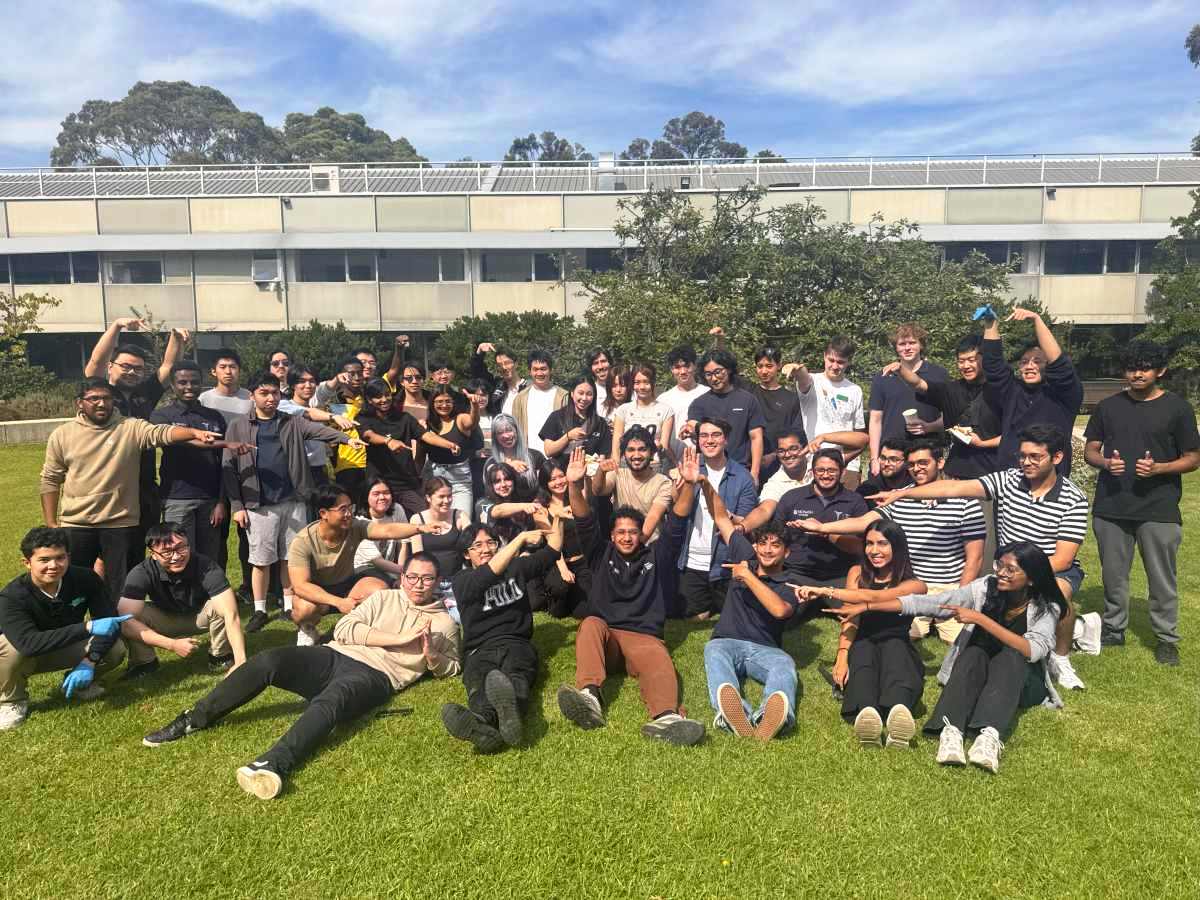
Meanwhile, back in Melbourne, MCAV’s Electric Self-Driving Automobile (ESDA) technical team and the other members who provided round-the-clock support included Yide Tao, Ben McGaw, Ricky Zhang, William Tioe, Aryeh Rather, Ben McGaw, Hao Yu Wong, Harrison Crofts, Shawn Hoon, Kin Wai Wong, Kenny Nguyen, Oliver Papillo, Sameer Simon, James Pringle, Brandon Tran, Finn Didier, Vidath Jayasooriya, Alan Wu, Insaf Imran, Johnny Ou, Joshua Chan, Kynan Reeves, William Tioe, Ricky Zhang, Jessie Li, Wilson Hidayat, Aiman Rahman, Rohit Lal.
Along with a handful of supporters who provided additional information along the way, Ishaan Chowdhary, Huy Nguyen, Bhagesh Shetty, Sanithma Mahawithanage, Guanyue Li, Daniel Seow, Dylan Gonzalez.
“None of this would have been possible without the incredible coordination and dedication across our whole team,” said Yoonus. “Through determination, hard work, and true teamwork, we overcame every challenge—and we’re more excited than ever for what’s next for MCAV.”
For more about Monash Engineering student teams, MCAV and their global achievements, visit monash.edu/engineering/student-experience/teams-and-clubs.