Robots + humans = faster, safer builds with greater efficiency
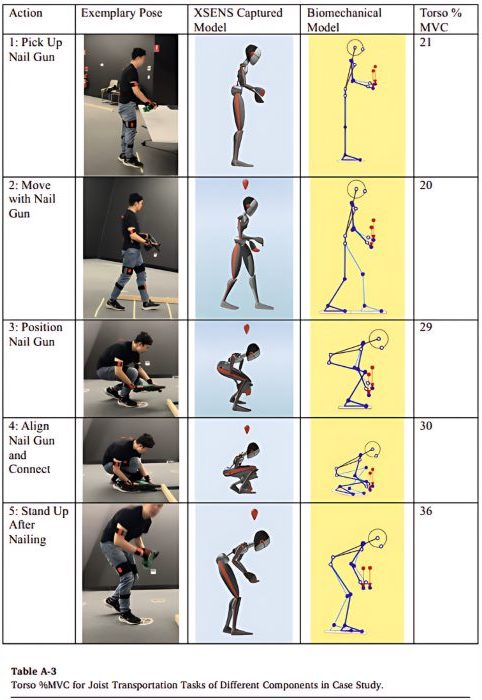
Engineers from the Department of Civil and Environmental Engineering have trialled a new human-robot collaboration system that makes construction faster, safer and less physically demanding.
Using Monash’s UR10e robotic arm and MiR100 mobile robot, assembly of a timber floor frame was simulated to test how sequencing tasks and allocating jobs between humans and robots impacts productivity and fatigue.
The results revealed efficiency gains and reduced strain on workers.
“Collaborating with robots in construction is no longer a distant vision – it’s rapidly becoming a reality,” said Dr Yihai Fang. “Faced with challenges such as low productivity, labour shortages and high injury rates, the industry must embrace innovation by integrating automation and advanced robotic technologies.”
First author Dr Will (Yizhe) Wang added “The simulations really show how robots could take the strain off workers – they can handle the heavy lifting and repetitive jobs, while humans focus on planning, problem-solving and making sure everything fits perfectly. It’s exciting to see how off-site prefabrication and smart on-site collaboration could actually make construction safer and faster for workers.”
Later this year, Monash Engineering will open a new research facility led by Professor Yu Bai and Dr Fang. Building on Monash’s construction robotics lab, the state-of-the-art space will feature high-capacity robotic arms, adaptable tooling modules and custom co-production setups designed to enable seamless collaboration between humans and robots.
View the research paper in Elsevier's Automation in Construction here.
Read an article about this project in Tech Xplore here.