Graphene team advances in global XPRIZE Water Scarcity competition
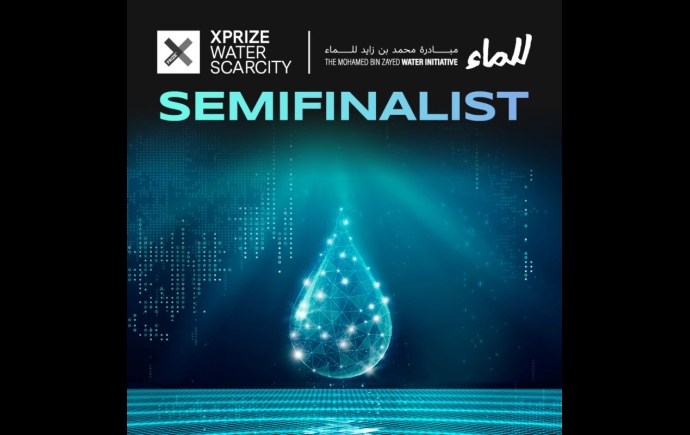
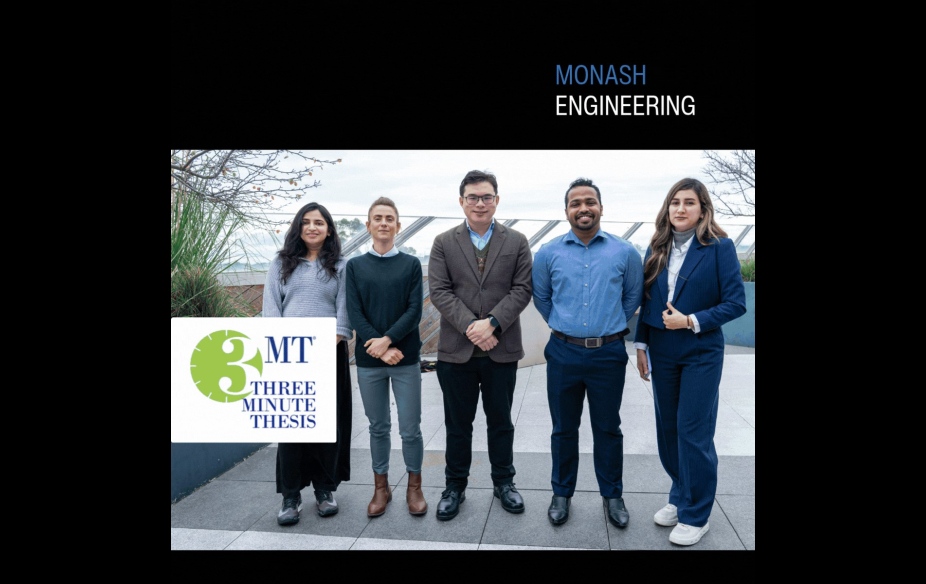
Selected from hundreds of teams across dozens of countries, the "Graphene Enhanced Reverse Osmosis" (GE-RO) team - a collaboration between Monash Engineering, Clean TeQ Water and NematiQ - has been named a semifinalist in the $119 million XPRIZE Water Scarcity competition.
A global challenge focused on transforming seawater desalination and improving access to clean water worldwide, GE-RO is developing breakthrough technologies designed to make desalination more reliable, affordable and sustainable.
Team lead Professor Mainak Majumder of Monash Mechanical and Aerospace Engineering and Director of AM2D | ARC Research Hub for Advanced Manufacturing with 2D Materials said this is a strong endorsement of the technology's progression from laboratory science to industrial-scale application.
“Translating fundamental graphene science into a manufacturable membrane product compatible with existing desalination infrastructure has been the central goal of this collaboration,” Professor Majumder said.
The GE-RO team builds on commercial-scale manufacturing experience with the Graphene Enhanced Ultrafiltration (GE-UF) platform, already produced by @NematiQ in 4040 and 8040 module formats. Early field trials have also been completed for a PFAS-selective GE-UF membrane variant.
Team member Dr Sally El Meragawi explains "What surprised us most was the coating's resilience across the entire durability protocol. Thermal cycling, pH extremes, scaling challenges, mechanical stress, biofouling surrogates and oxidant exposure: individually each is a robust test of membrane integrity.
The fact that GE-RO retained its performance through all six in sequence and was able to achieve WHO standards for water quality afterwards validates that the graphene oxide layer is protecting the underlying membrane from the real-world degradation pathways that limit conventional SWRO lifespan."
The next stage of development is expected to involve producing 1812-sized spiral wound modules on the team’s roll-to-roll demonstration coating line in Melbourne, alongside side-by-side testing with conventional seawater reverse osmosis membranes.
The team now progresses to semifinals testing where up to five Track B teams will advance to the finals. The next phase will assess safety, performance, sustainability and scalability, including Life Cycle Analysis, Safety Data Sheets and scalability planning ahead of testing scheduled for Q3 2026.
Congratulations to the team on this outstanding international recognition and best wishes for the next phase of the competition.