Large loads such as hydrogen electrolysers could help stabilise renewable-rich power grids
Hydrogen electrolysers are widely recognised for their role in producing clean hydrogen using renewable electricity. But new research suggests they could also play a critical role in helping stabilise electricity grids as renewable energy expands.
As countries scale up wind and solar energy, hydrogen production facilities are increasingly viewed as a way to absorb surplus renewable electricity and convert it into hydrogen for storage and later use.
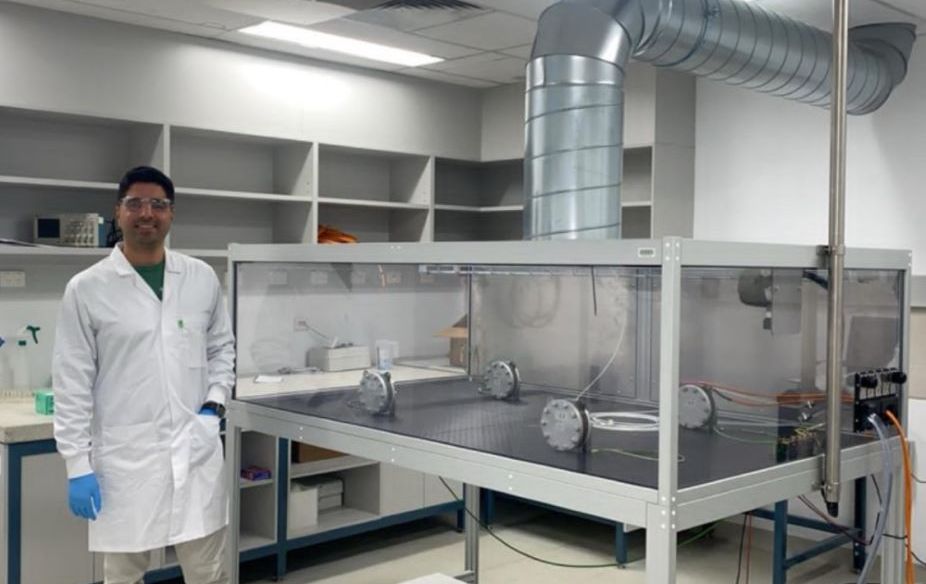
Research by Dr Mehdi Ghazavi Dozein of Monash Engineering - in collaboration with researchers from the University of Melbourne and UPC School (Universitat Politècnica de Catalunya) - highlights a further opportunity.
Because electrolysers can rapidly adjust how much electricity they consume, they have the potential to help balance supply and demand on the grid in real time. The study explores how electrolysers could be designed to provide “grid-forming” services, actively helping stabilise voltage and frequency.
These functions have traditionally been delivered by large spinning generators in coal, gas and hydro power plants. The researchers also outline control strategies that would allow electrolysers to support the grid while maintaining safe and reliable hydrogen production.
Managing hydrogen output and storage remains an important consideration when responding to rapid changes in grid conditions. This study, entitled “Grid-Forming Services From Hydrogen Electrolyzers,” has recently won the 2025 Best Paper Award in IEEE Transactions on Sustainable Energy.
As more renewable generation enters the energy mix, many of traditional generators are being retired, reducing the grid’s inherent stability. Flexible technologies such as hydrogen electrolysers and their system support capabilities could help address this challenge.
What comes next
Dr Ghazavi Dozein and his so-called "Low-Carbon Energy Team" is currently exploring these capabilities using a newly established advanced hardware-in-the-loop facility at Monash Electrical and Computer Systems Engineering.
This experimental setup enables improved validation and model parameterisation of large loads and electrolysis plants, allowing us to better understand their behaviour in power system applications.
At the same time, the research team is investigating key challenges associated with electrolysis plant flexible operation, particularly electrolysis stack degradation under variable energy consumption.
This research is funded by the Engineering Research Talent Accelerator grant and focuses on estimating hydrogen technology degradation when electrolysis plants provide system support and grid forming services. The team looks forward to sharing further updates as this research progresses and invite readers to follow our work and stay tuned for future developments.
Read the research paper here.