
Angus Steele
Fusing a flair for leadership with cutting-edge digital design
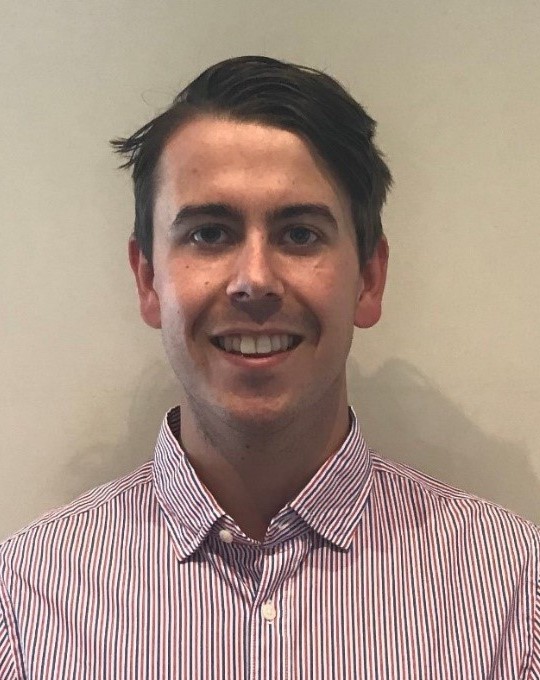
Intrigued by the new frontier of embedded data-driven design into engineering saw Angus enrol in Monash University’s Bachelor of Mechatronics Engineering (Honours, 2020) and Bachelor of Commerce (2020).
Whilst studying, Angus took the opportunity to deep dive into Monash’s professional development courses, including the Engineering Leadership Program for Undergraduates that provided opportunities to connect with likeminded peers, hone both his employability skills and a natural flair for leadership outside the formal classroom environment.
We sat down with Angus to hear how studying Mechatronics Engineering has shaped his career outlook and strong connection to the Engineering community. And of course, to learn more about his current role as Associate Consultant at Capgemini Engineering, a global leader in consulting, technology services and digital transformation.
Are there any notable experiences from your time at Monash you’d like to share?
My time at Monash was fantastic for preparing me to get into the workforce, and to continue learning when I got there. It’s important to acknowledge that the skills you learn at university are far from the last skills you’ll develop, and the experience of “learning how to learn” so to speak is the most helpful tool I gained at Monash.
Specifically, my time in the Engineering Leadership Program was incredibly helpful in this regard. Teaching me how to develop my soft skills, put me in touch with other driven and focused individuals, and reinforced the importance of embracing ongoing learning opportunities. These driving factors, especially the ability to present myself clearly through communication skills and a deeper understanding of emotional intelligence, have been instrumental in developing my career to date.
If you could tell your graduate self one piece of career advice what would it be and why?
If I had one piece of advice for my graduate self (knowing this was only 6 months ago) it would be to trust in myself and know that everything will be ok. When I finished, I didn’t have work lined up. I had just quit my previous role. My peers seemed to all be finding work and I felt like I may be left behind. Reflecting now, it was always going to be ok, even if I didn’t know it at the time. Continually developing my skills, applying for a variety of roles, and just embracing opportunities as they come, meant that in time, I was going to find a position that would be a good fit for me.
What are the top 3 skills you need to succeed in the designing engineering space?
When I worked at my previous role as a Design Engineer, there were a few key behaviours that were keys to my success.
Firstly, to be inquisitive. If something is beyond what you can find out for yourself: ask. If there is an opportunity coming up you want to be a part of: ask. It’s ok not to know everything, and you aren’t being hired as a technical expert, you’re being hired as a young engineer.
Secondly, and for both my current role and my design role, seek out and listen to feedback. Don’t be content being good enough, look to improve and take on board both the easy and hard truths.
Finally, capitalise on the classes you take at uni. I was offered my first design role shortly after completing “Engineering Design One,” and obtaining my SolidWorks certification. Don’t ignore how relevant the work you do at university is for your ability to work in the design space.
Tell us about your experience since leaving Monash: how has your career progressed to date? Any professional achievements you’d like to share
Since leaving Monash, I both left my job, and started a new role as an Associate Consultant. I had been working in the design space, but my role was highly technical, focusing on drawings and 3D design, which was and is not my passion. As such, shortly after I graduated, and before I had an offer presented from another firm, I left to find something I was more aligned to. This took me to several applications and interviews, before I found somewhere that both was interested in me, and I was interested in working for them. This in in the technology consulting space, where I am currently an “associate consultant,” working for Capgemini. They encourage me to keep learning, to develop my skills while on the job, and that support has been fantastic in my time there thus far.
How has your technical and operational experience assisted you in your executive roles?
My current position as an Associate Consultant at Capgemini Engineering, a large, multinational corporation is providing me with the technical and operational experience to grow into a future leader. The combination of my leadership training, both with the ELP and an ensuing Certificate IV in Leadership and Management, and the experience I am rapidly gaining in a large, and rapidly growing organisation, makes me confident I am setting the foundations for a long term, executive level career.
What are some of your passions and interests?
My passions and interests within work relate to helping others refine and improve processes. I love efficiency, things working smoothly and as they should, and it has been fantastic for me to find an opportunity where I can continue working towards that passion.
I also have been developing some Business Analyst skills, which allow me to communicate those potential opportunities more effectively and allow for greater improvement.
I am even more passionate about the people I align myself with. I choose my friends carefully, and my colleagues even more so. As such, the inclusive, support driven network within Capgemini has been important to me in continuing to be able to push myself and work towards the future.