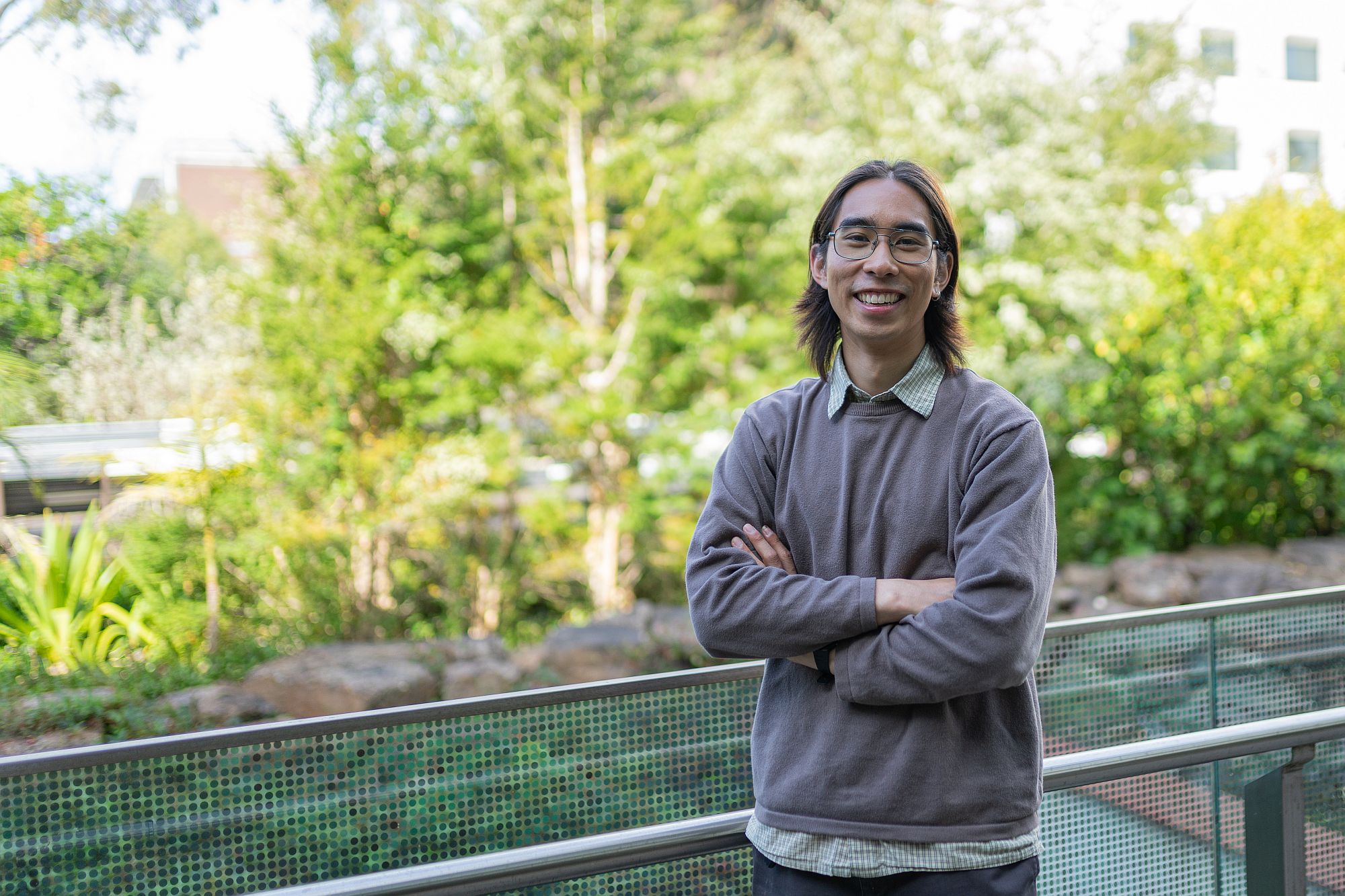
Jefferson Lam
Studying leaves to design the next generation of solar panels
We know plants absorb the sun’s rays through their leaves and convert them into life-sustaining energy through photosynthesis. Could these same plants, like the tree in your backyard or the rose bush by the letterbox, have something to teach us about making better solar panels? Materials Science and Engineering PhD student Jefferson Lam, the 2022 Australian Academy of Technology and Engineering’s Ezio Rizzardo Polymer Scholarship winner, is determined to find out. We asked Jefferson a couple of questions about his PhD research and experience and why the surface structure of leaves might inspire the solar panel designs of the future.
Q. How have you been inspired by nature to explore new solar panel designs?
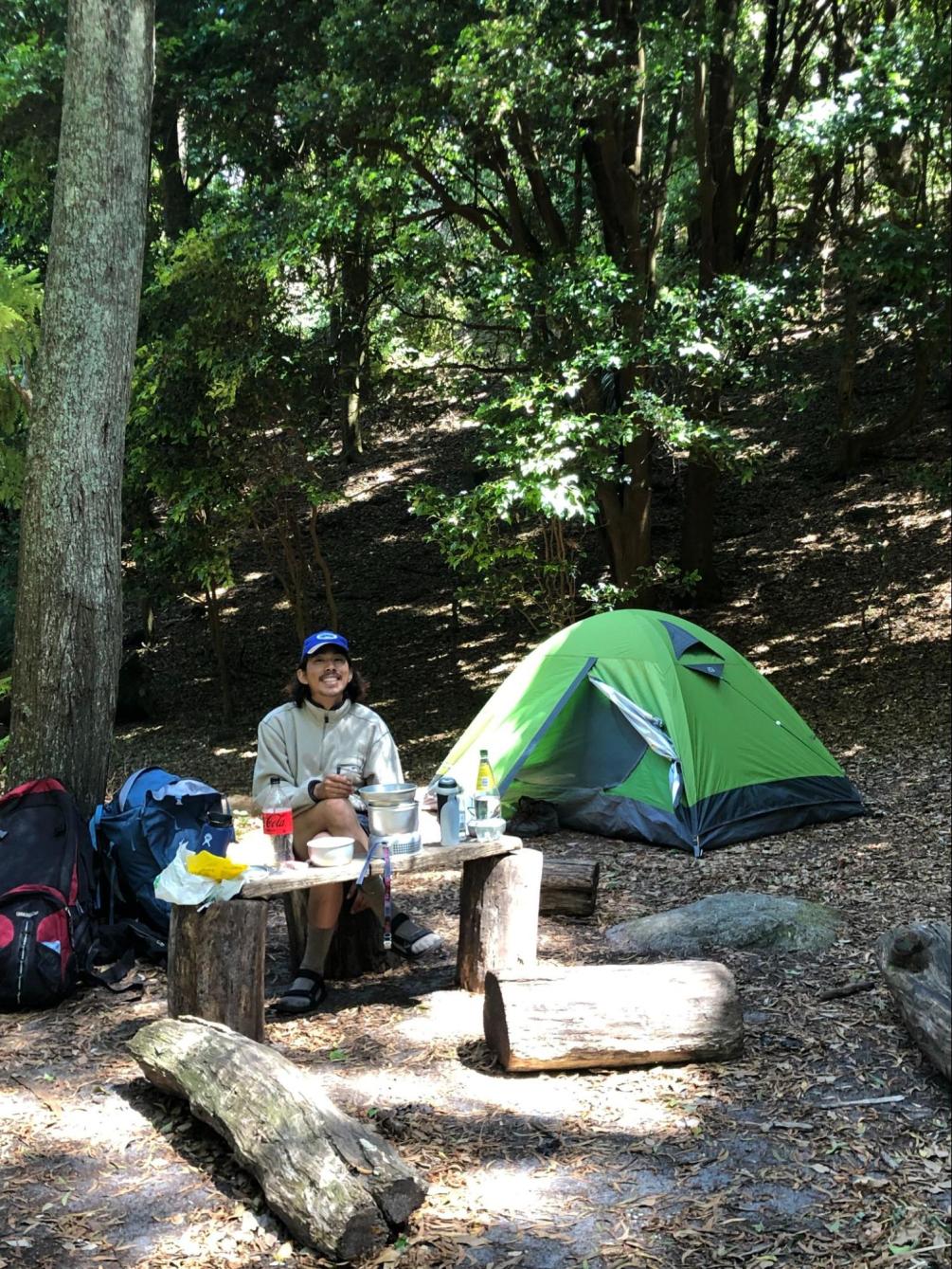
The idea of learning from nature stems from my hobbies and passions. I always strive to be outdoors doing the activities I love - like hiking, surfing and bouldering – and with the natural environment always in my periphery, it’s been easy to join the dots between the workings of nature with my work in solar.
Plant leaves and solar panels are really similar. They’re both devices that convert solar light rays into usable energy. Leaves have evolved and optimised over millions of years to become efficient harvesters of this light to feed and nourish plant life while also becoming durable enough to withstand the elements in all environments.
By probing into the surface structure of plant leaves and discovering how they handle light so efficiently while also being weather resistant, we can begin to replicate similar structures onto solar panels. We can do this through polymer engineering techniques such as hot embossing, imprint lithography, and the development of polymer/nanocomposite coatings. These techniques allow us to intricately sculpt the surface of polymers with hierarchical and composite structures found ubiquitously across plant life.
This is the fundamental idea behind ‘bioinspiration’ in materials engineering, taking natural principles and applying them to solve engineering problems. In my case, to improve the durability and performance of lightweight solar panels.
Q. What makes you excited about this area of research?
As a renewable energy source, solar energy will undoubtedly be an integral part of our energy systems in the future, with some predicting that solar will be one of our largest energy sources by 2050. Yet, no one knows what the solar panel of 2050 are going to look like, and it’s difficult to predict with advances in new materials and next-generation solar technology, like tandem cells and perovskites, evolving so quickly.
The need for solar technology is already here; now it’s just a matter of getting creative, which is what I love most about doing research. Ultimately, I imagine that the solar panels of the future will be seamlessly integrated into our lives, powering most of our energy needs. I’m excited to work towards this vision of the future.
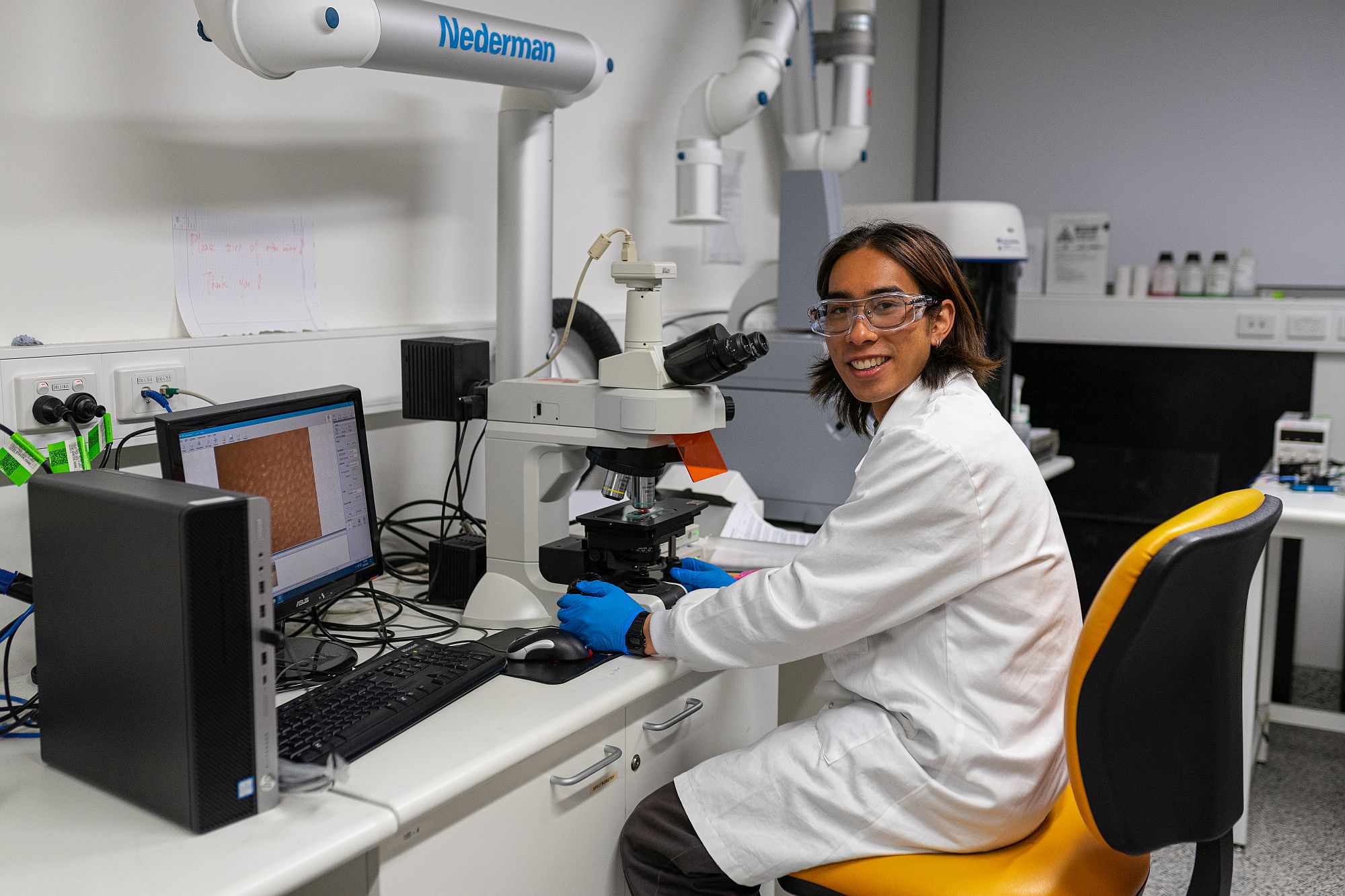
Q. What’s been the highlight of your PhD experience so far?
Being awarded the 2022 Ezio Rizzardo Polymer Scholarship from the Australian Academy of Technological Sciences and Engineering (ATSE) has been the main highlight so far. Like many PhD students, I’ve often experienced doubts and experienced my fair share of Imposter Syndrome. The scholarship has helped me feel much more confident in my capabilities and the direction I’m heading. I think that truly believing in your work is the first step to accomplishing your goals, and this scholarship has helped me do just that.
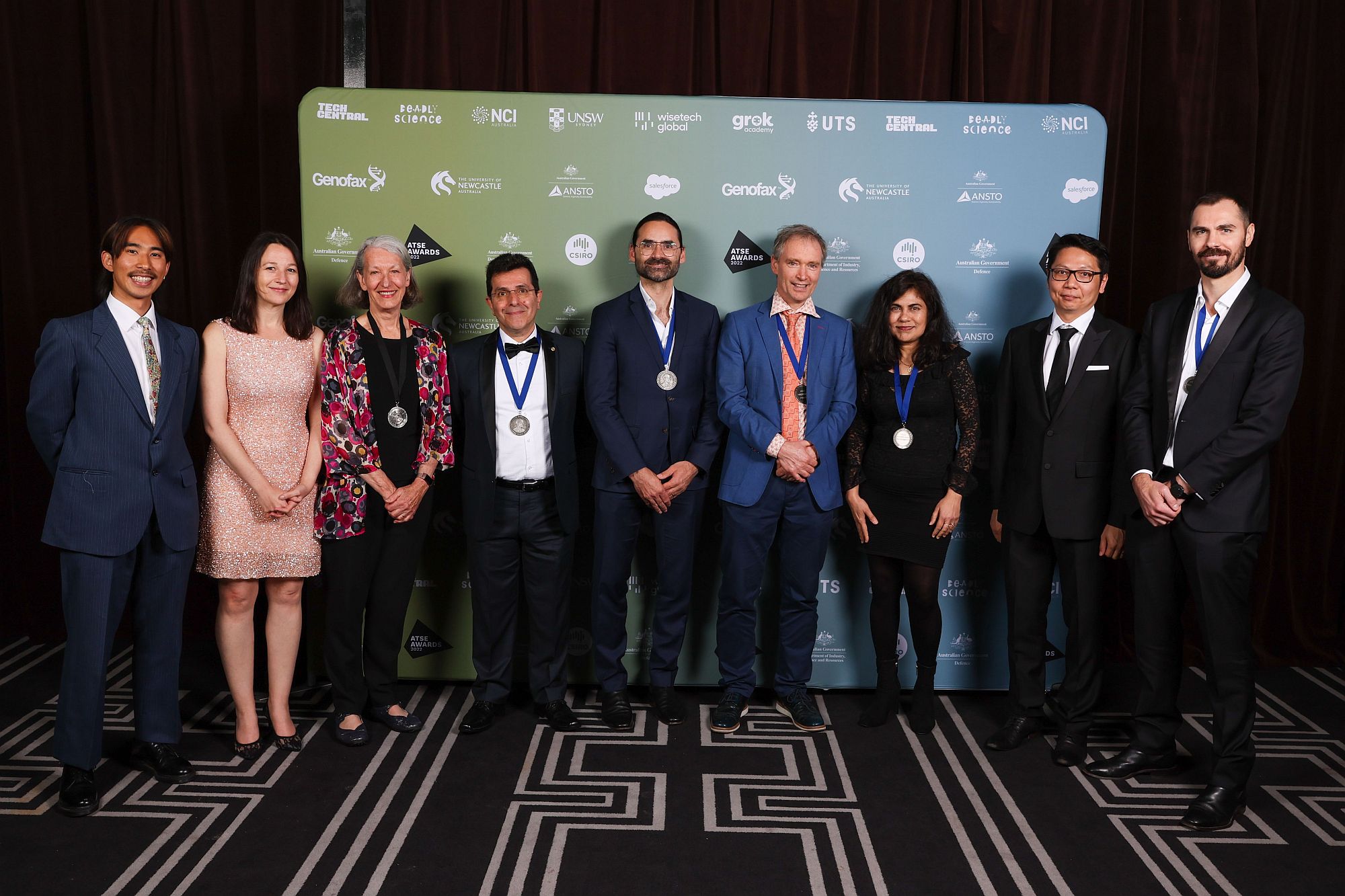
Australian Academy of Technology and Engineering 2022 award winners.
Credit: ATSE
Q. How is the Woodside Monash Energy Partnership supporting your research?
I’m lucky to be part of the Woodside Monash Energy Partnership, which brings together leading students, researchers, and industries to tackle sustainability challenges. One of our projects aims to drive substantial reductions in the cost of solar installation by harnessing lightweight panels and deploying them in innovative new ways. The project is incredibly relevant to my research and gives me the opportunity to understand the big picture and formulate the best ways to turn my theories into practice. The partnership also helps my professional development tremendously, through seminar presentations, workshops, and networking events. I'm lucky to be supported by such talented people to develop the skills I need to succeed in my PhD and beyond.
Q. How do you hope your research will impact the community and industry in the future?
I hope that my research will be able to guide the development of new, improved architectures of solar panels so that they are more efficient, affordable, lightweight and durable. I dream that one day I’ll look out my window and see solar panels on rooftops, cars, and building facades, all thanks to my research efforts. Overall, I hope to see a harmonious future world where we take cues from and give back to the natural world.
Interested in changing the world by doing a PhD or Master in Engineering? Visit our Graduate Research webpage and discover the current scholarship opportunities.
Hear more from Jefferson: