Xumeng Liu
Creating the world’s first self-calibrating photonic-chip
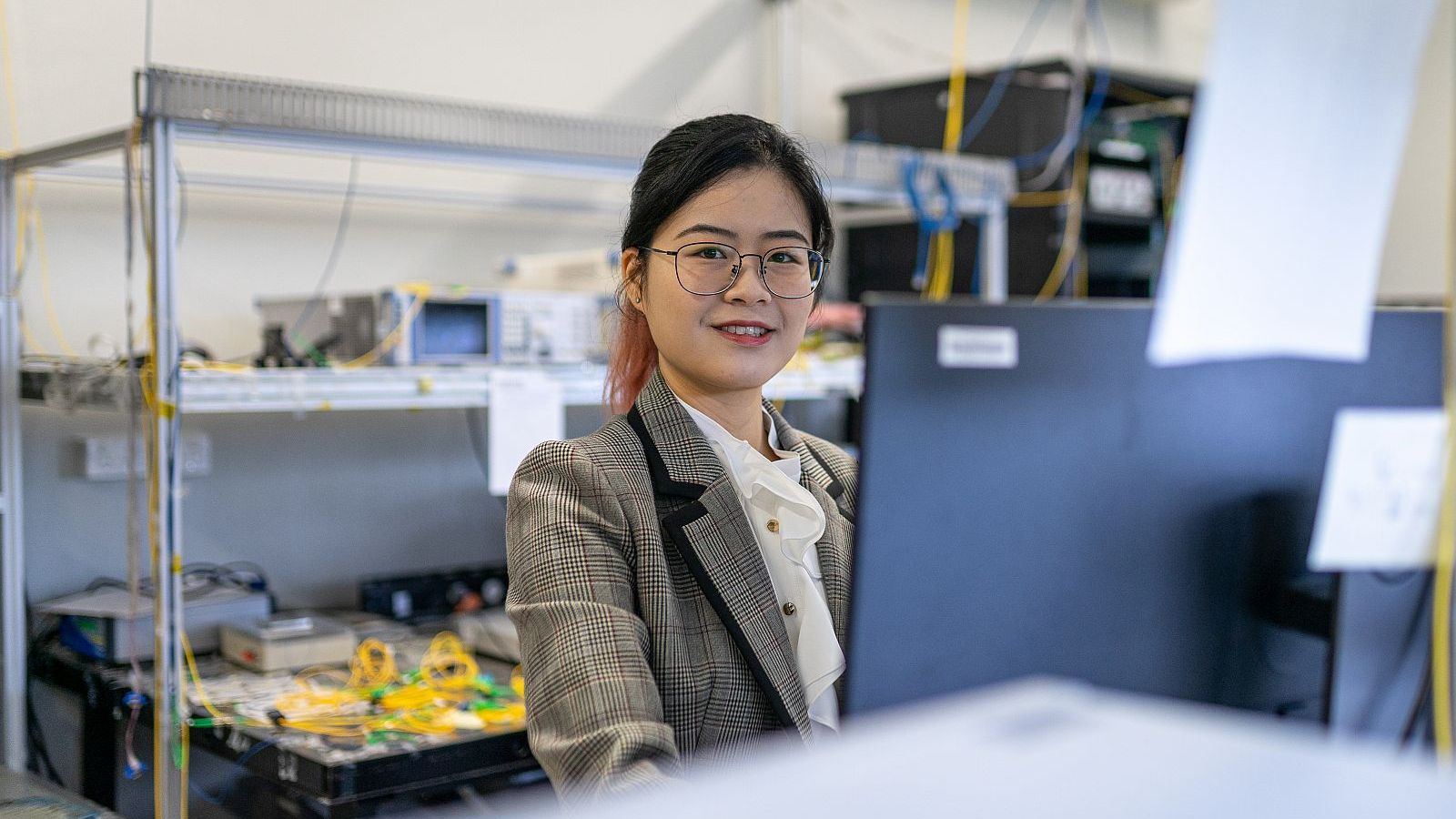
Xumeng Liu started as an undergraduate student curious about how electro-optical materials can be used for photonic circuit technology and became an inventor of the world’s first self-calibrating photonic-chip.
While studying for her Bachelor of Materials Engineering (Honours), Xumeng sought to globalise her research opportunities, by undertaking her first two years of study at Wuhan University of Technology (WHUT) in China and completing her degree at Monash University. Due to this, she graduated with two degrees awarded by both institutions through the collaborative 2+2 program.
This positioned her well to become a PhD candidate in Electrical and Computer System Engineering and conduct research into photonic integrated circuits (PICs) and their application in optical fibre communications systems such as adaptive optical equalisation. This optimises the digital and optical signal processes in optical communication systems when using ‘dial-up’ programmable PICs.
Xumeng’s PhD research opened the door to partnerships with many other academics and researchers from other institutions. She thanks her academic supervisor, Prof Arthur Lowery, an Australian Research Council Laureate Fellow and a leading researcher on PICs and optical communication systems, for his enthusiastic yet professional guidance through “profound research experience” and “academic insight”.
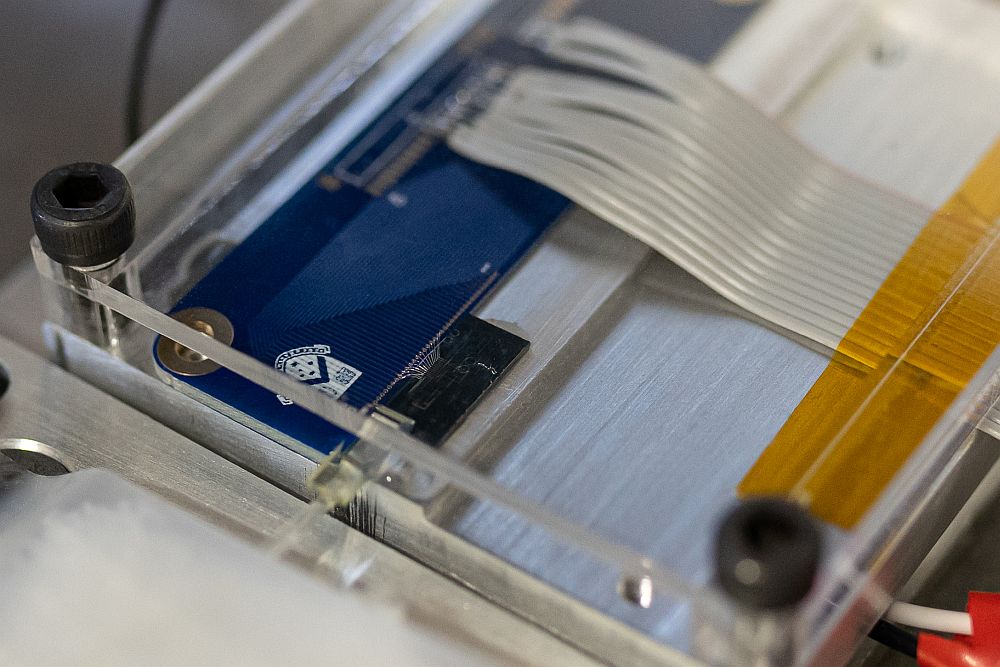
Optical chip
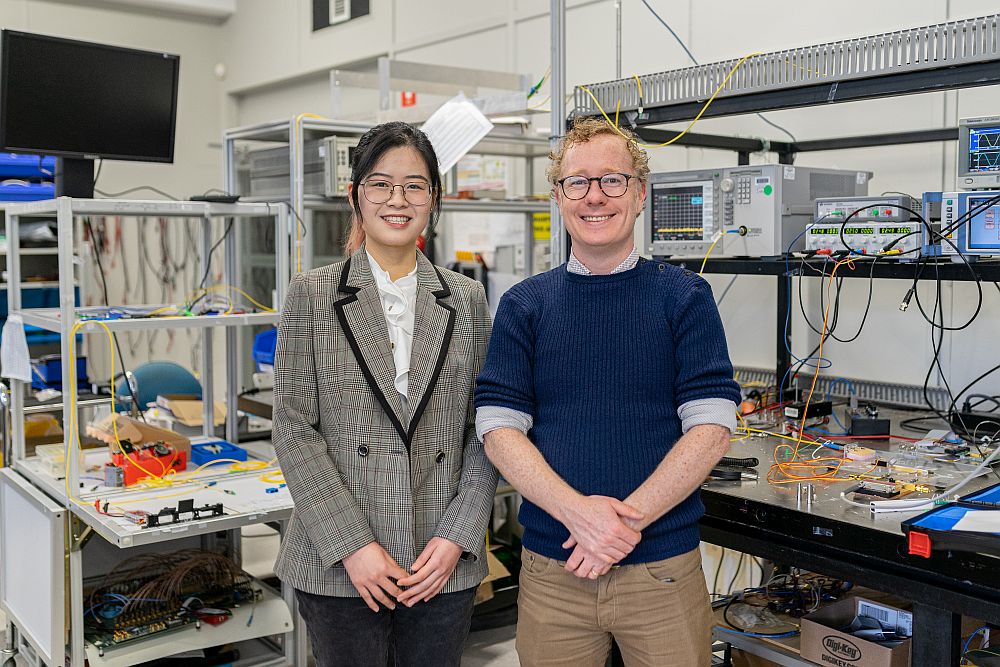
Xumeng Liu PhD student and Dr Bill Corcoran Electrical and Computer Systems Engineering Researcher and Senior Lecturer
Their collaborative research resulted in the world’s first self-calibrating photonic-chip. This paper-thin slice of silicon, smaller than the eye can see works as an interchange for optical data superhighways, instantly connecting and moving large amounts of data. According to Prof Lowery, self-calibration creates many real-world applications for tunable PICs, including “optical communications systems that switch signals to destinations based on their colour, very fast computations of similarity (correlators), scientific instrumentation for chemical or biological analysis, and even astronomy”. In our daily lives, this could be seen through AI that can more rapidly diagnose medical conditions or safer driverless cars capable of instantly interpreting their surroundings. This research was published in the internationally renowned academic journal Nature Photonics in July 2022.
After a phenomenal start to her research career, Xumeng hopes to continue contributing to valuable research by developing her professional knowledge at an industry-leading organisation and to keep searching for Melbourne’s best cup of coffee.
Read more about Xumeng’s research and creating the world’s first self-calibrating photonic-chip here.
Find out more about Bachelor of Engineering and Graduate Research degrees (PhD).