Membrane researchers nominated for prestigious Australian Museum Eureka Prize
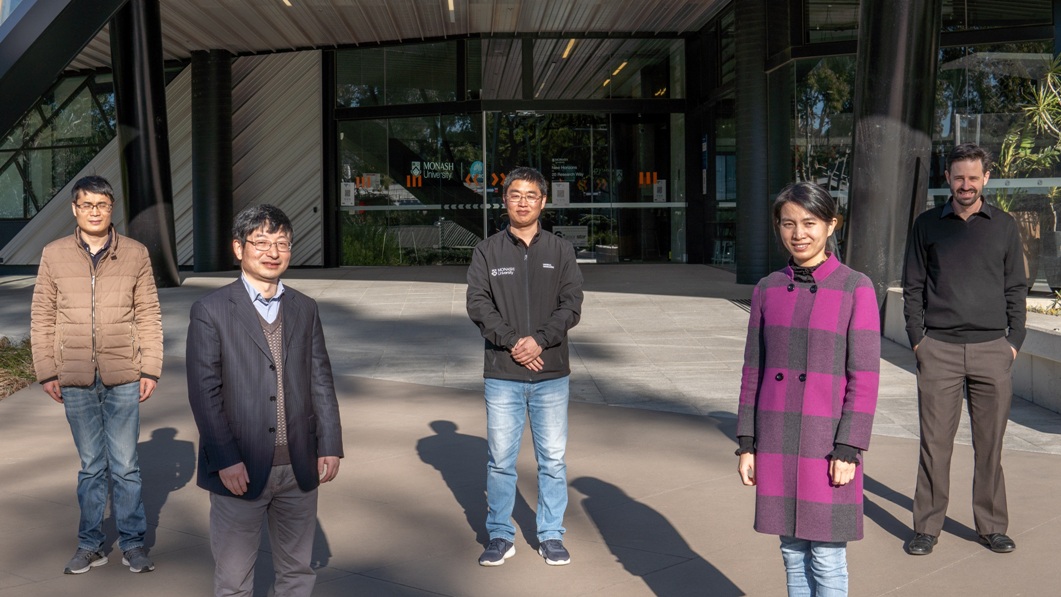
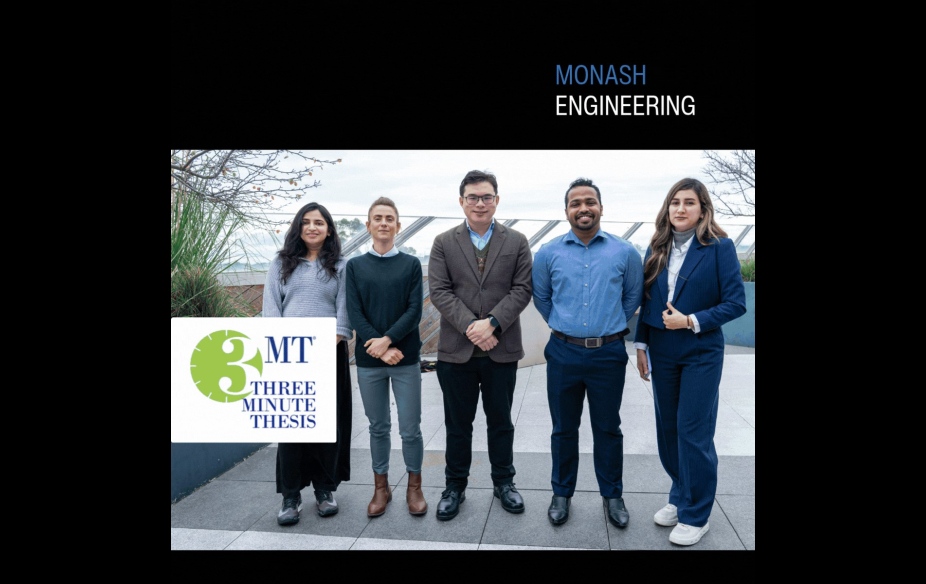
Eureka Prize team
A team of researchers led by Monash University has been nominated for the prestigious 2021 Australian Museum Eureka Prize for their groundbreaking work in developing a filtering technology that can extract lithium from brine faster than any other known method.
Nominated for excellence in research and innovation, the team is an international collaboration led by Monash chemical engineering professor and Australian Laureate Fellow Huanting Wang, with Professor Xiwang Zhang (Monash), Dr Huacheng Zhang (Monash and RMIT), Professor Matthew Hill (Monash University and CSIRO), Dr Anita Hill (CSIRO) Professor Benny Freeman (University of Texas at Austin), and Monash PhD students Jun Lu and Xingya Li also involved.
Inspired by the function of living cells, the team collaboratively developed a synthetic Metal-Organic Framework (MOF)-based membrane that is precisely tuned, in both size and chemistry, to filter lithium ions in an ultra-fast, one-directional and highly selective manner. This technology offers a vastly improved extraction method than the current slow evaporation process, whereby lithium brine is left to evaporate in large ponds using sunlight and harsh chemical additives, a process that can be environmentally damaging and take as long as two years to complete.
The team’s membrane technology has the potential to revolutionise lithium mining with vastly enhanced productivity and reduced environmental damage, offering a viable solution to the world’s growing demand for lithium to produce the batteries required for mobile devices, electric vehicles and renewable energy storage options. US-based company Energy Exploration Technologies, Inc. (EnergyX) has executed a worldwide exclusive license to commercialise the technology, and was recently valued at $300 million USD as a result.
Additionally, the team’s membrane technology could generate new opportunities in lithium-ion battery recycling. With more than 3300 tonnes of lithium-ion battery waste generated annually in Australia, a quantity that is projected to exceed 100,000 tonnes by 2036, the technology could make the lithium recycling industry technologically, environmentally and economically viable.
“We’re pleased and proud to have received the nomination for the Australian Museum Eureka Prize for our membrane technology, said Professor Huanting Wang. “The team has worked steadily together for many years to address the grand challenge in developing efficient membranes for ion separations, and we’re pleased that our results could lead to cleaner, faster and more sustainable lithium extraction in the future.”
“The nomination is a great recognition of the collaborative effort in the team, combining Monash and CSIRO’s expertise in material development with the University of Texas’ membrane and polymer expertise,” said Professor Matthew Hill. “We hope our combined efforts will make an important contribution to ensuring the world can access lithium efficiently, recycle our growing amount of battery waste, and have energy storage options that ultimately reduce our reliance on fossil fuels.”
“I’m honoured to be nominated for the prestigious Eureka Prize,” said Dr Huacheng Zhang. “We’re extremely fortunate to be able to work with outstandingly capable materials and membrane scientists and collaborate between institutions including Monash University, RMIT University, CSIRO, and The University of Texas at Austin. Our joint research activities will lead to the development of environmentally-friendly technologies for lithium extraction and toxic ion removal.”
Dr Benny Freeman said, “It’s a great honour to be nominated for this renowned prize and to have the opportunity to work with this outstanding team of materials science and membrane experts to address one of the grand challenges of our time, helping increase the efficiency of lithium extraction to accelerate progress towards sustainable, resilient, and reliable access to abundant, low-carbon renewable energy. The teams’ discoveries were enabled by the multidisciplinary scientific backgrounds of the team members, coming together to address unanswered basic science questions concerning the fundamental mechanism of ion transport in novel nanomaterials and polymers, and the team’s engineering expertise to demonstrate the utility of the research findings.”
Dean of Engineering Professor Elizabeth Croft said, “We are delighted to see our membrane researchers nominated for the Eureka Prize, a prestigious national science award. Membrane science and engineering is critical to innovation across mining, manufacturing, pharmaceutical research and development, food & agricultural production and wastewater management, and we are proud to see Monash engineering researchers and their colleagues at the forefront of innovation in this field.”
The winners of the Australian Museum Eureka Prize will be announced on 7 October 2021. For more information, visit their website.
Learn more about the team's work: