Our Best and Brightest: Meet Monash Engineering’s Fulbright Scholars 2025
Monash University celebrates six Fulbright Scholarship recipients this year, three of whom are from the Faculty of Engineering. Introducing distinguished awardees Professor Ranjith Pathegama Gamage FTSE, and PhD students Eddie Attenborough and Ravee Sainia.
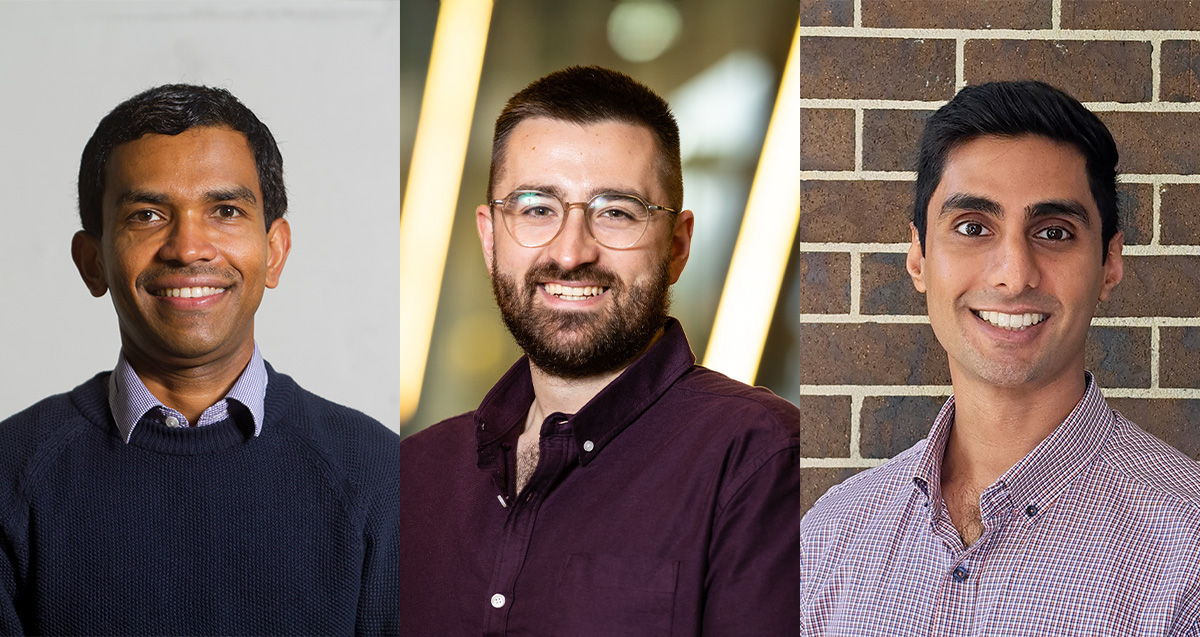
Left to right: Ranjith Pathegama Gamage FTSE, Edward “Eddie” Attenborough, Ravee Sainia
Professor Ranjith Pathegama Gamage FTSE
Director of International Affairs, Professor in Geomechanics Engineering, Department of Civil Engineering
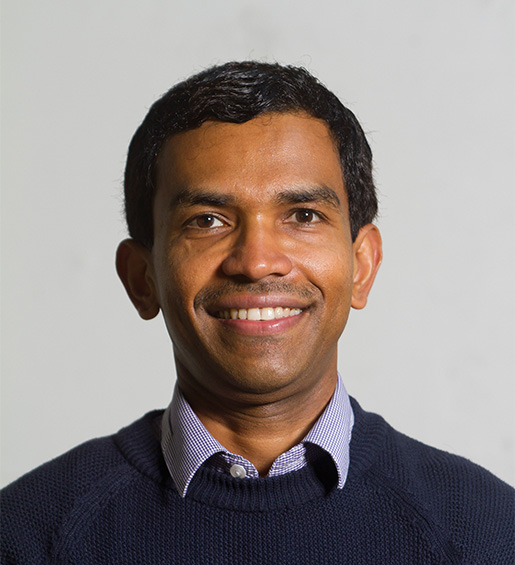
Project: Revolutionising Critical Mineral Extraction for the Renewable Energy Transition
Professor Ranjith is internationally recognised for his contributions to sustainable resource engineering. His work bridges the gap between academic innovation and real-world application, aligning with global Sustainable Development Goals (SDGs) and the urgent need for decarbonisation.
Over the past 20 years he has led groundbreaking projects in renewable energy, carbon sequestration, hydrogen storage and production, and waste-to-wealth initiatives, working closely with industry leaders such as BHP and Woodside.
Awarded The Fulbright Future Scholarship (Scholar), Professor Ranjith will advance his research at the Lawrence Berkeley National Laboratory (LBNL) in California.
His project "Revolutionising Critical Mineral Extraction for the Renewable Energy Transition," seeks to develop next-generation methods for critical mineral recovery using innovative technologies such as the Slow Releasing Energy Material Agent (SREMA).
This prestigious honour underscores his pioneering contributions to climate change mitigation, geothermal energy, and sustainable innovations in critical mineral recovery.
Of his award Ranjith says "I am deeply honoured to receive this Fulbright Scholarship which will provide me with the opportunity to spend several months at Lawrence Berkeley National Laboratory. This collaboration will enable me to work alongside leading scientists to develop groundbreaking solutions for next-generation critical mineral extraction, addressing a vital need for advancing renewable energy technologies.
Through this partnership, we aim to pioneer innovative techniques that minimize environmental impacts and promote sustainable practices in mining. This fellowship represents a significant milestone in my career, helping position Australia as a global leader in sustainable mining technologies and contributing to its energy transition goals."
Edward “Eddie” Attenborough
PhD Candidate, Department of Chemical and Biological Engineering
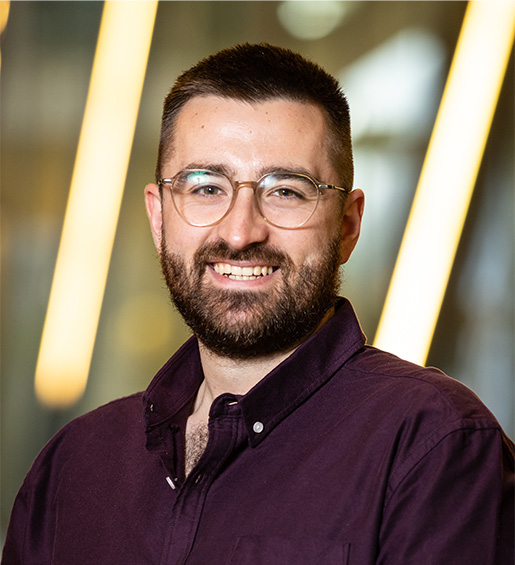
Project: Compostable biopolymer polyhydroxyalkanoate (PHA) films and biomedical composite materials, and their end of life
A chemical engineer and chemist at Monash University, Eddie’s areas of specialisation are food innovation, biopolymers, and waste valorisation.
In collaboration with Australian SME “Great Wrap”, he is currently completing his PhD in chemical engineering. Eddie’s research has focused on transforming food waste into compostable stretch wrap (also known as cling film).
Awarded a Fulbright Future Scholarship (Postdoctoral), Eddie will continue his research at the University of Alabama, Birmingham (UAB).
Entitled “Compostable biopolymer polyhydroxyalkanoate (PHA) films and biomedical composite materials, and their end of life”, Eddie’s research project combines key areas of bioengineering, polymer engineering and circular economy to utilise bacteria produced biopolymers, polyhydroxyalkanoates (PHAs), for development of functional films and biomedical composite materials.
For five months, he will research improving compostable biopolymer thin films for medical packaging applications, further develop PHA nanoparticles for drug delivery and for implantable devices, as well as look at PHA film degradation in ideal and non-ideal composting environments.
Eddie will work alongside Professor Mark Banaszak Holl, the Associate Dean for Research in the School of Engineering, and UAB's state-of-the-art mIRage-LS Microscope; one of only a handful in the world, which combines the functions of a microscope with IR and Raman spectroscopy at sub-micron scale.
He will also visit a variety of companies who make PHA's in the USA to facilitate knowledge transfer and learn from US expertise in PHA production and scale-up processes, allowing for the transfer of this knowledge to Australia to further develop our bioplastics industry.
“The Fulbright brings immense benefits to me and my work, with the research focused on answering some key questions in using PHA's as functional biomaterials, helping to further develop this non-toxic, marine biodegradable polymer for more wider-reaching applications,” Eddie said. “I am very excited and honoured to have received a Fulbright Scholarship to support this work and facilitate this academic and cultural exchange, and look forward to working with some fantastic researchers in the USA.”
Ravee Sainia
PhD Candidate, Department of Mechanical and Aerospace Engineering
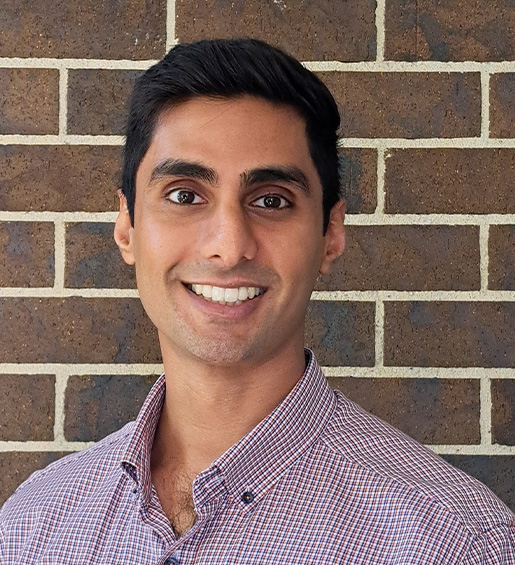
Project: Jet Noise Modelling
A PhD candidate researching aeroacoustics in the Shock Lab at Monash University, Ravee is studying the fundamental nature of jet noise. His research explores high-fidelity numerical data through the use of advanced data decomposition, to help explain why aircraft are so loud.
As a Fulbright Scholar (Postgraduate), Ravee will work alongside Assistant Professor Aaron Towne at the University of Michigan, in the Towne Flow Modelling and Control Lab.
As accessible and affordable air travel are integral to an increasingly connected global society, Ravee explained future aviation will rely on new sustainable technologies. “The barrier to their implementation is an unlikely one: noise. My Fulbright research aims to better understand jet noise, for a quieter next generation of aircraft,” he said.
“A tyranny of distance” is the description given to Australia’s geographical isolation and the consequent barriers to trade, tourism, and cultural exchange (Blainey, 1977). Efficient and affordable air transport resists this “tyranny” and is of particular importance due to Australia’s sparsely located major cities.
Sustainable aviation is a necessity to protect the climate, but it faces an unexpected barrier in the form of noise. Implementing environmentally friendly measures in aircraft requires the modification of flight paths. However, flight paths are strictly controlled by government regulations due to the harmful effects of aircraft noise. Jet noise is associated with several negative health consequences, including an increased risk of cardiovascular disease and mental health disorders. Solving the problem of jet noise would help provide sustainable flights to connect Australian communities.
Acknowledging his success, Ravee says “The Fulbright Scholarship is a tremendously exciting opportunity for me to foster new collaborations and learn from leading researchers in the US. The most important part of the experience will be the people I meet, the conversations I have, and the relationships I build. Senator William Fulbright’s view that “the essence of intercultural education is the acquisition of empathy” is one that deeply resonates with me. A Fulbright Scholarship is a chance for me to gain perspective through cross-cultural exchange, equipping me with the skills to face future challenges.”
The Fulbright Program has a rich history of supporting educational excellence and cultural exchange. "On behalf of the Faculty, I extend warm congratulations to this year's Fulbright Scholars," said Faculty of Engineering Dean, Yiannis Ventikos.
The flagship program will give participants the opportunity to forge new alliances and exemplify Monash Engineering's international reputation in research and collaboration.
"Our awardees are privileged to advance their research with distinguished scholars and institutions in the United States," Professor Ventikos said. "We wish our scholars every success with their projects and time abroad."