New graphene coating process makes mild steel not-so-mild when it comes to resisting corrosion
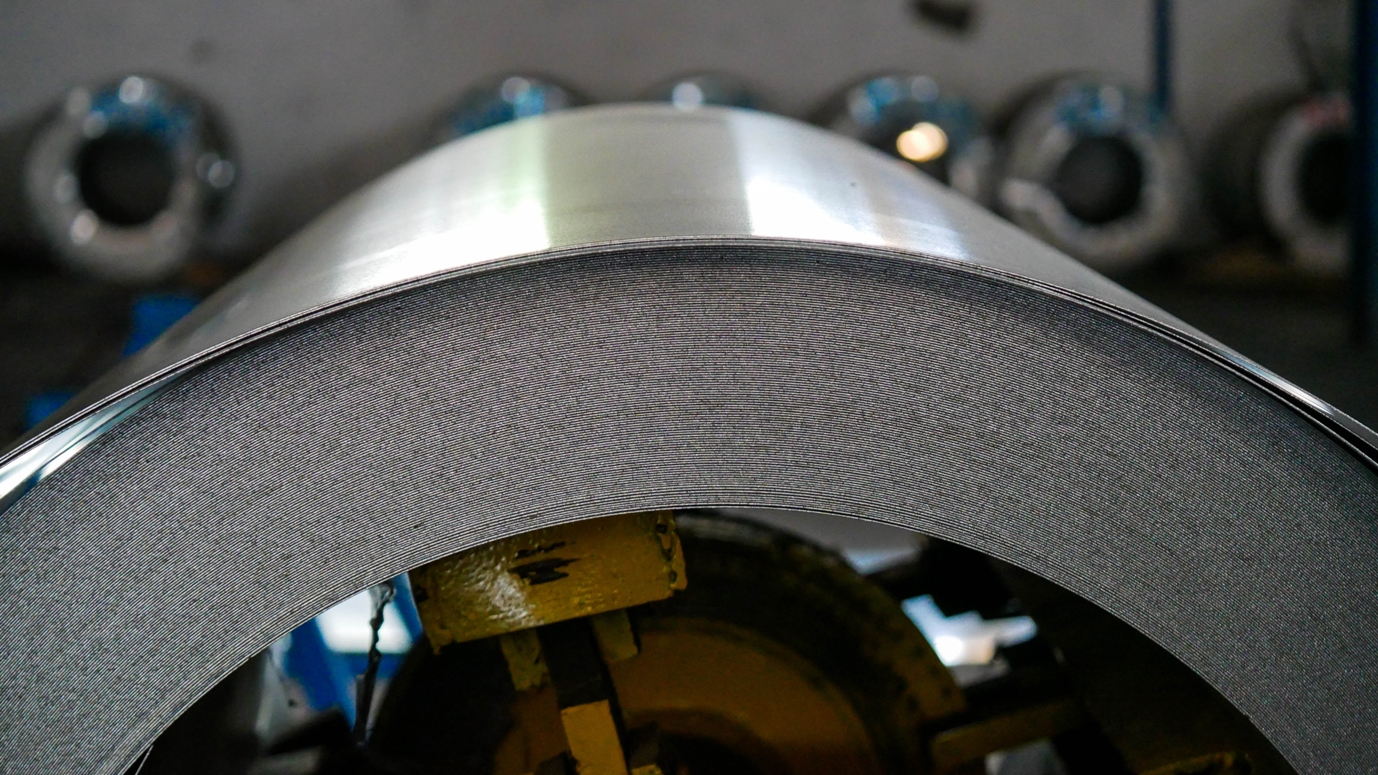
Engineering researchers at Monash University have produced exciting new evidence that a novel surface treatment combined with a thin coating of graphene - a form of pure carbon in a layer only a single atom thick - can provide remarkable long-term protection for mild steel against corrosion.
Led by Professor Raman Singh, who holds joint appointments in the Departments of Mechanical and Aerospace Engineering and Chemical and Biological Engineering, the Monash group has spent more than a decade investigating the effectiveness of ultra-thin graphene coatings to improve the corrosion resistance of a number of metals and alloys.
Mild steel is commonly used in a wide range of applications, including construction, manufacturing and machinery, due to its versatility, affordability, and strength, but preventing corrosion is vital to prolong its lifespan and maintain its structural integrity.
Earlier attempts to apply graphene directly to mild steel using the technique known as chemical vapour deposition (CVD) failed, explained Professor Singh, mainly because carbon is readily soluble in iron at high CVD temperatures (800-1000ºC) but is rejected excessively during post-CVD cooling, producing just carbon soot rather than graphene.
“Through an iterative process, we were able to identify a way to modify the steel surface using an inner layer of copper and an outer layer of nickel at just the right thicknesses to allow the formation of a uniform and robust multi-layer graphene coating,” said Professor Singh.
Tests using a highly corrosive chloride solution showed the graphene coating developed on top of this surface treatment improved the corrosion resistance of mild steel by two orders of magnitude, with lasting effect.
“Not only was this improvement sustained for the length of the entire test - more than 1000 hours - but we saw no trend for the corrosion resistance to decrease with time, so it could possibly be everlasting,” said Professor Singh.
“Mild steel is the most commonly used engineering alloy, so developing a workable process for coating it with graphene using CVD is very attractive commercially, but until now this has been very challenging.”
“We’re very excited that our research suggests we’ve been able to overcome those challenges.”
Professor Singh added that the surface treatment used to facilitate CVD graphene coating on mild steel is “generic” in nature, meaning it should also be applicable to other metal alloys.
The research paper, entitled “Remarkably Corrosion Resistant Graphene Coating on Steel Enabled Through Metallurgical Tailoring” is published in the interdisciplinary nanoscience journal Small: https://doi.org/10.1002/smll.202302498