High-speed rail promises faster, cleaner, intercity and interstate travel
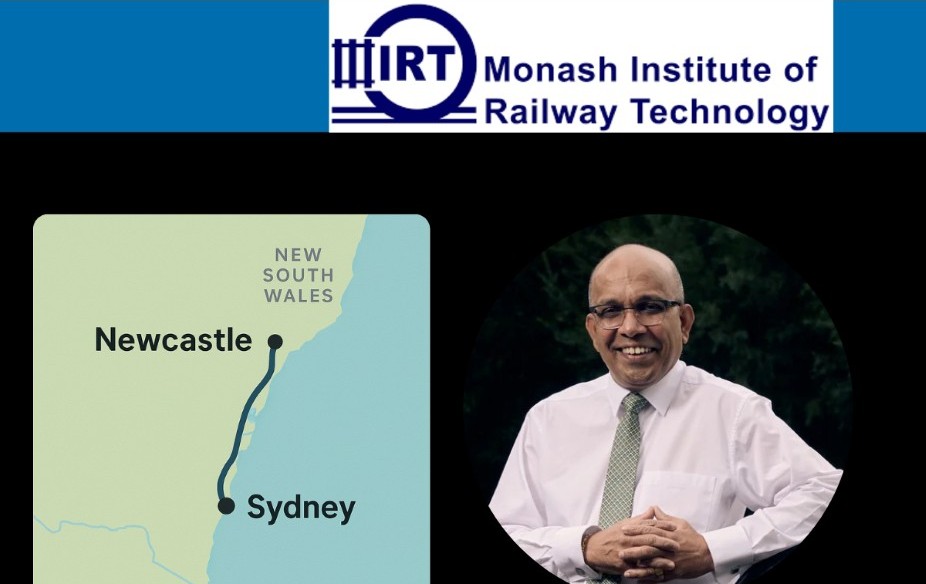
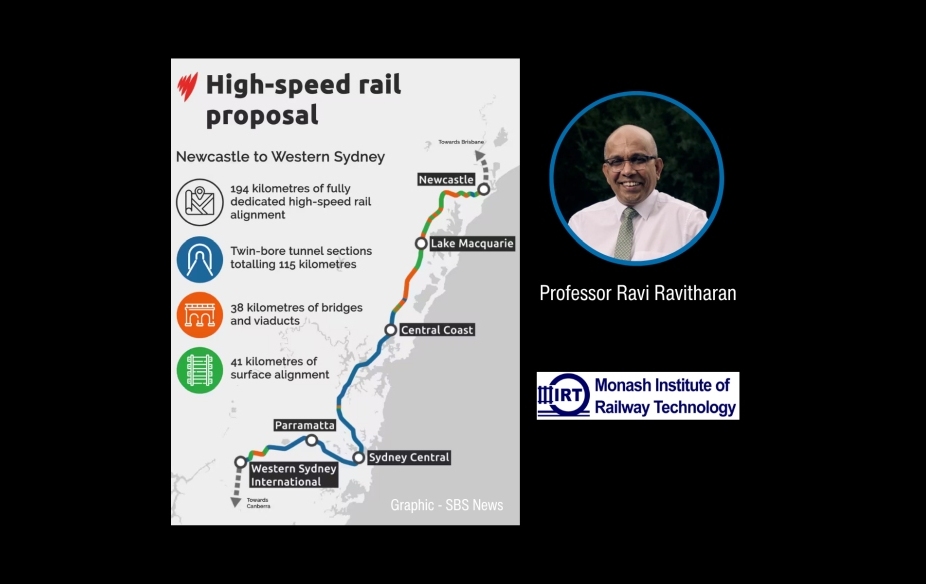
Australia’s long-discussed high-speed rail ambitions has returned to the headlines. The Federal Government has committed an additional $230 million toward the Sydney–Newcastle corridor’s development phase, with funding intended to make the project “shovel-ready” within two years.
Speaking with ABC Radio, Professor Ravi Ravitharan, Director of the Monash Institute of Railway Technology (IRT), said this current stage is focused on defining an engineering pathway.
“This is a development phase…looking at what sort of technologies [are] required, how the construction has to go ahead when it starts and give a clear idea of what other activities should happen to get this high-speed rail from Sydney to Newcastle,” he said.
Professor Ravitharan explained that high-speed rail differs fundamentally from existing heavy rail. “High speed rail is…up to about 320 kilometres per hour,” he said, noting the proposed dedicated line could cut travel time between Sydney and Newcastle from around two and a half hours to about one hour.
He noted the corridor is intended as a starting point for a larger eastern seaboard network linking Melbourne to Brisbane via Canberra and Sydney, arguing it could transform intercity and interstate commuting in Australia.
Professor Ravitharan added the system also offers climate advantages: high-speed rail can emit “about 1% of the carbon that is emitted by a flight for the same distance.”
If delivered, it would represent the closest Australia has come to a true high-speed passenger rail network, and potentially a major shift in how Australians move between cities.
Listen to the full interview here.