Mining and mineral recovery at a turning point

As South Australia considers lifting its decade-long moratorium on hydraulic fracturing in the state’s south-east, concerns about the environmental and social impacts of fracking have again moved to the forefront of public debate.
The proposal has reignited discussion around groundwater protection, water consumption, induced seismic activity and the long-term sustainability of unconventional gas extraction, with researchers increasingly examining alternatives to traditional hydraulic fracturing methods.
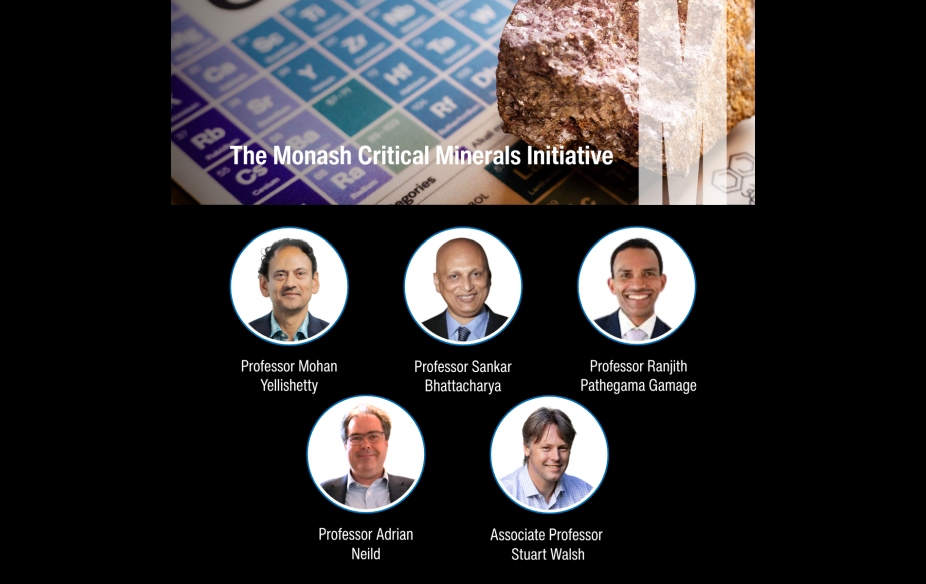
According to global mining expert Professor Ranjith Pathegama Gamage of Monash Civil and Environmental Engineering, the future of resource extraction will depend on developing technologies that reduce environmental impacts while maintaining energy security.
“Mining and mineral recovery are at a turning point globally,” Professor Gamage said.
“My focus has always been on developing technologies that allow us to access critical minerals and energy resources more safely, more efficiently and with far less environmental impact.”
Professor Gamage’s research explores lower-impact subsurface stimulation and resource recovery technologies, including approaches designed to reduce reliance on water-intensive fracking processes and minimise disturbance to surrounding geological systems.
“If we are serious about net zero and long-term resource security, we must fundamentally rethink how we mine and how deep-Earth systems are used,” Professor Gamage said.
Listen to an interview with ABC Radio here.