Leah Barrett
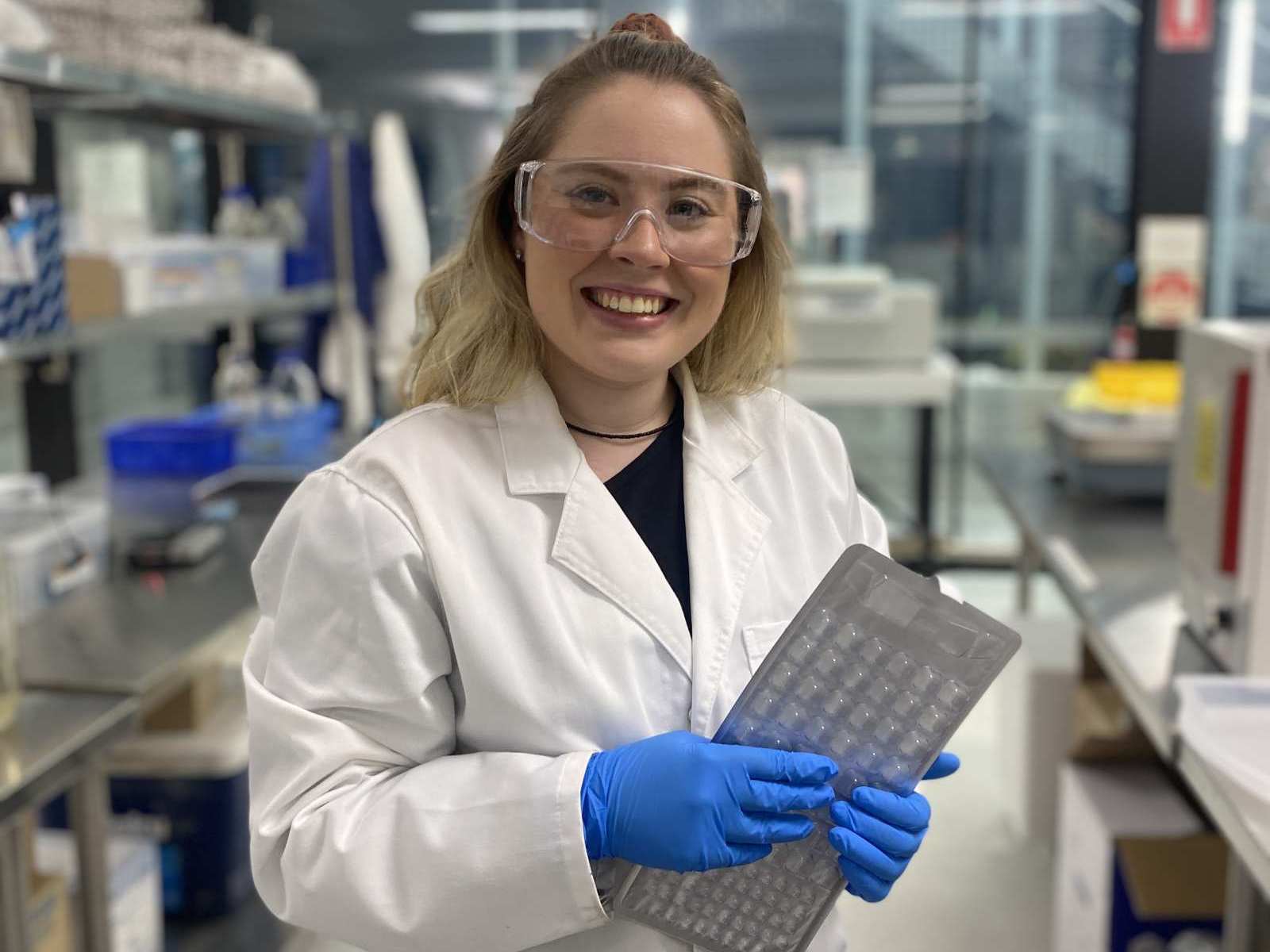
Identifying environmental faecal contamination: Data-driven solutions to improve environmental health outcomes worldwide
Leah Barrett | PhD Candidate, Civil Engineering
A native of South London, Leah Barrett has a longstanding fascination with problem-solving and science. She recognises the deep relationship between physical geography and the sciences, a focus that has fundamentally guided her academic research.
Leah completed a Bachelor of Science (Hons) in Geography at the University of Brighton and says, “Geography was the perfect fit, allowing me to continue studying science while gaining lab skills, fieldwork experience, and insights into the environment and human behaviour.”
Receiving the University of Brighton Vice-Chancellor’s Alumni Scholarship in 2019, she went on to complete a Master of Science in Geographic Information Systems (GIS) and Environmental Management.
In 2021, she won the University of Brighton Environmental Award for her thesis “Using advanced spatial data analysis and microbial source tracking to create a framework for water quality and pollution source identification.”
Real-World Data to Model Water Quality: A Targeted Approach
Of her master’s thesis, Leah explains the impact of COVID-19 on her studies. “I couldn’t conduct fieldwork or access laboratory facilities. Instead, I pivoted to working with historical water quality data and developed a predictive tool using GIS software. My project focused on modelling water quality in a catchment in southeast England and validating the tool using real-world data,” she said.
“This was when I first started working with microbial source tracking (MST) which is now the basis for my PhD. Unlike my undergraduate research, which relied on E. coli as a general indicator of faecal contamination, my master’s project incorporated human-specific faecal markers, allowing for a more targeted approach to identifying pollution sources.”
Research Reframed: Monash RISE Program
Searching globally for funded PhD opportunities, Leah found a funded project with Melbourne Water at Monash University. She applied in 2020 and – due to COVID and visa-related challenges - arrived in Australia two years later.
By that time, the funded Melbourne Water project had concluded. Leah explains “In my first week I had to rethink my research focus - that’s when I discovered the Revitalising Informal Settlements and their Environments (RISE) program, which ultimately shaped my PhD.”
Real-World Data, Real-World Impacts
“My work focuses on identifying environmental faecal contamination. Understanding faecal pollution is crucial - once we know where it’s coming from, we can build infrastructure or implement strategies to stop it from getting there in the first place,” she says.
Universal tests often fail to accurately identify contamination sources because factors like diet, climate, and local sanitation practices significantly shape the microbial makeup in each region, making it crucial to develop and validate MST (microbial source tracking) markers tailored to these unique conditions.
Research Findings
On 6 February 2025, lead author Leah and her team’s research - Beyond borders: A systematic review and meta-analysis of human-specific faecal markers across geographical settings - was published in Environmental Science and Technology.
Leah says “This research has real-world impacts. Faecal contamination in the environment leads to the spread of diseases, particularly diarrhoeal illnesses, which kill over 440,000 children under five and more than 1.2 million people every year. By improving our ability to track and manage this pollution, we can help protect vulnerable communities, reduce illness, and ultimately save lives.”
“I know I can’t solve the entire problem on my own, but the idea that my research could contribute to real change — whether by improving detection methods, influencing policy or guiding infrastructure development — drives me every day.”
Find out more about the Bachelor of Engineering (Honours) degree and Civil Engineering and what it’s like to study engineering at Monash.