Development of an Active Lower Limb Exoskeleton
Development of an Active Lower Limb Exoskeleton
Project overview
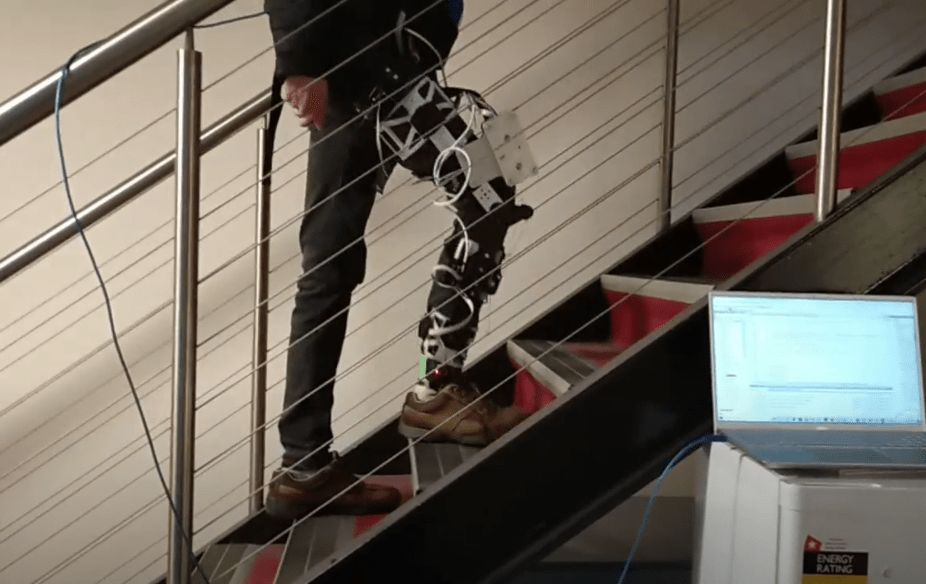
This project aims to address the imperative need for an effective, lightweight knee exoskeleton to assist individuals with mobility issues. In recent decades, there has been an increase in attention to walking assistive devices and wearable robotics.
While there are existing applications for industrial workers and neurologically impaired patients, there are still a lot of technical challenges to applying this technology to broader applications. This project emphasises the critical importance of maintaining proper exoskeleton-human interaction, encompassing design, control systems, and actuator considerations. In this project, a lower limb exoskeleton that ensures user effectiveness, accuracy, and comfort while responding to the wearer's motions and intentions will be developed.
Additionally, the project will focus on developing a real-time algorithm using machine learning techniques, specifically deep neural networks, to detect gait phases and transitions between activities from body motion data. Various sensor information will be collected and analysed.
The anticipated outcomes encompass a lightweight exoskeleton design and an innovative gait phase detection system, marking substantial progress in assistive technology and offering improved quality of life for individuals facing mobility challenges.
This project seeks to bridge existing gaps in the field and contribute to the advancement of active lower limb exoskeletons, catering to a broader range of applications and user needs in daily life.