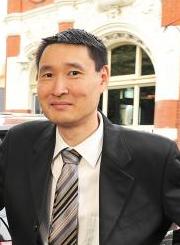
Dr. Gary Au
Dr. Gary Au
Dr Gary Au is an Adjunct Senior Research Fellow in Civil Engineering at Monash University applying artificial intelligence to enhance the performance of transport systems.
Traffic congestion
One research projects uses both real and synthetic data for training supervised deep learning object detection algorithms such as YOLOv9 (https://github.com/WongKinYiu/yolov9) and Facebook AI Research’s Detectron2 (https://github.com/facebookresearch/detectron2) to detect, classify, track and reidentify vehicles on road networks in real-world video imagery across multiple cameras. In this research the characteristics of synthetic data are identified to enhance correct detections and classifications and minimise false positives across real-world congestion, weather and lighting conditions. The overall aim of this work is to understand how traffic congestion emerges and evolves over time, so that congestion mitigation strategies can be developed.
Route optimisation, road pricing and parking simulation
Another research project involves route optimisation. This work explores parking behavior using SUMO, the Simulation of Urban Mobility (https://github.com/eclipse-sumo/sumo) and the minimisation of cruising in parking using different search strategies.
In addition to developing agent-based simulations to explore travel and parking behavior, he also conducts long-term empirical studies on the economic impacts of parking pricing; and studies dynamic parking pricing.
Of related interest is using AI to develop road pricing protocols for optimising traffic flow.
Transport Psychology
In transport psychology, he has studied prospect theory and decision making under risk and uncertainty.
Organisational Psychology
Other broader interests include researching the impact of AI on work design and organisation including job displacement and the creation of new job roles. For the transport industry, this includes the introduction of autonomous vehicles including driverless trucks and robotaxis, the education and skills required to safely manage AI-based transport systems in transport agencies, and more broadly the strategic workforce planning required to support a transition to an AI-based working world.
He received his BSc (with Honours) degree (1994) and his two PhDs (Physics (1996) and Psychology (2013)) from The University of Melbourne.
Qualifications
- B.Sc (Hons), University of Melbourne
- Ph.D (Physics), University of Melbourne
- Ph.D (Psychology), University of Melbourne
- Graduate Certificate in Scientific Leadership, University of Melbourne
- Graduate Certificate in Human Factors, Queensland University
Expertise
- Artificial intelligence (deep machine learning)
- Parking
- Prospect theory and decision making under risk and uncertainty
- Route optimization and scheduling
- Social and organisational psychology and workforce impacts of AI
Vu, H. L., Au, G., Nguyen, C., & Lai, R. (2020). Real-time traffic congestion monitoring using internet traffic imagery and deep learning. Transportation Research Board Annual Meeting January 12 – January 16, 2020, Washington, DC.
Au, G., & Young, W. (2016a). The impact of the introduction of paid parking at a local retail precinct: A case study of the Yarraville Village paid parking scheme. ARRB Conference, 27th, 2016, Melbourne, Victoria, Australia. https://engit.monash.edu/profiles/wp-content/uploads/2018/06/2016_Au.pdf
Au, G., & Young, W. (2016b). A users’ perspective of paid parking at a local retail precinct. Australasian Transport Research Forum (ATRF), 38th, 2016, Melbourne, Victoria, Australia. https://australasiantransportresearchforum.org.au/wp-content/uploads/2022/03/ATRF2016_Full_papers_resubmission_8.pdf
Sonenberg, N., Au, G., & Taylor, P. G. (2015). A queueing model for the capacity planning of a multi-phase human services process. International Journal of Systems Science: Operations & Logistics. http://dx.doi.org/10.1080/23302674.2015.1015660 https://engit.monash.edu/profiles/wp-content/uploads/2018/06/A-queueing-model-for-the-capacity-planning-of-a-multi-phase-human-services-process.pdf
Au, G. (2014). pt: An R package for Prospect Theory. R package version 1.0. https://rdrr.io/github/gary-au/pt/man/pt-package.html
Au, G., & Kashima, Y. (2009). Do the micro cognitive and communicative processes constrain group formation? Simulating Eastern and Western social cognition and group formation. 18th World IMACS / MODSIM Congress, Cairns, Australia 13-17 July 2009.
http://mssanz.org.au/modsim09/H4/au.pdf
Au, G., Goss, S., Heinze, C., & Pearce, A. R. (2001). Rescuemodel: A multi-agent simulation of bushfire disaster management. In P. Stone, T. Balch, G. Kraetzschmar (Eds.) RoboCup 2000: Robot Soccer World Cup IV. Lecture Notes in Computer Science (LNAI volume 2019) (pp. 285-290). Springer Berlin Heidelberg. https://engit.monash.edu/profiles/wp-content/uploads/2018/06/RescueModel-A-Multi-Agent-Simulation-of-Bushfire-Disaster-Management.pdf
Au, G. (1995). The quest for quantum gravity. arXiv preprint gr-qc/9506001. https://arxiv.org/abs/gr-qc/9506001
Au, G., & Spence, B. (1995). Hamiltonian reduction and supersymmetric Toda models. Modern Physics Letters A, 10(29), 2157-2168.
Au, G., & Spence, B. (1994). Covariant phase space formulations of superparticles and supersymmetric WZW models. Modern Physics Letters A, 9(27), 2469-2480.
Supervision
PHD
Cuong Nguyen
Deep Learning Transport Applications
2018 to 2020