
AI in nature: The new era of sustainability
AI in nature: The new era of sustainability
Watch the replay
Artificial intelligence and the natural world can have a powerful synergy to reshape the impact of technology, accelerate sustainability outcomes and greatly strengthen conservation efforts.
Join us for an eye-opening showcase of projects that push boundaries – exemplifying new and creative ways that AI is being applied in nature.
We’ll explore initiatives that are:
- tracking bee pollination patterns for better food security
- monitoring unique bird calls to infer population health in a non-invasive and scalable way
- predicting precipitation at fine scale across Australia from earth observations
- consolidating Australia’s biodiversity data from multiple sources, making it accessible and reusable for research and decision-making.
This event will also feature a panel session that will share key perspectives from a range of experts and insights from collaborative projects with organisations such as the Department of Energy, Environment and Climate Action, Bush Heritage Australia, The Atlas of Living Australia and more.
It’s a great opportunity to engage early and be part of a collaborative approach to sustainability. If you’re looking to partner or contribute to these exciting projects – or begin one with experts in the space – this is where the conversation starts.
Speakers
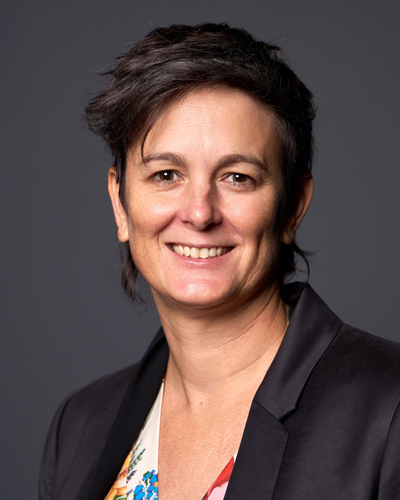
Professor Iadine Chades
Director, Environmental Informatics Hub
Professor Chades is a Professor of AI and a leading researcher in decision-making under uncertainty, developing algorithms that determine what actions to take, where to intervene, and when to act. Her work has advanced the management of endangered and invasive species, disease control, and adaptive monitoring using interpretable, trustworthy AI. She also advocates for a globally coordinated approach to AI for biodiversity to maximise real-world environmental impact.

Professor Bernd Meyer
Deputy Director, Environmental Informatics Hub
Professor Meyer’s work is predominantly on mathematical and computational models of social insect behaviour, amoeboids, and bacteria. He also works on nature-inspired algorithms derived from this, specifically for optimisation and swarm robotics.

Professor Alan Dorin
Lead Food, Environmental Informatics Hub
Professor Dorin researches the ways in which technology assists discovery in the ecological sciences and in human creativity. Through his work in Artificial Life and ecological simulation, he explores the key attributes of organisms that enable them to live in complex environments. This knowledge is used to improve agriculture and horticulture, and to assist us in maintaining natural ecosystems.

Associate Professor Ailie Gallant
School of Earth Atmosphere and Environment, Faculty of Science
Associate Professor Gallant's research focuses on drought, and precipitation variability and precipitation extremes. Her work characterises variability and trends in characteristics of drought, extreme precipitation, and extreme heat using observations and climate models. Her past work has also included palaeoclimate investigations to place recent droughts in a longer-term context.

Associate Professor Vanessa Wong
School of Earth Atmosphere and Environment, Faculty of Science
Associate Professor Wong’s research explores the spatial and temporal interactions between soils, sediments and water at a range of scales. She is interested in the role of soil-surface water-shallow groundwater processes ranging from the micron scale to the landscape scale in landscape function, and seeks to understand how these biogeochemical processes occur in a range of environments.