
From Code to Cure: AI in Modern Medicine
From Code to Cure: AI in Modern Medicine
Watch the recording
Artificial intelligence is transforming how we deliver healthcare and design new medical solutions. At the Faculty of IT, we’re harnessing that power through our new AI in Health initiative.
Led by Professor Enes Makalic, this interdisciplinary initiative brings together our best AI researchers with one goal: to solve real challenges across the entire health spectrum – from clinical medicine to pharmacy. Professor Makalic will introduce the initiative and share its new AI platform, built to accelerate discovery and create real-world impact.
You’ll also hear directly from Monash researchers leading this work and discover four key projects that showcase the breadth of innovation already underway:
- AI and cancer genomics
- Deep learning for biomolecular interactions
- Federated learning in digital health
- Beyond "Hospital + AI": The Rise of the AI Agent Hospital
With the launch of Monash MAVERIC, this Monash Tech Talk is the moment to spark new collaborations across disciplines and industries. Join us, bring your ideas, and be part of shaping the future of healthcare.
Speakers and presentations

AI for smarter breast and brain cancer screening
Professor Enes Makalic
This presentation explores how AI is advancing cancer research and solutions in breast and brain cancers. For breast cancer, this talk will showcase research using machine learning to develop a novel, fully automated breast cancer predictor based on mammographic analysis.
By combining mammographic density with textural image features, we have developed predictive models that generate personalised risk measures. Our findings demonstrate that these automated approaches predict breast cancer risk more accurately than conventional mammographic density measures.
For brain cancer, this presentation introduces an Australian initiative to build the first national registry of families with multiple glioma cases, paving the way for better risk prediction and personalised care. Glioma is a rare and aggressive brain cancer with limited treatment options and a poorly understood genetic basis.
Building on models from breast and prostate cancer research, the project will collect extensive clinical and biological data to uncover inherited risk factors, as well as integrate AI with genome-wide association studies and polygenic risk scores. Our recent work has already identified rare inherited variants that significantly contribute to glioma susceptibility, beyond known syndromes like Li-Fraumeni and Neurofibromatosis.

Deep learning for predicting biomolecular interactions
Professor Geoff Webb
Predicting how small molecules interact with proteins is a key challenge in drug discovery, especially when structural information is lacking. Existing approaches often require detailed protein structures and offer limited interpretability.
We introduce PSICHIC, a graph neural network that efficiently learns the patterns of protein–molecule interactions using only sequence data. By integrating core physical and chemical constraints, PSICHIC achieves top-tier performance in predicting binding strength and provides interpretable insights into the mechanisms behind these interactions.
Our findings demonstrate that sequence-based AI models can match—and even surpass—traditional structure-dependent methods, pointing to a new era of speed and insight for AI-driven drug discovery.
Federated learning in digital health
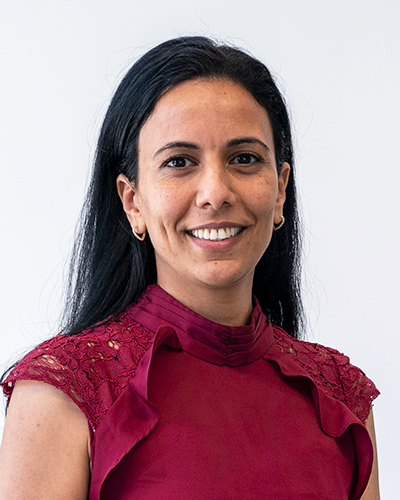
Dr Yasmeen George
Healthcare data is often siloed across institutions and jurisdictions, limiting opportunities to build robust AI/ML models for disease diagnosis and risk prediction. Centralised repositories promise scale but face significant legislative barriers to data sharing and privacy concerns, limiting access to this data.
We build a federated learning platform that allows AI model learnings to be gained from health data across organisations and states without attempting traditional integration. By training AI models locally and iteratively across different sites, this platform preserves data privacy while scaling-up the knowledge.
Beyond "Hospital + AI": The Rise of the AI Agent Hospital
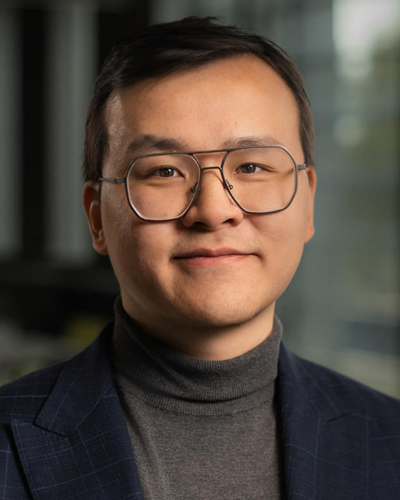
Associate Professor Zongyuan Ge
Medical AI is currently stuck in a static ‘tool’ phase. But not for much longer.
We propose a revolutionary shift to the AI Agent Hospital where agents can inhabit virtual hospital simulation and autonomously reason, collaborate and evolve – unlike traditional models that can only predict.
By validating Foundational Models in a rapid "simulation-to-clinic" pipeline, we are building the next generation of medical intelligence: Systems that don't just analyse data, but actively partner with clinicians to solve complex healthcare challenges.