
Teaching that changes lives: Dean’s Awards for Education Excellence
The Monash University Faculty of Information Technology's 2025 Dean’s Awards for Education Excellence recognise exceptional teachers and educational support programs in the Faculty.
‘Outstanding teaching changes lives. This year’s recipients raise the bar with research-informed, student-centred practice and a deep commitment to equity and belonging,’ said Professor Jean-Guy Schneider, Deputy Dean (Education) at the Faculty of IT.
This year, the Faculty celebrates eight individual and two team winners across five categories.
Small Group Teaching Award
This category recognises individuals that teach small format classes such as sessional academics and assistant lecturers.
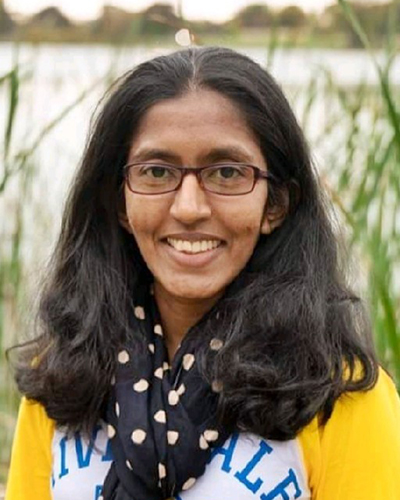
Sachinthana takes a student-first approach to support learners in complex theoretical units, especially those registered with Disability Support Services (DSS). She mentors DSS students using tailored study plans with check-ins after about two weeks. Students report tangible gains, including one mentee who moved from aiming for a pass to achieving a High Distinction.
In class she uses an active problem-solving model where students attempt a solution, then refine it through counter-examples, mirroring real software-engineering interviews. She also supports large units with additional marking and review to ensure timely results. Over the past year she mentored about ten DSS students and taught across seven units.

Farheen fosters inclusive, student-centred learning. She uses post-class QR pulse checks, activity timers and Mentimeter to lift pace and participation; addresses students by name with targeted feedback; and brings inclusive resources such as her podcast Here, Queer, Everywhere!
She mentors students through co-created learning plans and regular check-ins, triangulating mid-semester Google feedback with iSETU so current cohorts benefit immediately. Support continues after class via career advice, CV reviews and recommendation letters, backed by endorsements from students and unit leaders.
In class she runs practice-first activities and realistic role-plays (project manager–software designer) to link theory to professional practice. Since August 2022 she has taught across six units and mentors new staff through the Peer Observation Program.

As tutor for FIT3178 Advanced Database Design, Jinchun leads engaging, student-centred labs that use quick PollEV competitions to motivate participation within a supportive atmosphere. Outcomes are outstanding, including a 99 per cent SETU satisfaction score – well above the Faculty average – and similarly strong results in other units.
She helped redesign FIT3176 labs to replace toy examples with real-world datasets tied to weekly equity, diversity and inclusion themes (for example gender diversity, Indigenous children in out-of-home care, mental health and gender-based violence). Jinchun played a crucial role finalising datasets, questions and guidance so they were rigorous and respectful – an approach more than 80 per cent of students rated positively.
She was subsequently invited to join a multi-university ACDICT-funded project on embedding EDI in computing curricula and now collaborates with peers from six universities.
Kite’s teaching maintains academic rigour while making cybersecurity accessible. He creates a classroom where questions are welcomed, provides individualised guidance and builds student confidence. He breaks complex concepts into methodical steps and uses a varied toolkit – including real-world incident scenarios, concept maps and structured activities – to help students connect ideas.
His success is demonstrated through a recent SETU score of 89/100 (above the Faculty average), twelve student nominations for the Education Excellence Award across 2023–2024, and selection to teach across multiple cybersecurity offerings.
Citation for Outstanding Contribution to Student Learning
This category recognises individuals or teams with chief examiner, unit coordinator, lecturer, or unit administrator roles that have had sustained impact for two, three or more years.

In 2024 Dr Pierce took over FIT2107 Software Quality and Testing – one of the Faculty’s lowest-rated units – and rebuilt it end-to-end. Within a semester, SETU rose 19.8 per cent from 3.06 to 4.05, the first time the unit has scored above 4.
The redesign applied constructivist, student-centred, active and reflective principles: fully rewritten content, constructive alignment, an industry-informed topic sequence and applied sessions that cycle from discussion to practice to reflection. She removed invigilated tests and introduced tester-vs-“machine” role-plays to build critical thinking.
Dr Pierce will showcase her practice in the Faculty’s Universal Design for Learning video series, and her role-play work has been accepted at ITiCSE 2025, the premier European computing-education venue.
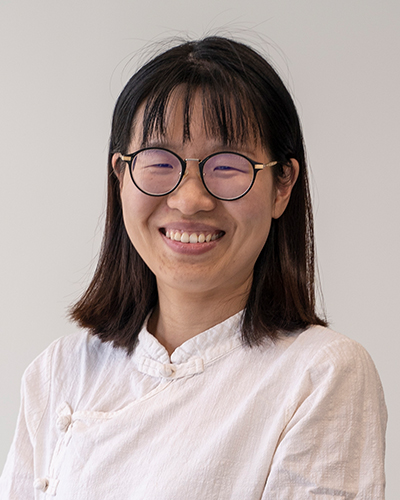
As Chief Examiner and lecturer for FIT5163 Introduction to Cryptography for Cybersecurity over the past four years, Dr Cui has led a high-impact redesign resulting in an average SETU of 4.14.
Guided by a “less-is-more” philosophy, she prioritises core concepts and cuts unnecessary content. She added a programming-focused component for hands-on learning and uses active strategies – including interactive polling, role-play and in-class group exercises – with visual aids to clarify complex mathematical ideas.
In response to student demand for industry-aligned skills, she replaced a research-heavy model with in-class exams that emphasise analysis over recall, while retaining a smaller research project on cutting-edge topics so students can keep up-to-date with emerging cybersecurity trends.

FIT9131 Unit Teaching Team
Professor Judithe Sheard, Dr Rebecca Robinson, Ravish Goyal and Tim Ho
In 2022 the team transformed FIT9131 Foundations of Programming from a traditional teacher-centred format to a flipped, active-learning model. They updated learning outcomes, restructured content and rewrote all teaching, assessment and support materials.
Complementing the new student-centred approach, the team also shifted away from heavily-weighted final exams to in-semester assignments to encourage authenticity and sustained learning. To address plagiarism in the generative-AI era, the team adopted new strategies that emphasise education and encouragement over detection and punishment.
Since the redesign, student results and attendance have improved, and overall SETU satisfaction now sits well above the Faculty average.
Innovation in Learning and Teaching
This category recognises individuals or teams with leadership, chief examiner, unit coordinator, or lecturer roles that have had sustained impact for two, three or more years.

Dr Chen, a researcher in Learning Analytics and AI in Education, brings advanced technologies into the classroom to lift outcomes. In FIT5145 Foundations of Data Science, he embedded a generative-AI chatbot to scaffold ideation and critical inquiry, helping students iterate on ideas and sharpen information-seeking skills.
He also prioritises timely support. He led the development of a predictive machine-learning model that flags at-risk students and sends targeted feedback emails in Weeks 5 and 8. With more than 60 per cent of students finding the guidance helpful, he built Edvance, a learning support tool that integrates predictive, prescriptive, and generative AI to enhance the student experience. Edvance will be launched across Monash this year.
Teaching Excellence
This category recognises individuals or teams with leadership, chief examiner, unit coordinator, or lecturer roles that have had sustained impact for two, three, or more years.
The Games and Immersive Media team
Associate Professor Thomas Chandler, Josh Olsen, Rick Laird, Min Dubery, Venice Cheung, Scarlett Noorman, Mike Yeates, Michael Neylan, Bennett Owen, Nic Pallant, Jason Haasz, Nicole Leaw, Lucy Robertson-Bell and Rebecca Fleming
Since the 2022 redesign and 2023 launch of the Games and Immersive Media major, results have been outstanding. Average SETU is 4.51 across all units. Graduates have secured roles at Ubisoft and Microsoft. The teaching team is 50 per cent women, and enrolments have doubled in key units such as FIT1073 Game Design and FIT2096 Games Programming.
A coherent, industry-aligned curriculum underpins this success, with each unit contributing to an authentic folio that prepares students for work from day one. Capstone enrolments have rebounded from 40 in 2019 to over 80 per year, and around 30 per cent of enrolments in FIT1033 Intro to 3D and FIT1073 Game Design come from outside IT. Collaboration with the Sir Zelman Cowen School of Music brings original scores to final-year games, and accessibility is built in through multimodal materials and continuous feedback.
Educational Leadership
This category recognises individuals with educational focused leadership roles that have had sustained impact for three, or more years.

Associate Professor Matthew Butler
Associate Professor Butler shows sustained commitment to quality education through both formal leadership and ongoing initiatives. As Associate Dean (Learning and Teaching) from 2018 to 2020 and Deputy Dean (Education) from 2020 to 2022, he led the pandemic shift online, set portfolio strategy, launched the FIT Unit Transformation, and championed applied classes and workshops in the Woodside building. He oversaw major reviews and professional accreditations, including ACS and Engineers Australia accreditation for Software Engineering in 2022.
At a university level he served on the Education Committee, supported the wind-down of Monash operations in South Africa with student transitions, helped establish programs in Indonesia and Monash Online, chaired Academic Misconduct, and continues to chair Academic Progress.
Beyond formal roles Associate Professor Butler has led the Phoenix Non-Residential College for eight years mentoring more than 1000 students, serves as academic lead for the Monash Assistive Tech student team, and leads the Education Pillar of the Monash Assistive Technology and Society Centre focused on disability inclusion. He was awarded Senior Fellow in 2022 at the Monash Higher Education Academy.