AI excellence: Monash researchers honoured at Women in AI APAC Awards
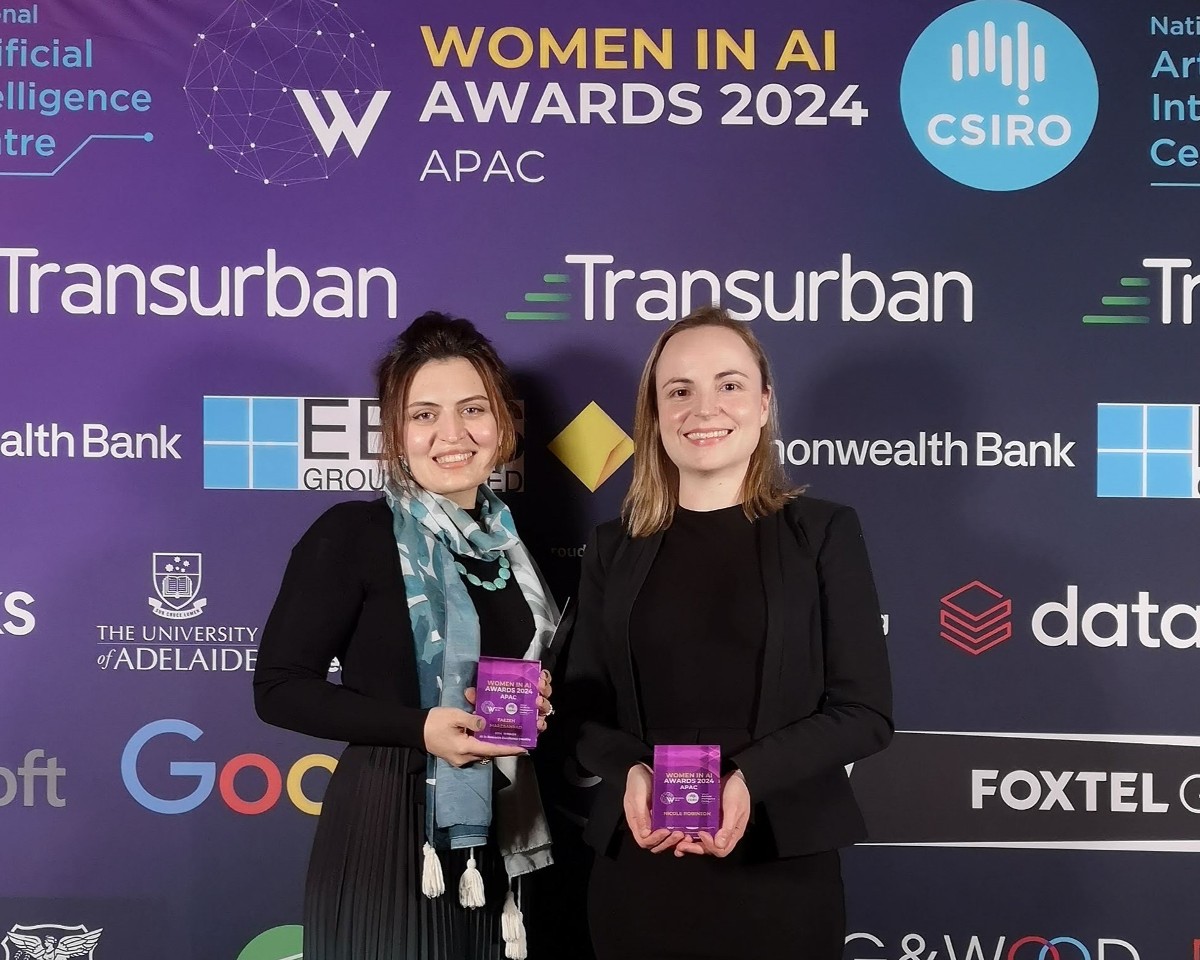
Dr Fae Marzbanrad (left) and Dr Nicole Robinson (right) with their Women in in AI APAC Awards at the awards ceremony in Sydney
The exceptional work of two researchers at Monash Engineering who are using artificial intelligence (AI) to address significant health and social problems has been recognised in the Women in AI Asia-Pacific (APAC) Awards for 2024.
Dr Faezeh Marzbanrad, who leads the Biomedical Signal Processing Research Lab in the Department of Electrical and Computer Systems Engineering, won the AI in Research Excellence (Health) Award.
Dr Nicole Robinson, a Research Fellow and Lecturer in the Department of Electrical and Computer Systems Engineering and the School of Psychological Sciences won the AI in Agribusiness and Rural Development Award.
Dr Robinson was also chosen from among finalists in all award categories as the overall Women in AI Grand Winner.
"I am deeply honoured to receive the Women in AI Grand Winner Award, and I’d like to thank everyone who has supported and believed in this journey,” said Dr Robinson. “Recognition through these awards not only validates the hard work and dedication put into advancing AI, but also underscores the potential of AI to create positive change in the world."
Dr Robinson’s research involves human behaviour and its translation into software agents and robotic systems that collaborate effectively with humans. She is also a Director of LYRO Robotics, a venture-backed robotics company that builds and deploys intelligent pick-and-pack order fulfilment solutions using computer vision, deep learning and robotic systems.
Dr Marzbanrad’s research focuses on developing affordable and accessible AI-powered healthcare technologies for global health, particularly for fetal, neonatal and women's health in low-resource and underserved communities. By leveraging AI to extract useful information from low-cost and accessible devices, her research aims to close gaps in health equity and improve health outcomes for vulnerable populations.