Cuts to key facilities threaten Australia’s global scientific standing
Professor Michael Preuss of Materials Science and Engineering has warned that Australia risks losing its position as a global scientific leader if investment in critical research infrastructure is not maintained.
Among the country’s most important facilities are the Australian Synchrotron in Melbourne and the Australian Centre for Neutron Scattering at Lucas Heights in Sydney, both operated by the Australian Nuclear Science and Technology Organisation (ANSTO).
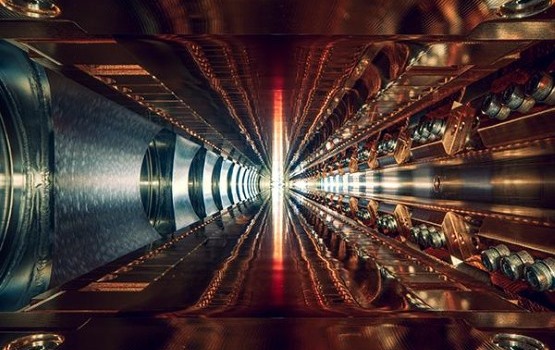
These facilities house advanced instruments including infrared microscopy and terahertz/far-infrared beamlines that fire high-intensity X-ray light at samples to probe materials at the atomic scale.
The insights gained underpin innovations in batteries, pharmaceuticals, green hydrogen, defence and aerospace materials and enable studies of living cells, cancer therapies, antibiotic resistance and even lightweight fire-fighting suits.
Hundreds of projects, PhD students and early-career researchers rely on these instruments for training and discovery.
Despite this critical role, ANSTO has proposed a series of “sustainability measures” (effectively funding cuts) to both the Synchrotron and Neutron Scattering Centre, citing the need to “support financial stability for the long term,” as first reported by The Sydney Morning Herald.
Professor Preuss and colleagues emphasise that these facilities do more than make great science possible - they make it possible in Australia. Cutting support risks undermining decades of research capability, international competitiveness and the training of future scientific leaders.
Read the full article in The Conversation here.