Transparent tech for passive cooling
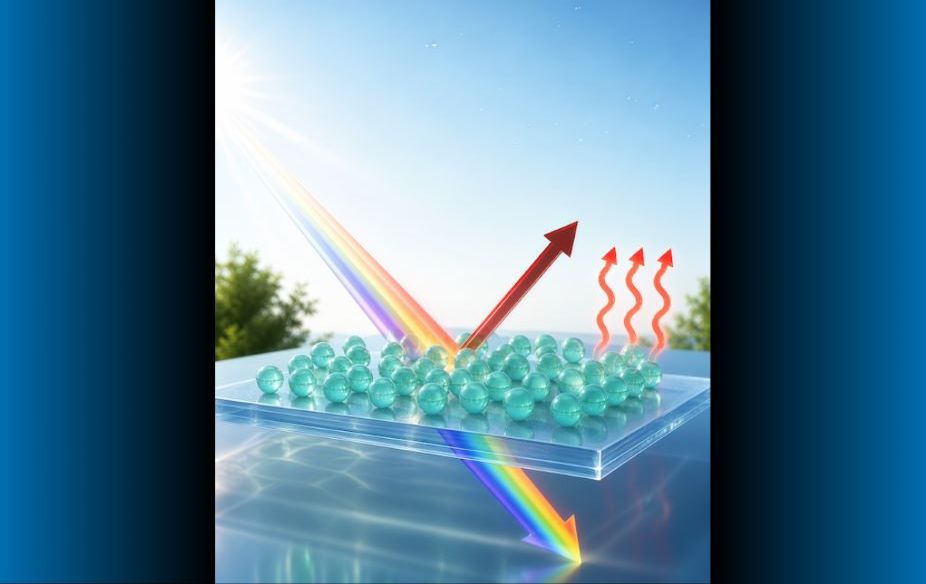
Researchers from Monash University, the University of Bayreuth and Karlsruhe Institute of Technology (KIT) have developed a transparent cooling coating that could help buildings and solar panels stay cooler - without consuming electricity.
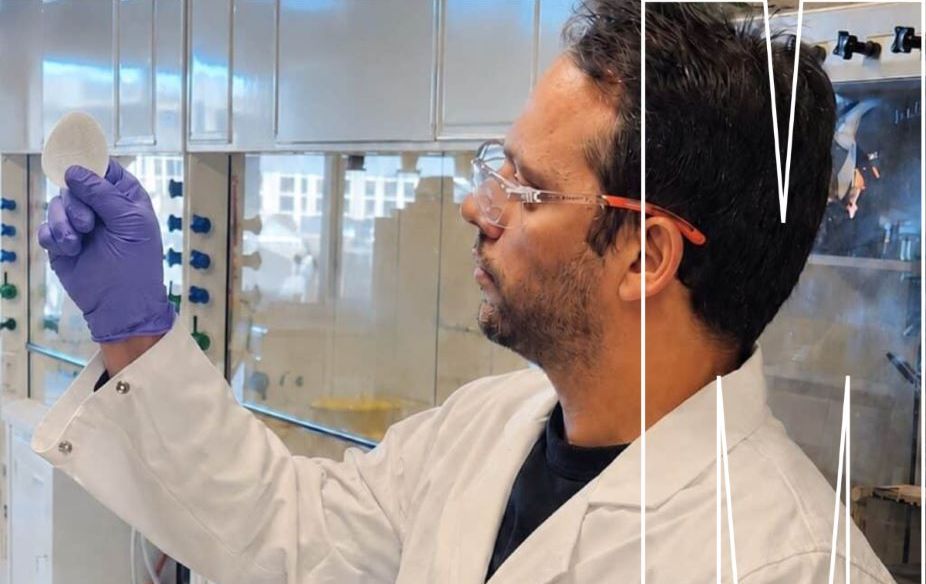
Led by Jefferson Lam - a PhD candidate at Monash Materials Science and Engineering - the team created ultra-thin coatings made from microscopic silica particles, the same base material used in glass.
Applied as a sparse, near-invisible layer, the coating is designed to release heat through Earth’s “atmospheric window”, a part of the atmosphere that allows thermal radiation to escape into space.
Unlike conventional cooling coatings that often appear white or opaque, this approach aims to preserve visible transparency while still improving passive cooling performance.
Researchers found the shape and structure of the silica particles were critical. Larger solid particles delivered the strongest cooling effect by boosting infrared heat emission, but also scattered more visible light, making the coating slightly hazier. Hollow silica spheres, however, provided a valuable compromise: maintaining high transparency while still significantly improving heat release.
Jefferson explains "We show that particle morphology acts as a valuable lever to control the optical and thermal properties of the coating. For applications which require greater cooling effects, solid particles are ideal. Alternatively, if high transparency is valuable (e.g. windows), you could use hollow particles."
In some cases, the coatings achieved atmospheric-window emissivity above 90 per cent while preserving glass-like transparency. Outdoor testing also demonstrated measurable cooling benefits, with coated surfaces recording temperature reductions of around 1°C.
Importantly, the coating can be produced using a simple bath-immersion process with minimal material use, making it a potentially scalable and low-cost solution for windows, skylights, photovoltaics and other technologies that benefit from passive thermal management.
Read the full article in Advanced Materials Interfaces here.