A new twist on solar power: Nanoribbon-inspired molecules drive more efficient organic cells
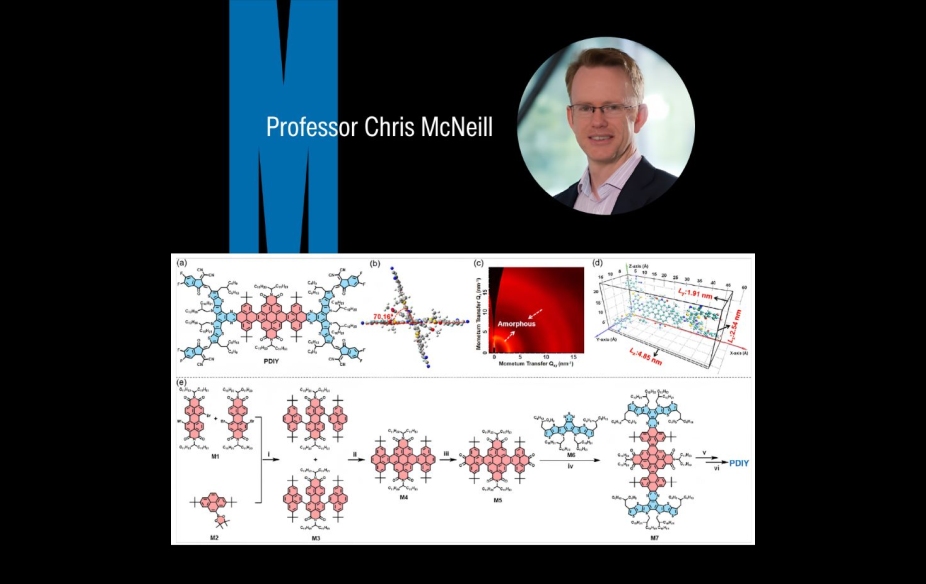
Researchers have unveiled a new molecular design that could boost the performance of next-generation organic solar cells, reporting a “twisted nanoribbon-like” electron acceptor that significantly reduces energy losses while promoting more orderly film formation.
Published in Angewandte Chemie GmbH, the study describes how the uniquely structured material suppresses non-radiative recombination - one of the key inefficiencies in organic photovoltaics - while a complementary seed-assisted crystallization strategy improves molecular packing and charge transport.
Together, these advances enable higher power conversion efficiencies compared with conventional designs, offering a promising pathway toward more efficient, lightweight and flexible solar technologies.
The findings highlight how precise control over molecular architecture and thin-film morphology can work hand in hand to overcome long standing performance limitations in organic solar cells.
Co-author Professor Chris McNeill of Monash Materials Science and Engineering said “This multidisciplinary research demonstrates how precise molecular design and synthesis can be used to tackle key limitations in organic solar cell performance. The work is the result of years of collaboration between chemists, materials scientists, and physicists combining expertise to address complex technological challenges.”
Read the full article here.