New eco-friendly coating could dramatically extend the life of steel infrastructure
A new environmentally friendly protective coating developed by researchers from Monash University and UNSW could help steel infrastructure last longer in harsh marine environments, reducing maintenance costs while eliminating the need for harmful chemical solvents.
The research describes a water-based nanocomposite coating that combines a specially designed polymer with reduced graphene oxide, a highly durable form of graphene. Unlike many existing anti-corrosion products, the new coating requires no organic solvents or chemical modification of the graphene, making it a more sustainable alternative for industry.
Corrosion is a costly global challenge, damaging bridges, ports, pipelines, offshore platforms and ships exposed to saltwater. Existing high-performance coatings often rely on volatile organic solvents that pose environmental, health and safety risks.
The researchers - including Associate Professor Vipul Agarwal of Monash Materials Science and Engineering - developed a water-based coating that forms a tough, flexible barrier over steel surfaces. Laboratory testing showed it reduced corrosion by up to 99.98 per cent compared with unprotected steel, while field trials in Sydney's marine environment found coated steel showed almost no signs of corrosion after a week of continuous seawater exposure.
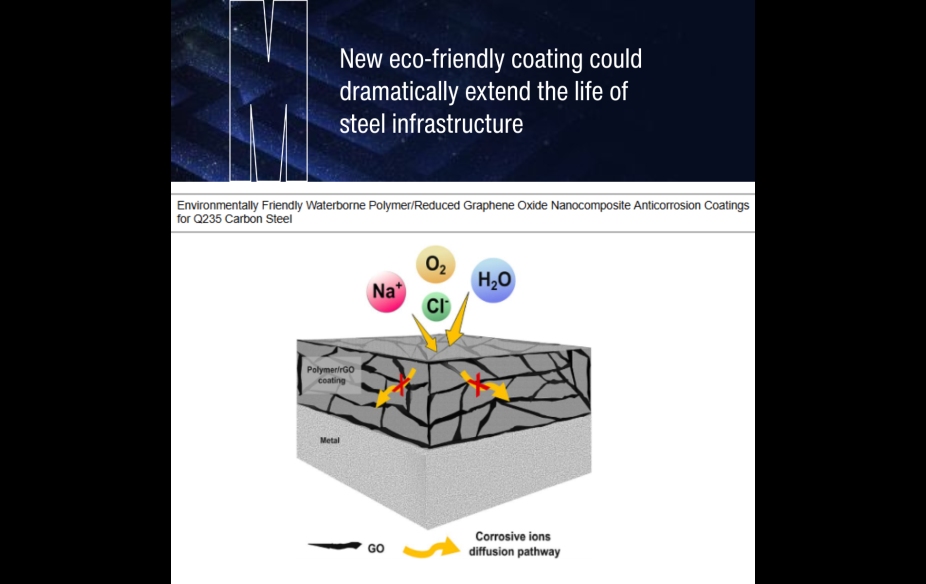
The coating's exceptional performance comes from the control over the distribution of reduced graphene oxide sheets within the polymer matrix that create a complex barrier, making it difficult for water, oxygen and salt to reach the steel beneath.
The researchers also found that preparing the coating under mildly alkaline conditions improved the distribution of the graphene, further enhancing corrosion protection.
Unlike previous graphene-based coatings, the new manufacturing process uses unmodified graphene oxide and a simple water-based production method, avoiding the additional chemical treatments typically required.
The technology could benefit industries including shipping, offshore energy, mining, transport and civil engineering by extending the lifespan of critical steel infrastructure while reducing environmental impacts.
Longer-lasting coatings mean fewer repairs, lower maintenance costs and improved sustainability, offering a practical new approach to protecting essential infrastructure.
Read the full article here.