Nobel Prize in Chemistry awarded for metal-organic frameworks
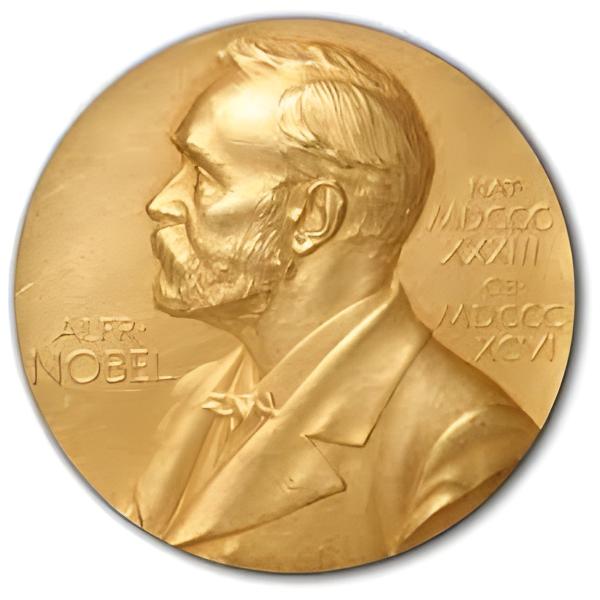
The Nobel Prize in Chemistry 2025 has been awarded to three scientists for pioneering the development of metal-organic frameworks (MOFs) - molecular structures with vast internal spaces capable of capturing and storing gases and other chemicals.
The prize is shared by Professor Susumu Kitagawa (Kyoto University), Professor Omar M. Yaghi (University of California, Berkeley) and Professor Richard Robson from The University of Melbourne.
Professor Robson’s foundational work dates back to 1989, when he and collaborator Bernard Hoskins first discovered the frameworks that would later underpin major advances in gas storage, catalysis, and environmental chemistry.
Of this year's recipients and their research, Professor Matthew Hill, Head of Monash Materials Science and Engineering says:
“Metal Organic Frameworks are an incredible family of materials. They are made by connecting metal atoms to one another by an organic linker molecule, and when conditions are right, they form an extended framework structure where up to 85% of the internal space of the MOF is an open pore, and every single atom is an exposed surface. This internal space can be used like a sponge or a sieve.
By changing the combination of ingredients, hundreds of thousands of different MOFs can be made, and tailored to applications such as separating carbon dioxide from the air, harvesting water, or protecting people from harmful gases.”
In an interview with Scimex, Professor Hill went on to say “The three laureates are the perfect awardees, and have each played a crucial role in establishing and leading the field. Here in Australia, there is a whole generation of researchers who have been inspired by their work, and in particular the pioneering efforts of Professor Robson.
The commercialisation of MOFs is active here in Australia, with start-ups spinning out of CSIRO, Monash and Sydney Universities. This is a singular moment for Australian materials science.”
This landmark recognition highlights the enduring global impact of Australian research and its role in shaping one of chemistry’s most dynamic and applied fields.
Read expert opinions about MOF research in Scimex.org here.