Smarter catalysts and stronger batteries: a leap for clean energy
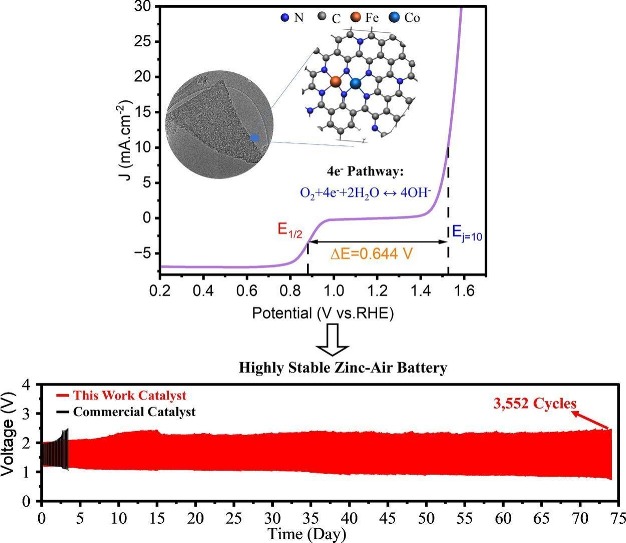
As the world pushes toward clean energy, better batteries are key. Metal-air batteries could be game-changing. They store more energy than today’s lithium-ion batteries and could power everything from electric vehicles to aerospace systems. But they face a big hurdle: slow oxygen reactions that limit efficiency and shorten their lifespan.
To solve this, researchers from the Department of Chemical and Biological Engineering created CoFe-2DSA, a new catalyst made from cobalt and iron atoms spread across ultra-thin, porous carbon sheets. This smart design speeds up the crucial oxygen reactions, making the batteries far more efficient and durable. In testing, batteries using this material showed:
- Higher energy storage
- Greater power output
- Remarkable stability over thousands of cycles
This breakthrough shows how new materials at the atomic scale can unlock the full potential of next-generation, sustainable energy storage.
Of the research, Dr Parama Chakraborty Banerjee says “These catalysts not only solve a key bottleneck for zinc-air batteries, but their design principles can be applied to other clean energy technologies - from fuel cells to water splitting - offering broad impact across the energy landscape.”
Read the article in Elsevier's Chemical Engineering Journal here.