
Celebrating the 2024 Dean’s Awards for Equity, Diversity and Inclusion winners
The 2024 Dean's Awards for Equity, Diversity, and Inclusion (EDI) recognise the exceptional efforts of academic and professional staff who have championed inclusivity and fostered a culture of belonging within Monash University’s Faculty of Information Technology.
This year the Faculty celebrates 17 winners across four categories: Research, Education, Community, and Environment and Culture.
‘This year's awardees have demonstrated remarkable leadership in advancing EDI principles, setting a powerful example of how diversity enriches our wellbeing, society and environment – strengthening our collective mission of researching and developing IT for social good,’ said Associate Dean (Equity, Diversity and Inclusion) Professor Rashina Hoda.
Winners are also selected based on how closely their work aligns with the University's strategic plan, Impact 2030. This plan prioritises three global challenges – climate change, geopolitical security and thriving communities – where the University is focusing its research and educational resources.
‘By focusing our efforts to address the most pressing contemporary challenges, we ensure our work is inclusive and purposeful, driving positive change on a broader scale,’ said Professor Ann Nicholson, Dean of the Faculty of IT.
This year’s winners will be considered for the broader University’s Vice-Chancellor's Excellence Awards for Equity, Diversity and Inclusion on 19 November 2024.
Here are the faculty’s 2024 winners:
Research
Awarded to staff enhancing research and research impact relating to equity, diversity and inclusion.

Dr Roisin McNaney
Action Lab, Department of Human-Centred Computing
Dr McNaney is nominated for her groundbreaking work in digital mental health. Her research agenda addresses critical real-world needs by focusing on the collaborative co-design of digital solutions with diverse stakeholders to ensure community adoption.
With over 60 publications across her career and over $14 million in research funding awarded in the last four years alone, she fosters interdisciplinary collaboration, advancing the careers of diverse student teams.
Roisin's leadership in culturally and linguistically inclusive innovations and responsible AI has significantly advanced digital health research and practice.
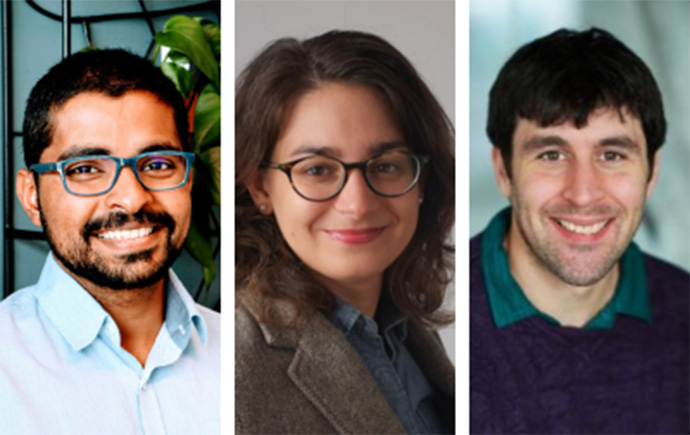
Dr Delvin Varghese, Dr Margherita Angelucci (departed from Monash) and Associate Professor Tom Bartindale (departed from Monash)
Action Lab, Department of Human-Centred Computing
Dr Varghese, Dr Angelucci and Associate Professor Bartindale lead the Interpreting Mentoring and Professional Advancement Regional Opportunities (IMPARO) project, advocating for better training opportunities of culturally and linguistically diverse non-professional translators and interpreters (NPTIs) based in regional areas, and the formal recognition of the importance of tailored training into the strategic plans of regional Victoria's councils, universities and government agencies.
This inter-faculty initiative, in collaboration with the Faculty of Arts’ Monash Intercultural Lab and Master of Interpreting and Translation Studies students, closely engages with NPTIs in Goulburn Valley to co-design training solutions that address the unique needs and preferences of these translators and interpreters.
The IMPARO project also seeks to create a community-driven online platform for resource sharing and support, fostering a sense of ownership and empowerment among NPTIs.
Education
Awarded to staff developing teaching practice, curricula or other initiatives that foster inclusion for a diverse range of students.

Dr Sadia Nawaz, Jaime Clark and Andrew Junor
FIT1049 IT professional practice
FIT1049 IT professional practice is a core first-year unit that introduces students to the modern IT profession. This year the team (Dr Nawaz, Jaime Clark and Andrew Junor) updated the curriculum to reflect current social issues by incorporating Indigenous perspectives to enhance cultural awareness, and integrating content on AI ethics to encourage critical thinking on this trending topic.
To boost engagement, the team employed creative teaching methods, such as using virtual reality technologies to explore equity, and screen reader assessments to strengthen students’ practical skills in accessibility.

Ross McQueen, Phillip Abramson and Emilie Kilvington (departed from Monash)
Educational Design, Innovation & Quality (EDiQ), Faculty Office
Fostering an awareness of diversity in the classroom is key to creating an inclusive environment where all students receive the support they need to thrive academically. Educational designers Ross McQueen, Phillip Abramson and Emilie Kilvington developed a learning module for new teaching staff focused on inclusive teaching practices.
This module helps educators accommodate diverse human experiences, challenge existing biases and practise meaningful allyship. Through real case studies, educators gain a deeper understanding of neurodiversity and individual differences, and learn effective teaching strategies to create more supportive classroom experiences for all students.
Community
Awarded to staff engaging the wider community to foster inclusion or support for underrepresented, disadvantaged or marginalised groups.
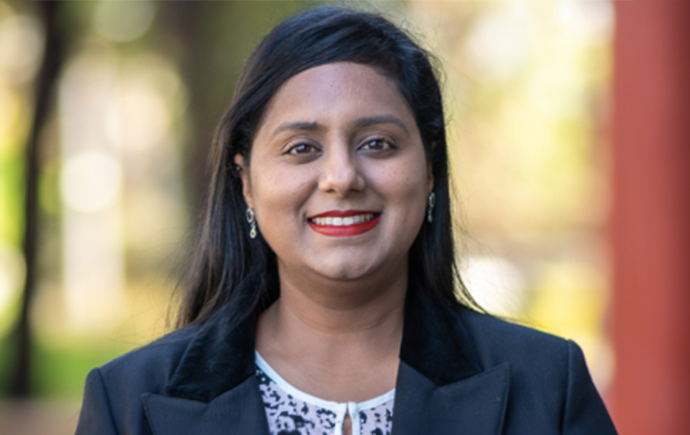
Ruchi Sembey
HumaniSE Lab, Department of Human-Centred Computing
In her three years as a lecturer and PhD candidate, Ruchi has mentored new teaching associates and provided one-on-one academic support to students registered with Disability Support Services. Her inclusive teaching practices have been recognised through the Monash Education Excellence Award in 2023.
Through Monash’s #ChangeIt campaign, Ruchi promoted international recruitment of students passionate about solving global challenges, advancing Monash’s mission to make a positive social impact. She was also awarded the Faculty of IT Ambassador awards in 2023 and 2024.
A passionate advocate for women in STEM, Ruchi actively contributes to programs that champion diversity and inclusion. She has facilitated the Superbots programs where Year 7 to 9 girls learn about AI voice technology design, participated in a Women Leading Tech interview on driving change for women in higher education, advocated for gender-neutral technology development at the South Korea-USA STEM Leadership program and spoken on an Ada Lovelace Day panel celebrating women in computing.

Professor Gillian Oliver , Dr Md Khalid Hossain,
Dr Manika Saha, Dr Misita Anwar (departed from Monash) and
Dr Tanjila Kanij (departed from Monash)
Information Empowered Communities, Department of Human-Centred Computing
The Information Empowered Communities team supports disadvantaged communities in the Global South through multi-country projects, focusing on understanding their challenges, promoting sustainable community-driven interventions and designing inclusive technology to create real impact.
For instance, through PROTIC II in Bangladesh and DFAT AII 2024 projects, they collaborated with local non-profits and universities to connect resources with fishing communities in Bangladesh and Indonesia.
Together, they co-created information and communication solutions to share critical knowledge on climate and disaster resilience, fish availability, fishing techniques and natural resource management, while also advocating for the rights of these communities.
Environment and Culture
Awarded to staff developing initiatives aimed at building or supporting EDI at Monash, and positively influencing the learning and/or working environment and culture.

Dr Sanaz Nikalazar
Centre for Learning Analytics Monash (CoLAM), Department of Human-Centred Computing
Dr Nikfalazar is dedicated to creating an inclusive environment in her team and classrooms. She celebrates diverse cultural and religious backgrounds, supports those with caregiving and parenting responsibilities by accommodating their schedules, and values gender diversity. Dr Nikfalazar also promotes a culture of respect and diversity, showing appreciation during cultural festivities with small celebrations or tokens.
In her teaching, Dr Nikfalazar encourages student engagement by building trust and facilitating open discussions, allowing everyone to share their perspectives and feel acknowledged. This approach helps students feel included and empowered, and encourages them to learn from each other’s experiences.