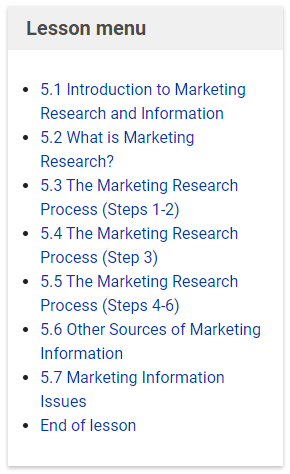
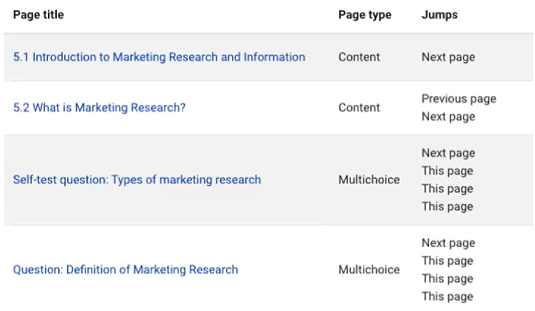
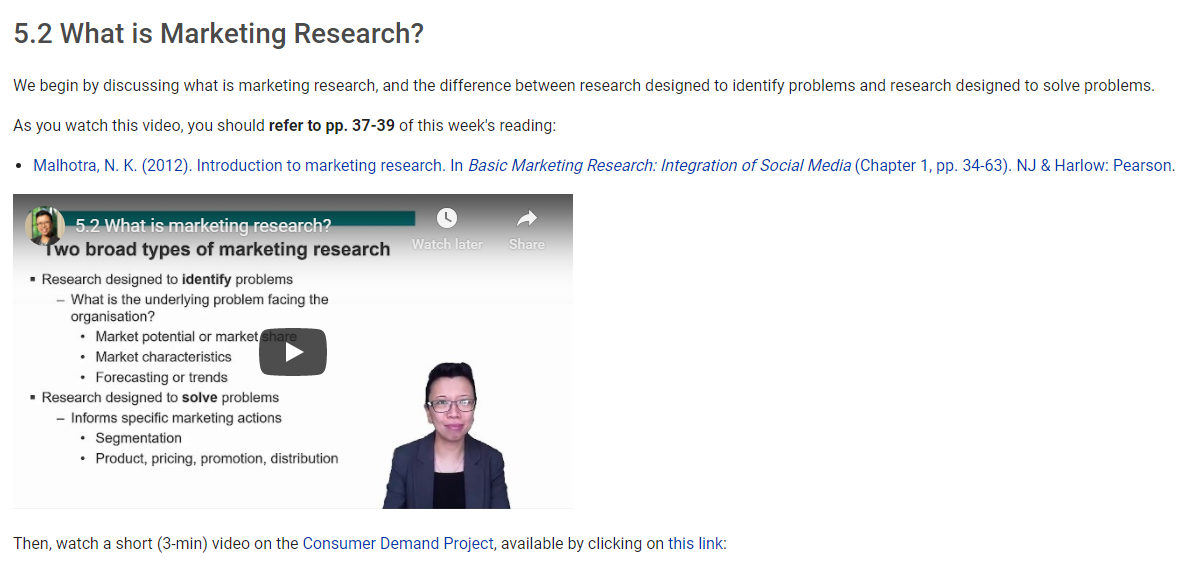
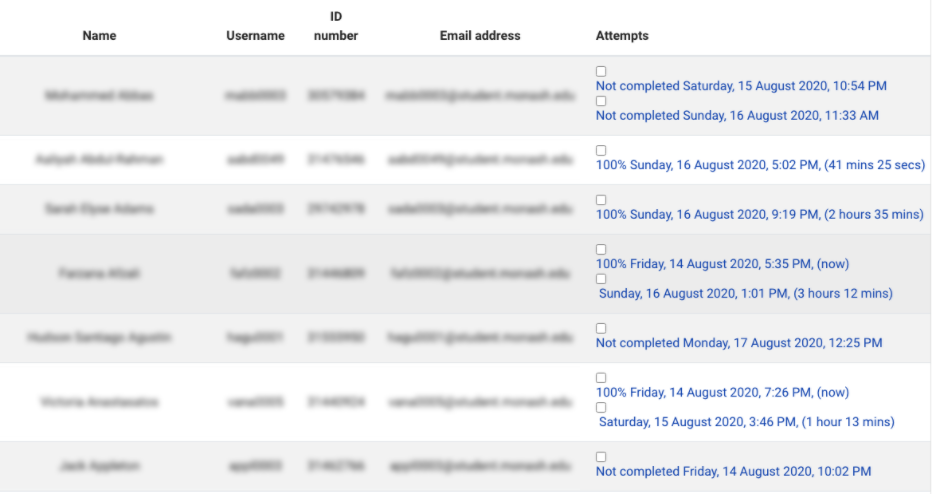
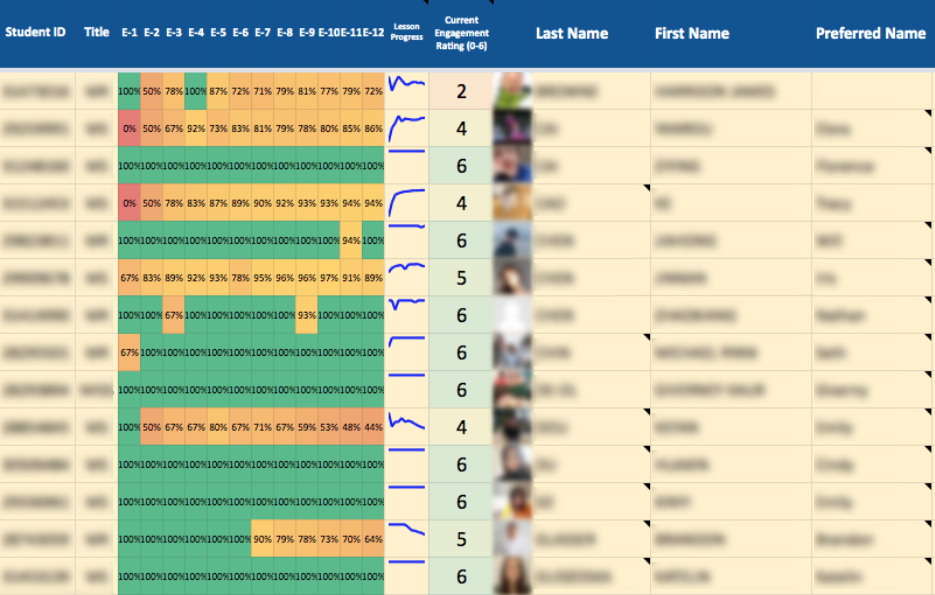
Using the visualised data from the spreadsheet, an appropriate action for the student to take to improve their engagement was decided. For students who had several incomplete lessons, this was a personalised email sent directly to them. The data was also used to send "congratulations" emails to students who were engaging well with the learning materials.
Communication with the students was framed in a positive way. The student was asked to engage more fully with the content and review their understanding, instead of asking for more time in lessons.
An Activity Completion block was used to further show student progress and to trigger communication from students about their progress. This would present opportunities to connect and engage with students.
As an additional feature, the total engagement score from the Excel analysis was used in Moodle to show an “engagement star” rating to students. Each student only saw the rating they had reached, which also included suggestions for actions that the student could take to improve their scores. This approach was useful to reach students who weren’t necessarily struggling and the students who didn’t read their emails.
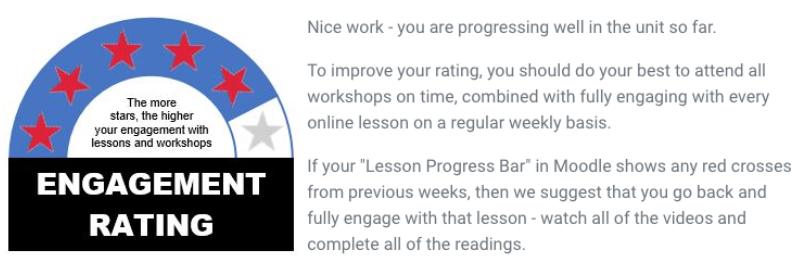
Figure 6: Progress and engagement rating
Overall, the expert impression from the experienced teachers was that the system helped students across the whole cohort, across a range of areas and levels of engagement. Furthermore, the engagement score predicted the student final mark (R-square 49%), indicating that using these engagement scores to provide appropriate support for students is worthwhile.
It is not a foolproof method to detect engagement in all cases, but is a valuable tool to help measure online engagement and guide students in improving the way that they access and engage with content.