Portfolio podcasts: Amplifying student voices in the industry
About this example
“Leadership in Asia” is a second year unit that is part of the management degree within the School of Business (Monash Malaysia). Students prepare portfolios that contextualise their learning, and reflect on their leadership journey to produce a podcast that amplifies their unique voice to a global audience.
Watch the video to learn more
School of Business, Monash University Malaysia
-
The “Leadership in Asia” unit is a home-grown unit, and caters to about 150 students in the School of Business at Monash Malaysia. Since its inception approximately 7 years ago, the unit focused upon 2-hour exams, or academic essays as the final assessment. When I inherited this unit, I implemented a take home test where students had 24 hours to respond to a case analysis drawn on responsible leadership in Asia. While authentic, it was a very stressful experience for the students. Furthermore, I felt that for a leadership course, students need to be able to showcase intrapersonal and interpersonal competencies that will prepare them as social impact leaders in their communities.
With my background in management consulting prior to joining Monash, I see myself as an educator with a service design mindset. Through the lens of a service designer, I aspire to craft a "customer journey" that enables a holistic and meaningful learning experience for students where they can connect what they learn to professional practice. This got me thinking, why not change the final assessment from a take home test to a more authentic reflective portfolio task through which students can showcase their knowledge and competencies in resumes and LinkedIn Profiles? I also wonder, what if students are not only active learners of the unit content, but they are also co-creators of knowledge that matters to the leaders in the industry?
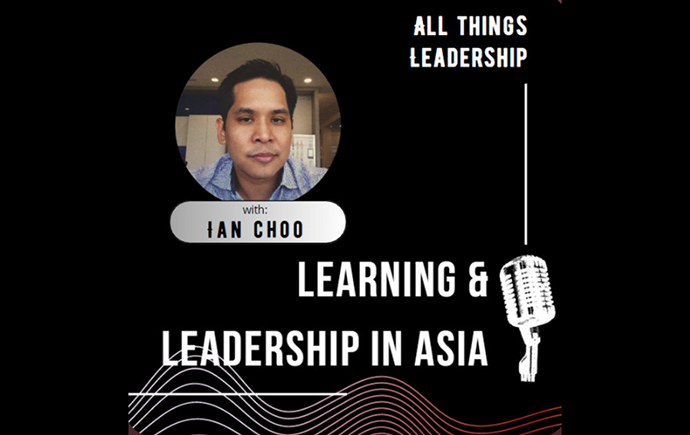
These musings somehow brought to mind a Spotify channel titled "Learning & Leadership in Asia" which I had followed while preparing for this unit. This channel is hosted by Mr Ian Choo, a Learning and Development manager at New Balance, Singapore who has a wide connection within the human resources (HR) professional network internationally. Ian's podcast channel featured conversations that were focused on the Asian context and were highly relevant to topics and themes raised in my unit "Leadership in Asia".
Against all doubts, I reached out to Mr Ian Choo via LinkedIn which marked the beginning of our collaborative endeavour that made this portfolio podcast assessment a reality. Together, we set the objectives of our collaboration as follow:
- Provide students a unique opportunity to summate their learnings in a concise and impactful manner, that brings value to their learning journeys.
- Build students’ personal brand, and engage with professional networks through LinkedIn and podcast following.
- Allow for a wider reach for Learning and Leadership in Asia Podcast to the next generation of leaders.
To achieve these objectives, a final assessment consisting of a reflective portfolio (30% - written reflections and 20% - podcast creation) was designed. This task allows students to demonstrate their learning and leadership development through a selection of evidence which represents students' leadership knowledge and competencies. The potential evidence showcased in this task, which consisted of selected tutorial activities such as role play and self assessment exercises, alongside the other assessments of this unit which included a team project of interviewing a social impact leader.
-
At first, students were apprehensive about the portfolio and podcast as an assessment - this is because they were so used to exams, essays and report assignments. To guide their efforts, students were given the following authentic scenario:
‘Mr Ian Choo who is the host of the podcast channel “Learning & Leadership in Asia” invited the students to contribute a podcast episode of 4-5 minutes based on key insights from their portfolio reflections. The target audience are mainly experienced and emerging leaders in Asia who seek to advance their knowledge and competency in leadership’.
This scenario helped to establish the ‘real’ context for students to work with. I also provided the link to the podcast channel in the task instruction, as it served as an example of the baseline standard and quality expected of the students for their podcast.
Furthermore, Mr Eric Tan from Monash Education Excellence Unit supported me by preparing a video recording of how to improve podcast audio quality using Audacity. He also offered consultations to the students when they had queries regarding the technical aspects of podcast recording. With the advent of ChatGPT, I allowed students to generate the podcast script using this tool and to explore ways of creating an interesting and engaging podcast. I realised that students were more confident as a result of these valuable resources and support.
To help address my concerns about authenticity and academic integrity, I asked the students to provide a video recording of their podcast recording in session to make sure that the submitted audio podcast was the students themselves.
-
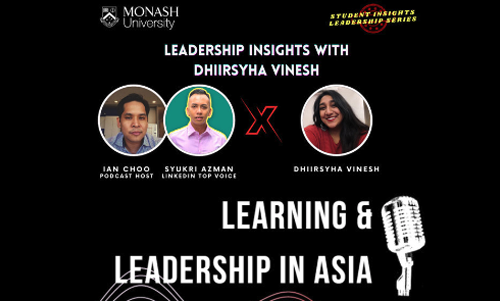
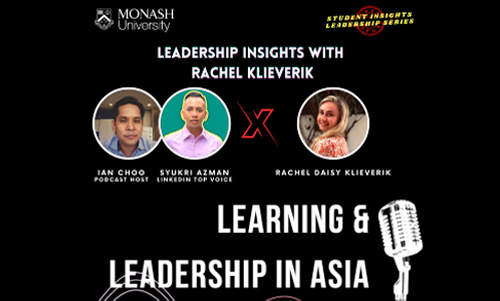
After the official results were released, the best podcasts were selected to be featured on Ian’s "Learning & Leadership in Asia: Navigating the Workplace" Spotify channel, under our newly established ‘Student Insights Podcast Series’. The selected podcasts were showcased one at a time, from July 2023 to November 2023. Ian shared his own takeaways from each podcast episode via LinkedIn and invited his network to listen to the podcasts. He also partnered with Shukri Azman, who is recognised as a Linkedin Top Voice to feature the student podcasts in the social media. This allowed our students’ voices to be amplified at the global stage, and their profiles to be elevated, leading to further conversations and potential networking opportunities.
As of to-date, there were 190 podcasts downloaded from these episodes; 21,922 impressions via LinkedIn posts and 379 reactions over the same LinkedIn posts. As shared by Dhiirsyha via her LinkedIn Post (while resharing Ian Choo’s post):
When I was approached by my lecturer Dr. Yit Sean (Esther) Chong that my podcast has been selected to be part of this amazing project by Mr. Ian Choo, I felt a surge of excitement! Let’s leverage this platform to exchange insights, learn from each other’s triumphs and struggles, and collectively empower ourselves to make a positive impact in our organisations and communities. Remember, leadership is not just about titles, it’s about influence, inspiration, and collaboration. Together, we can create an environment where everyone’s unique strengths are valued and diverse perspectives are celebrated.
The above quote captures the essence of this unit in an impactful manner. Our student insights contribute to the modern leadership discourses, by shaping new perspectives and aspirations to make a positive difference in the world.
Click on the cards below to listen to an example of student podcast episodes on Spotify
Try it out
This exemplar is a bit more complex to implement.
Recommended resources and training:
- Technical support from faculty education designers (Ed excellence in Monash Malaysia)
- Recording device (Laptop, smart phone) and program (Zoom or Panopto)
- Post-recording program to improve audio quality (Audacity)
-
Research on portfolio assessments as this type of assessment may be designed in various forms according to the nature of your unit/discipline.
Set clear objectives for the task to align to the competency goals, unit learning goals, and rubric design. Determine the types of evidence that students can choose to be incorporated into the portfolio, as it allows a sense of autonomy to showcase their knowledge and competencies.
For the portfolio podcast, a recommended structure will be useful for students to organise their ideas, while allowing rooms for creativity to flourish.
Provide examples of podcasts from a specific channel that you find relevant.
With the collaboration with an existing podcast channel (in the context of Leadership in Asia unit), students only need to prepare the audio file in mp3 without the need for music/sound effects. This is because the host will integrate these files into the channel using the standard format (eg introduction, music background) for the episodes. Hence, students only focus on the content and style of delivery for the podcast episode.
For this unit, I did not specify specific tools/devices that students must use for the podcast recording. Broadly, students tend to use Zoom, Canva or other softwares they were comfortable with to produce the podcast recording from their mobile phones, laptops or other devices.
Obtain consent from the student for the podcast to be showcased on an external channel, and to obtain their Linkedin Profiles when the episode is posted on social media. This helps to elevate the students’ profiles in the professional network.Potentially, consent from other parties mentioned in the podcast is also necessary (eg. if a student shares about an assessment task in the podcast, that involves an interview with a third party).
Potentially, consent from other parties mentioned in the podcast is also necessary (eg. if a student shares about an assessment task in the podcast, that involves an interview with a third party). -
- Start planning early: Since external people were involved it required detailed planning and discussion to ensure it was done properly. Consider planning for the final assessment 1-2 months before the semester starts.
- Don’t be afraid to experiment during your teaching journey: Inspiration for innovation happens at the most unexpected time, and implementing new endeavours can be daunting. However, if we are fully convinced of the benefits that this assessment offers to our students and stakeholders, I think it is worth making the leap. Learning from hindsight also serves as a foresight to future endeavours.
- Contact your faculty educational support team: I was initially struggling with this portfolio assignment, and it was helpful to get some additional insights from someone external to the unit/the school who may act as a consultant to offer some fresh perspectives. I was able to consult with the Education Excellence team to seek advice and explore possible approaches to implement the new assessment.
- Scaffold the assessment: At the start, I thought the podcast could serve solely as the sole final assessment task of 50%, without the written component. However, whilst the podcast alone may not justify a 50% weightage, the written component helped the students to deeply reflect upon the chosen evidence in alignment to the unit objectives. The podcast enabled students to go a step further towards converting these written insights into a more concise and relatable format for the professional community.
- Amplify students’ voices: I hope we can find opportunities to showcase our students’ thought leadership as I believe they have much to offer to the world of their professional practice and beyond.
Supporting resources
Here are some additional resources that you can browse to help you implement this assessment.