Using TikTok and short videos to explain medical concepts
About this example
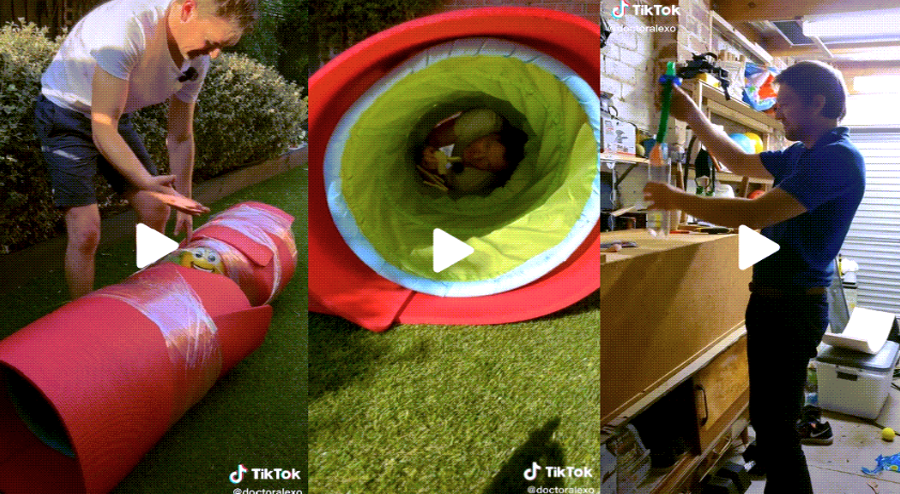
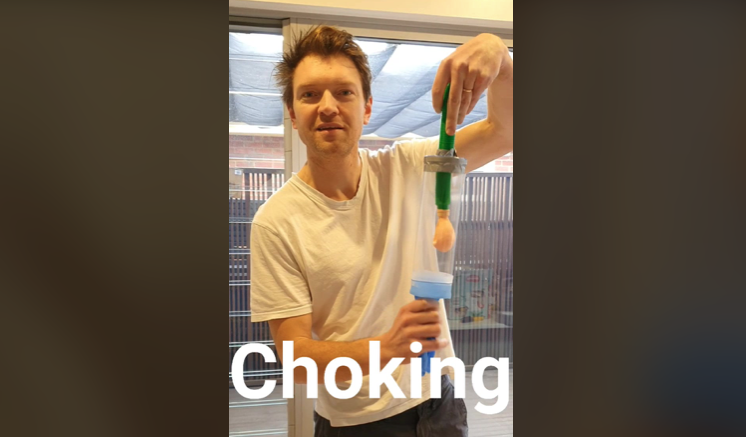
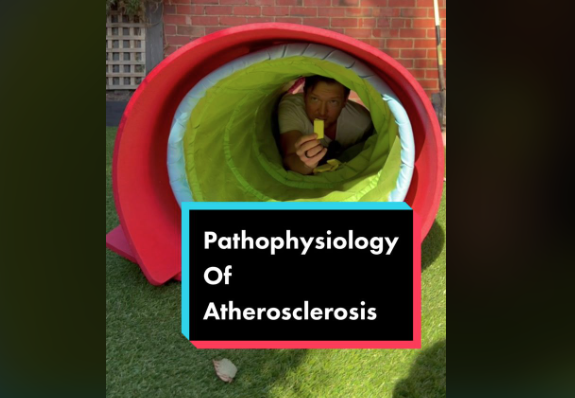
Teaching some of the core concepts in cardiac and lung related medical emergencies can be a challenge. Often the critical information is hidden within powerpoint slides, and not made visual - or memorable. Under the umbrella of ‘edutainment’, the use of short videos distributed on social media platforms (e.g. TikTok) have been very positively received by our students.
Listen to this inspiring educator talk about his journey into TikTok for teaching.
Medicine, Nursing & Health Sciences
-
I noticed that students were often distracted during tutorials with their phones, and wondered how I could better engage them?
I then thought back to my own study experiences, and wondered when I would have been on my phone rather than being interested in what I was learning. I realised that the material I remembered best had been made visual.
For example, Boyle’s law can easily be written down on a PowerPoint slide as “volume is inversely proportional to pressure”.
However, these words pale in comparison to actually seeing a made up simple thorax and lung model which demonstrates this principle. So, in marrying up the challenges of students being distracted on their phones, and the inspiration of creating visual content, TikTok seemed like the perfect solution.
@doctoralexo Respiratory #anatomy and #physiology! 🫁Just build it to believe it 😍 #meded #medtok #learnontiktok #fyp #paramedic #ambulance #thingsthatjustmakesense ♬ original sound - Dr Alex -
I first made a video of fairly low quality - without any editing - in my garage. This was focussed on a step-by-step creation of the thorax model.
I simply put the video on Panopto and showed it to students in a 15 minute unedited version with all the bloopers and hiccups. The students welcomed this form of delivery warmly and enthusiastically. They encouraged me to put this on TikTok.
Due to time constraints on the platform (10 minutes), subsequent videos had to be made much more succinct, and this required more planning, and editing.
In order to ensure every student had the opportunity to see the videos (because not every student is on TikTok) at the start of each tutorial we would spend a couple of minutes reviewing any new or previously unseen TikTok videos.
Students were then prompted to think of what current viral trending video clip could be applied to explain that week’s material. Their ideas would form the basis for subsequent videos.
-
Both formal feedback (SETU and mid semester surveys), as well as ad hoc informal feedback during tutorials or unsolicited student emails have been very positive. Engagement in tutorials also improved dramatically - they used their phones to engage with the material, rather than disengage!
Student feedback:
-
Fantastic teacher
"I just wanted to say a massive thank you for a great semester. I’m emailing from the back of an ambulance on placement right now where I’m putting all your teachings and tik toks into practice. You’ve been a fantastic teacher this year and really helped make one of the most challenging subjects enjoyable."
-
Fun and engaging
“Alex's videos each week were amazing. They made everything so much easier to understand – and he did them in a fun and engaging way. I 10/10 recommend this approach to future units.”
-
Models helped consolidate knowledge
“I also found the models Alex would make very beneficial to consolidating the knowledge regarding pathophys and what treatment acts on certain aspects. Specifically, the asthma one was fabulous for me.”
-
3D modelling videos engaging
“The 3d modelling videos of specific pathophysiology and anatomy and weekly lecture content was very engaging.”
-
Theory made interesting
“Alex's 'tik tok' videos were very effective in understanding the theory.”
-
Appreciate all the effort made
“I learnt so much from the visual models made by Alex and TikToks. Not the traditional style of just taking notes of long boring lectures. It was very clear to me that so much effort was put into each and every video.”
-
Try it out
This exemplar requires a medium level of effort to implement.
Recommended resources and training:
- Review the Using multimedia guide
- Create a TikTok account
- Materials for the demonstration
-

Think of a topic that is hard for students to grasp, or that is core to your teaching objectives.

Consider ways in which this may be shown to the students visually or explained by current trends.

Grab your phone and get a friend or partner to video you explaining the topic.

Use a wireless microphone to significantly enhance the production quality (minimal cost) - if the students find it hard to hear what you are saying, the videos are less likely to be viewed - or engaged with.

After recording, editing can be done through commercially available apps or within the TikTok platform itself.

Use text to highlight key points as well as emojis’ to lighten the mood and drill home the core ideas. Ideally place them early in the videos if not throughout the whole video. 
Post the video on TikTok and all the various social media platforms that you may use. 
Optimise engagement and views:
- Consider spreading on Moodle if a new video has been uploaded, integrate the link to the video in the different weeks’ contents.
- Within the video itself, ask students for questions which they can respond to in the comments.
-
Just do it.
If the production is of low quality with many challenges along the way, the students do not mind seeing this if they can see that the material is being delivered in an enthusiastic way from a place of honest curiosity.
If you are wondering whether TikTok is appropriate, I would remind you of Brookfield’s notion that the primary function of a teacher is to help students learn.
If you are fearful that TikTok videos are unprofessional, lack scientific rigour or trivialise the material, I can assure you I felt the same way when first starting using it, however I believe, and I think it has been demonstrated through several cohorts of students now, that when this sort of light hearted yet educational delivery is being done, in addition to traditional material, it only supplements rather than distracts.
Lastly, remember that DONE is better than PERFECT so get your videos out there.
Supporting resources
Here are some additional resources that you can browse to help you implement this assessment.