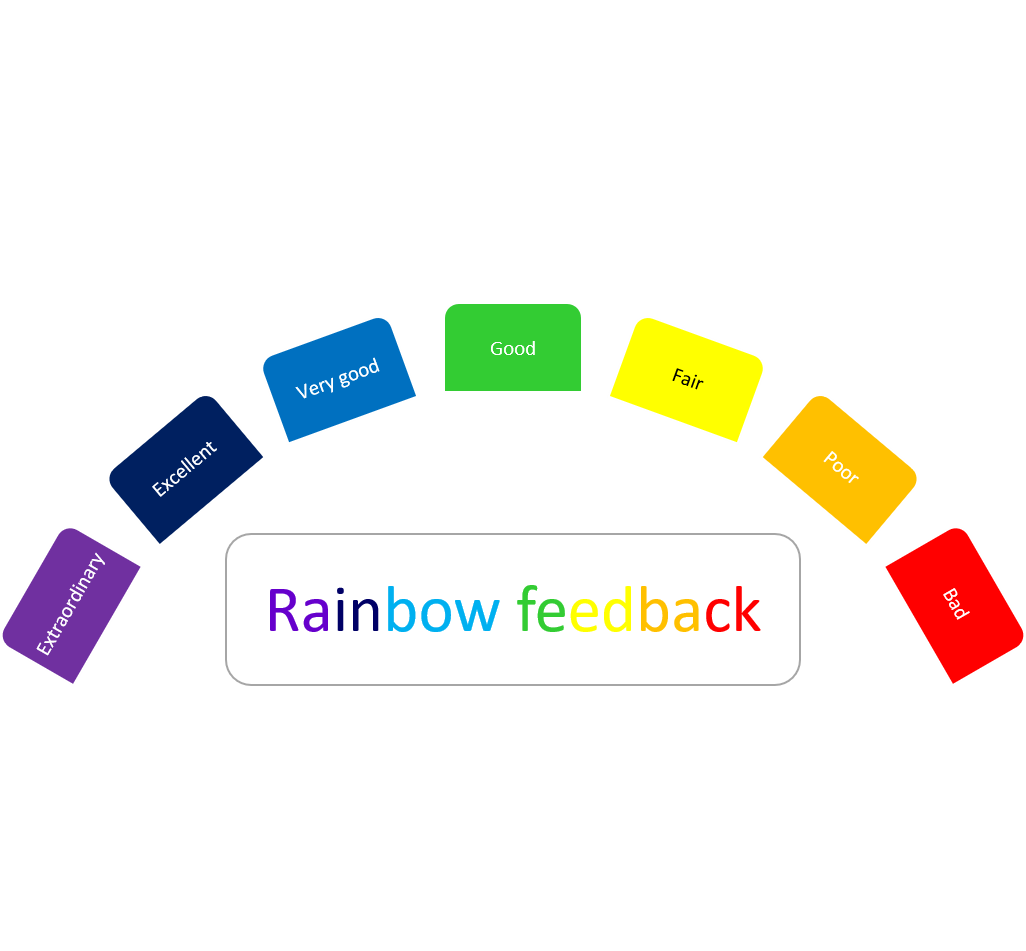
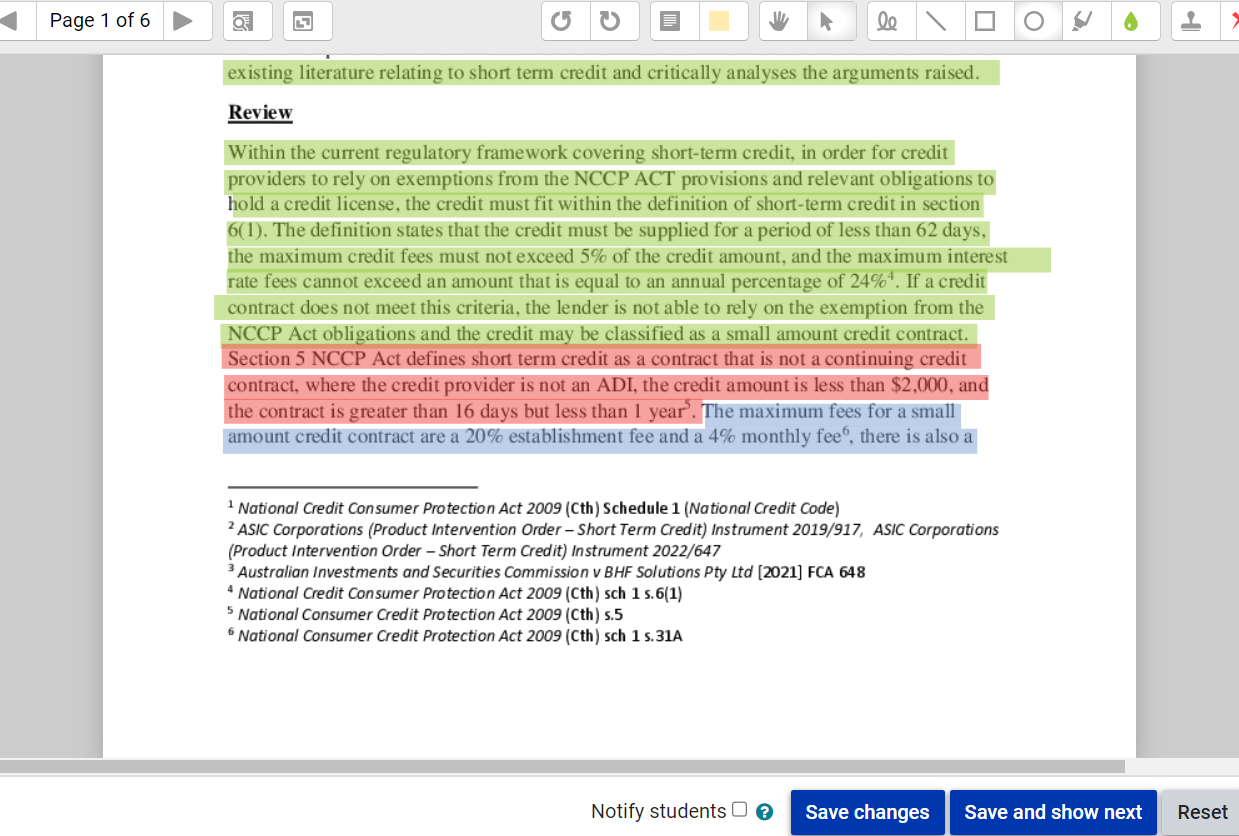
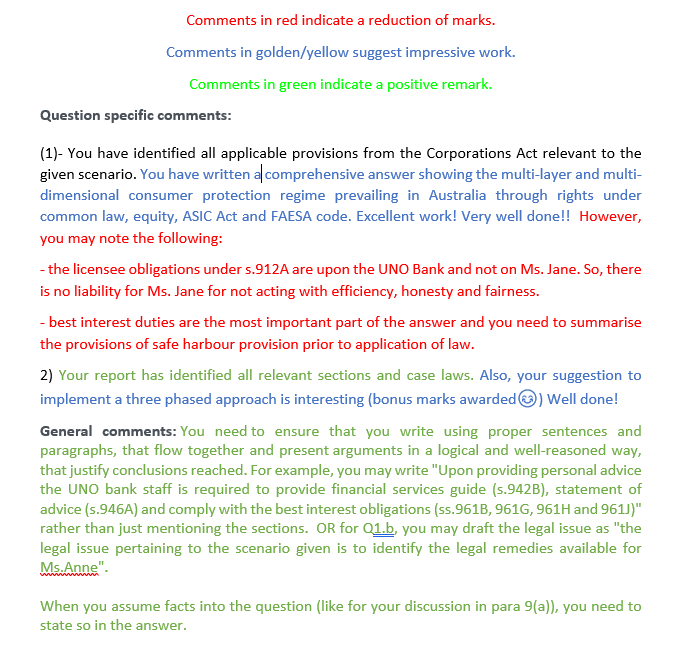
This feedback strategy was inspired by one of my students, who was visually impaired. After attempting all tutorial questions, he sought feedback on a weekly basis. When I realised his difficulties in reading through my written feedback, I started to highlight his answers in different colours so that he understood what is relevant and not relevant from his draft.
Eventually, I modified this practice and adopted it to provide feedback to assignments in Banking and Finance Regulation (BTF5112). I found it to be a very effective strategy since highlighting could be easily done in Moodle. It also helps students to rationalise the marks/grade awarded to them for an assessment, through providing them with a more nuanced approach - using colours.
A constant area of student dissatisfaction in my units over years has been the quality of assessment feedback - an issue common at Monash. In SETUs, the quality of feedback criteria scored the lowest of all SETU criteria. SETU comments also indicated that:
- students cannot rationalise why the marks are deducted/ or how many marks are deducted for a mistake.
- students need to rely upon multiple avenues (rubrics/grade book/feedback comments) to get comprehensive feedback on their performance.
- students do not feel appreciated for their hard work when feedback is limited to selective areas.
- students feel discouraged and unmotivated when they cannot identify if the instructor had gone through the answer/assignment thoroughly, and
- students do not feel valued if the comments are ‘one size fits for all’ (too general) and not personalised.
In addition to SETUs, many studies have now established that inadequate feedback negatively impacts on student learning and results in student dissatisfaction.