
Visitor: Kristina Grünenberg, University of Copenhagen
Recently ETLab had the pleasure of hosting Dr Kristina Grünenberg, Senior Associate Professor at the Department of Nursing and Nutrition, University College Copenhagen, and Associate Professor at the Department of People and Technology, at Roskilde University.
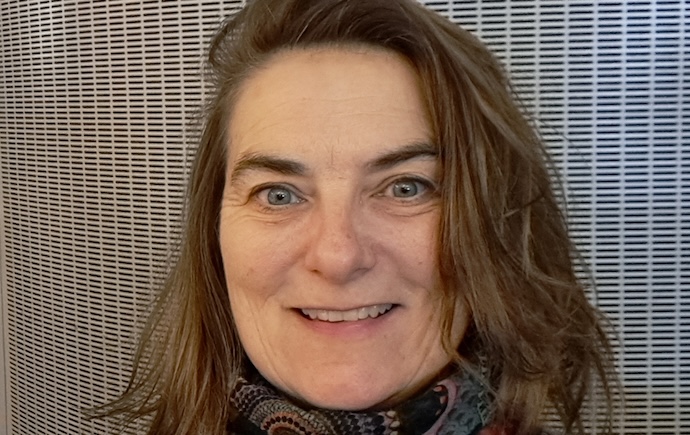
Dr Kristina Grünenberg has a MA in anthropology and a PhD in qualitative sociology.
Her research experience comes from her years as an associate professor at the Department of Anthropology, University of Copenhagen and the perspectives of migration research as well as medical anthropology, which has focused among other things on the intersection between migration and border technologies, health, illness, and assistive technologies, as well as the visions inscribed in these technologies and their implications for migrants on the move, healthcare professionals, patients and families and distributions of responsibility more broadly.
Kristina is currently employed as a senior associate professor at the department of Nursing and Nutrition, Faculty of Health, University College Denmark and as a Senior researcher at the Department of People and Technology at Roskilde university, with a specific focus on technology in health care in- and outside Denmark.
Abstract:
'Futuring elder care; mobilizing technologies for aging societies and for ethnography'
The presentation will fall in two parts that are both based on a current collaborative project across Denmark and South Korea. The first part will address the futures imbedded in what is known as ‘aging societies’, and how technological visions and practices are mobilized to address this future across Denmark and South Korea. The second part will start with the presentation of a sound piece from the South Korean field. Based, on the two parts I would like to engage in discussions of technological visions and practices of the future in the presence, and in more general methodological discussions about what the use of ’sound collages’ do to the ethnographer-listeners experience of- and engagement with the field? The types of sonorous bodies that may emerge? and how technologically enabled ‘sound work’ might complement other creative ethnographic formats?
Contact: krgr@kp.dk