Designing authentic business role play scenarios with ChatGPT
About this example
MGM5966 is a postgraduate level unit in the Masters of International Business that teaches international business theory and practice before students progress to more applied projects in the Masters program. Role play was used to transform ethics from an abstract concept to one that engaged students by illustrating the situational contexts that they may potentially face as future international business managers.
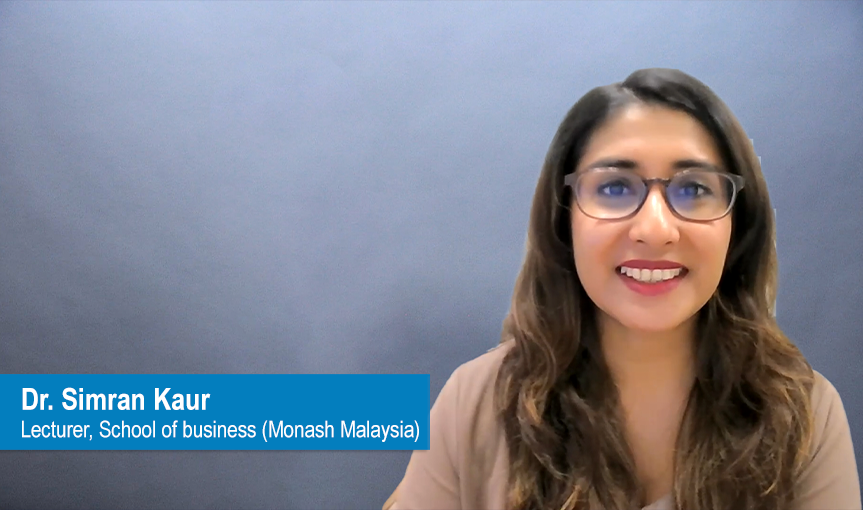
Watch the video to learn more
Faculty of Business and Economics (Monash University Malaysia)
-
I developed the roleplay activity primarily to address a key learning objective of the unit, which is to assess ethics and sustainability within the realm of international business. It's crucial for students to grasp the concept of ethics, and this is my third time teaching this unit. In the past, I noticed that the lecture on ethics had the lowest viewership statistics, likely because students found it challenging to connect with the abstract nature of ethics or see its link to the context of international business.
I previously attempted a roundtable discussion on ethics, but it still failed to engage students effectively. This led me to the idea of creating scenarios based on cases discussed in the lecture and using roleplay as a teaching tool. With roleplay, every student can actively participate, taking on various roles and addressing challenges within a specific context. This approach allows them to better comprehend the practical applications of ethical theory.
In my teaching, I emphasise equipping students with skills beyond the classroom. The roleplay activity embodies this philosophy by immersing students in dynamic scenarios, bridging the gap between theory and real-world practice, particularly in ethics. It encourages students to ask the right questions and make informed decisions in complex contexts, fostering critical thinking and ethical reasoning essential for their future success.
-
Initially, I attempted to brainstorm scenarios independently but could only come up with a limited number, around three or four. Since I had ten groups in my class, I needed ten scenarios. To overcome this challenge, I turned to ChatGPT for assistance in generating ethical dilemmas, focusing on topics like supply chain and culture. The AI provided me with some excellent scenarios.
I then presented my students with a list of ten scenarios from which they could choose the one they found most appealing. In the following class, they would participate in role play activities based on their selected scenarios. I provided them with clear instructions, including:
- Identifying the ethical dilemma.
- Identifying the stakeholders involved in the situation.
- Devising strategies to navigate the situation while ensuring that each stakeholder is content with the outcome.
-
During our evaluation of this activity, my tutor and I were pleasantly surprised by the remarkable improvement compared to the roundtable discussion we had attempted in the previous semester. The students exhibited enhanced communication skills, a clear understanding of the task, and an adept selection of stakeholders.
What was particularly intriguing was that, contrary to expectations often associated with reserved behaviour, students from diverse backgrounds actively participated. Many Asian students, who, by stereotype, might be perceived as more reserved, showcased their engagement and enthusiasm. This inclusive atmosphere encouraged them to overcome their shyness, even when English wasn't their first language.
The students took a broad scenario and skilfully applied it to real-world examples, infusing their unique perspectives. They localised the role play by situating it within specific contexts, such as an Indian company operating in China or an American company operating in China. For instance, Chinese students shared firsthand experiences from China, sharing how actual cases were resolved and suggesting improvements. Their contributions expanded my own understanding, introducing solutions I had not previously considered.
It's important to note that the role play activity was not part of the formal grading process but played a pivotal role in scaffolding the subsequent assessment.
Try it out
This exemplar is easy to implement.
Recommended resources and training:
- ChatGPT (free version)
- TeachHQ: Learn more about Generative AI
-
Define your learning objectivesBegin by clarifying the specific learning objectives you want to achieve with the roleplay activity. Identify the topics or themes you wish to explore, such as ethics, sustainability, or any other relevant subject matter.
Generate scenarios using ChatGPTThink of a set of scenarios related to your chosen topics.
Enter descriptive prompts into ChatGPT, asking for ethical dilemmas or situations that align with your objectives.
Review and edit the AI-generated results as needed to ensure they align with your teaching goals and are suitable for your student audience.
Create clear instructionsDevelop clear and concise instructions for your students, detailing the purpose of the role play activity, the scenarios available for selection, and any specific guidelines they need to follow. Be sure to emphasise the ethical or critical thinking aspects of the exercise.
Collaborate and seek feedbackShare your activity plans with colleagues or peers to solicit their insights and suggestions. Their input can help refine your approach and enhance the effectiveness of the activity.
Group formationOrganise your class into groups, considering the size and dynamics of your student population. Ensure that each group has access to the list of scenarios.
Scenario selectionAllow students to choose a scenario that piques their interest from the list you've provided. This choice should empower them to engage more deeply with the activity.
Preparation timeAllocate sufficient time for students to research and prepare for their roleplay. Encourage them to consider the ethical dimensions, the stakeholders involved, and potential solutions.
Role play sessionConduct the role play sessions in your class. Encourage students to actively participate, take on their assigned roles, and engage with the scenarios.
Debrief and discussionAfter each role play session, facilitate a debriefing discussion where students can reflect on the experience, share their insights, and discuss the ethical dilemmas and solutions they encountered.
By following these steps, educators can create a dynamic and engaging roleplay activity that promotes critical thinking and ethical decision-making while catering to the specific needs and interests of their students. Collaborating and seeking feedback from peers can further enhance the quality of the activity.
-
- Remember that the key to student engagement lies in them understanding the purpose behind what they're doing. It's not just about going through the motions; it's about making a genuine connection to the curriculum and their own learning journey.
- Link your activity to a central concept or assessment. Your activity should serve as a stepping stone toward a larger educational goal, whether it's a key concept you're exploring that week or aligning with broader learning outcomes. Alternatively, it can be designed as scaffolding for a forthcoming assessment. This way, every step your students take in the activity has a clear and meaningful purpose.
- Create an environment where knowledge isn't just delivered but constructed through active participation and collaboration.
- Give students the tools to build their understanding together, fostering a sense of shared meaning and discovery.
- In your own classroom, embrace the uniqueness of your students and your teaching context.
- Don't be afraid to adapt and go with the flow, recognising that what works for one group of students might need adjustments for another.
- Be flexible, listen to your students, and be open to new ideas.
- Ultimately, the magic of teaching lies in your ability to inspire and empower your students to explore, learn, and create meaning together.
Supporting resources
Here are some additional resources that you can browse to help you implement this assessment.