
New initiatives to strengthen dialogue and build social cohesion
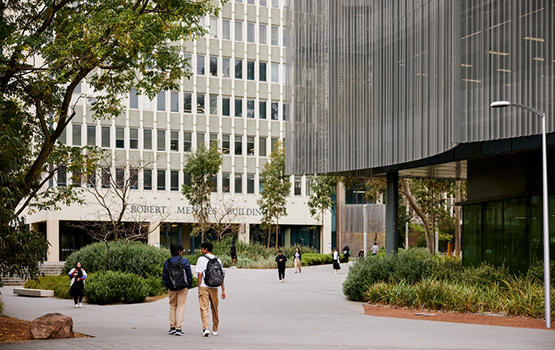
Monash University announces four major initiatives to build social cohesion, strengthen dialogue and help to reduce tensions.
“You can play a tune on black keys, you can play a tune on white keys, but both are needed for perfect harmony.” – Sir Doug Nicholls
“Our message of peace must be louder than ever…Humanity is universal and the recognition of this truth on both sides is the only way. The suffering of innocent people on either side is absolutely unbearable.” – Daniel Barenboim
I write to you all today to offer a considered response to the moment we are experiencing together. Learning from my Aboriginal and Torres Strait Islander colleagues, I have come to gain a far better understanding of the value of deep listening. Deep listening does not necessarily equate to agreement, but instead genuinely commiting to hear people's thoughts, feelings and fears.
The Monash community will be aware that the protest encampment on the Clayton campus peacefully ended last Friday. However, the last few weeks have highlighted the urgent need for us as a University to come together and establish new ways to promote listening, dialogue and peace across our community and promote social cohesion on campus.
The University has been in ongoing dialogue with registered student associations, clubs and societies about the conflict since October 2023. These conversations have been constructive and sometimes challenging. Such work is never complete but is critical to peace building. We always need to be responding to the experiences and needs of Monash students and we remain committed to ongoing dialogue and the everyday work of supporting all our students.
As a public institution, the University has both the obligation and the capacity to exercise leadership. The University will therefore implement four major initiatives to build social cohesion, strengthen dialogue and help to reduce tensions:
- The University will commit $1M over a two-year period to support an action-based research program led by Associate Professor David Slucki and Dr Susan Carland. The project will investigate specifically the nature and experience of antisemitism, islamophobia and related prejudice and develop and test programs and initiatives that support social cohesion on campus. To facilitate prompt action, they will make rolling recommendations to the University.
- The University will initiate and facilitate a dialogue between students to achieve a better understanding of different perspectives and contribute to building peace. The aim of the dialogue is to build the understanding of our common humanity in the manner advocated by Israeli musician and peace advocate Daniel Barenboim and Palestinian philosopher Edward Said as a way to support peace and respect on campus. The dialogue will also contribute to the co-design with students of parameters to guide the creation of safe, inclusive and supportive learning environments for all students. I am grateful that Professor Jacqui True, and Yorta Yorta/Boon Wurrung men Mr Jamil Tye and Mr Josef Tye will support the co-design and conduct of this process with Monash students.
- The University will work with its supporters to double the number of humanitarian scholarships to Monash, with a specific focus on students affected by current conflicts. The University recognises that the current conflict, as well as other major conflicts around the world, has led to widespread suffering and displacement.
- The University will consult with representative registered student associations on the forthcoming scheduled review of the Environmental, Social and Governance (ESG) Statement that will include the University’s investment policy. This review will be conducted by a working group of the University Council.
I intend to work with the broader Monash community to build upon these initial commitments.
Dialogue and mutual understanding are the foundations of peaceful conflict resolution. When Monash students raise consequential matters in a peaceful and constructive way, when Monash students tell of the anguish and the harm they are experiencing on campus, it is incumbent on the University to respond with due consideration and action, informed by knowledge and our willingness to learn from each other.
Kind regards,
Professor Sharon Pickering
Vice-Chancellor and President