Snapshots of Intergenerational Connection in Finland

Snapshots of Intergenerational Connection in Finland
A visual journey through Finland showing places and moments where children, parents, grandparents and communities come together for play, participation, and belonging across generations.
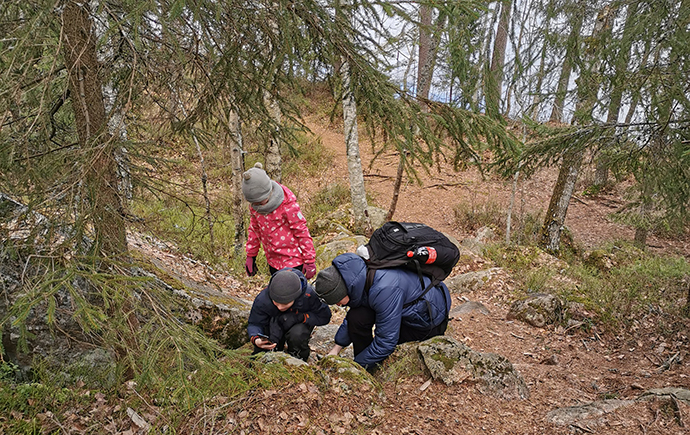
Metsäleikki (forest play) is important for all Finnish people
The forest is seen as the ultimate, natural playground - navigating uneven forest terrains, balancing on logs, climbing on rocks are important skills. For children, this helps them learn natural risk assessment and build motor skills. For older people, the uneven terrain of forest paths helps keep joints and muscles strong, the varied environment improves coordination, and reduces stress.

Families play together in the forest
Traditions, games, and shared outdoor chores are passed from generation to generation.
Foraging can become a game – “who can find the first …?” or “who can fill their bucket first?”
Active forest games like Piilo (Hide and Seek)
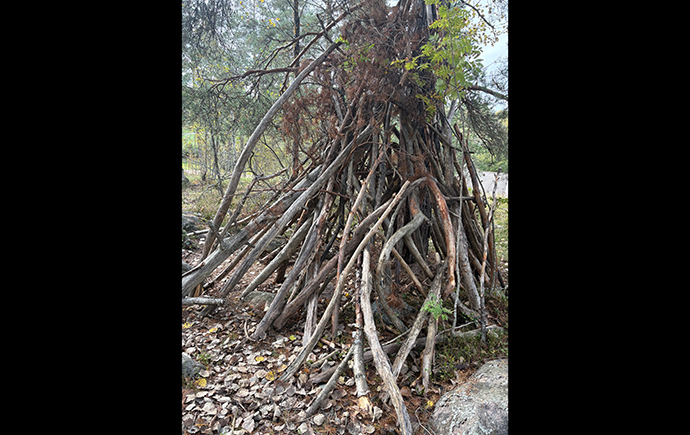
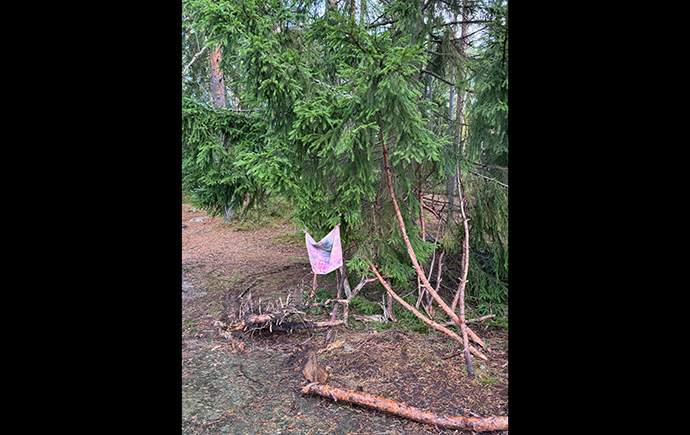
Majanrakennus (Building Shelters)
Majanrakennus (Building Shelters) is a common family activity. Lean-to shelters are made from fallen branches, logs, and moss. Gravity, friction, and natural engineering using materials found on the forest floor are all important learnings. The process often begins with an anchor tree – a sturdy living tree, a fallen trunk, or a large rock. Found items such as branches are then leaned against the anchor point to create the shape for the structure. Smaller branches, twigs, and loose moss are then layered over the top to fill the gaps and decorate.
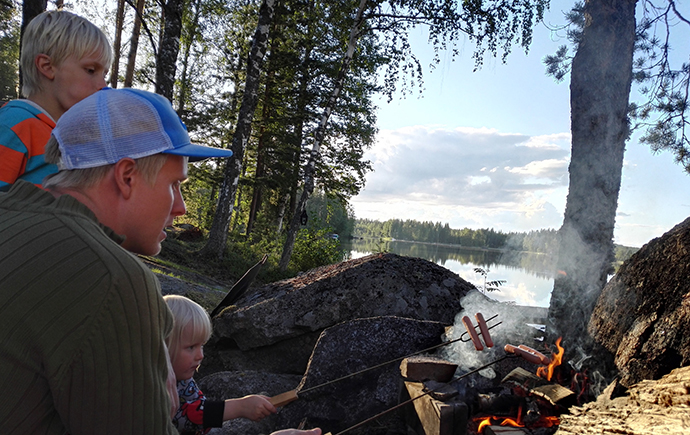
Tulentekopaikka (campfire sites)
Tulentekopaikka (campfire sites) are spaces where families cook together. They spit wood to build a fire, where they roast grillimakkara (Finnish sausages) on sticks and drink warm berry juice.
SKAPA Porvoo project
SKAPA Porvoo project focuses on integrating creativity and art into natural spaces through open-ended play. Children and adults work together to construct an imaginary town in the forest using found materials, their imaginations, and lots of stories. This group of Kindergartens and their teachers created a town that included a dentist surgery complete with a troll, a grocery store that sold grillimakkara (Finnish sausages) to roast, structures to house sick animals, and a coffee house.
Outdoor play is a priority, and a daily routine regardless of weather
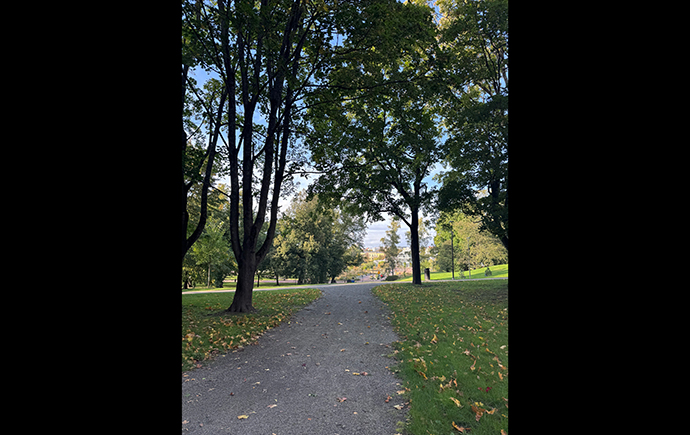
Time outside is important for everyone’s health – to build emotional regulation, physical stamina, and resilience. Leikkipuisto (neighbourhood play parks) are frequently found in cities and towns. Two examples in Helsinki are Liisanpuistikko and Kaisaniemi Park.
Liisanpuistikko (Liisa Green) is a small (4840 square metre) urban green space in Helsinki near the Pohjoisranta Harbour. It has been a community gathering point for more than 180 years. The park has space to play with balls or to ride bikes, swings, sandboxes, pathways, flowerbeds, mature trees, and benches to sit. It is a neighbourhood gathering space where children and adults spend time outside together.
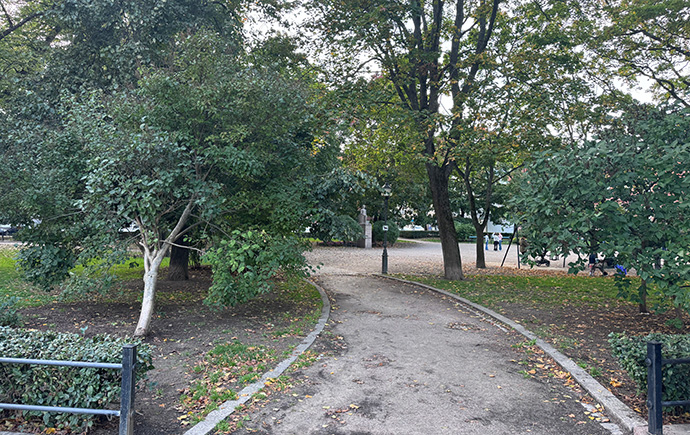
Kaisaniemi Park stretches over 17 hectares from the Central Railway Station to the coastal shoreline in Helsinki. It is the oldest public park in Finland. It has a playground (with climbing structures, swings and sandboxes), a water pool lined with statues, sports fields (basketball, football, tennis and pesäpallo – Finnish version of baseball), and built in exercise equipment. Alongside it is the Banna bicycle corridor, and walking paths criss cross through the parkland. The park is described as an urban “living room” for local city families. Families visit the playgrounds, play sports together, go for picnics, and explore the many paths on foot or by bike.
Mushroom foraging
Jokamiehenoikeus (Everyman’s Right) means that Finnish people are legally permitted to forage for berries and mushrooms in the forests and other public land.
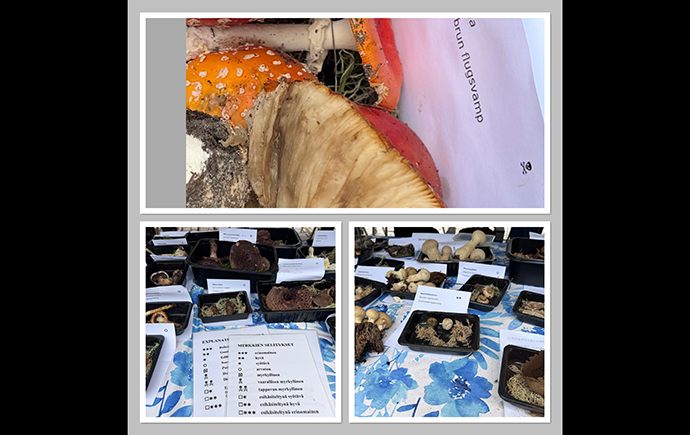
Autumn is a time to forage for mushrooms, there are hundreds of mushroom species but some are lethally toxic. Families often forage together and knowledge is passed from generation to generation –learning about types of mushrooms, twist and pull to preserve the base, using an open basket, cleaning off soil and moss as you pick with a sieniveirsi (mushroom brush) are all important lessons. After picking mushrooms families return home where they clean, cook, pickle, or dry their harvest.

Learning about mushrooms
The Kaisaniemi Botanic Garden in central Helsinki has an annual autumn mushroom exhibition. The event is for seasoned foragers to share their knowledge with beginners. An exhibition of freshly harvested mushrooms teaches visual textures, gill structures, and colours. There is also a mushroom identification tent where people can show what they’ve found and get help to identify the type of mushroom as they learn the differences between edible and toxic mushrooms. This even is only on for two days, and families often prioritise the opportunity to go and learn more.
Animal Quarters
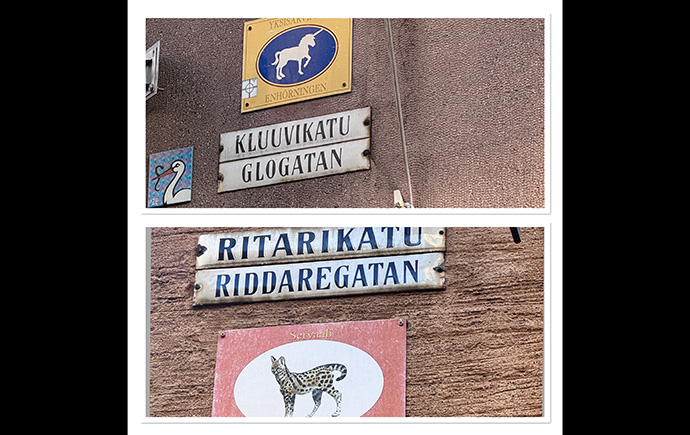
Finland is a bilingual country.
Finland has two national languages – Finnish and Swedish. Many things are labelled with both languages – including street signs. But, most people (86%) speak Finnish as their native language. At school, children learn both languages.
Much of Helsinki had to be rebuilt after fires in 1808. City blocks were named and numbered in 1820. At this time, there were many people who were illiterate. Central blocks in Helsinki were named with an animal to help navigate the city easily. Now, hunting for the animal blocks has become a popular scavenger hunt game. This can be played in different ways – having a list of animals to find, navigating to a particular block, storytelling about the different animals.
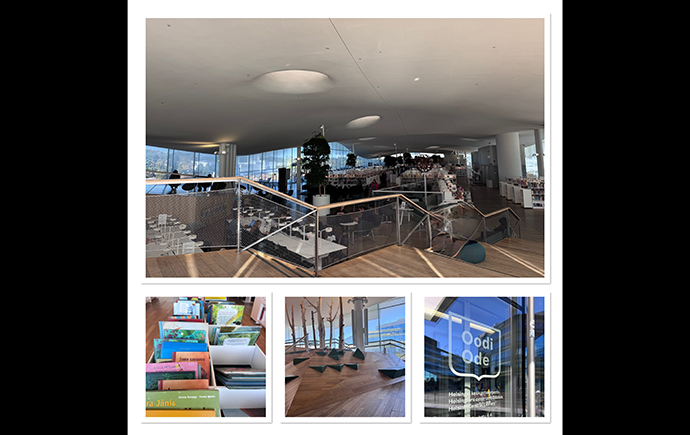
Helsingin keskustakirjasto Oodi
Oodi is the Helsinki Central Library in Kansalaistori Square in central Helsinki. It is described as an “urban living room” that belongs to the public. Over three floors it is intentionally designed to accommodate all generations with space and freely available resources. The Maker Space (on the second floor) enables sharing skills in digital design (using 3D printers, laser cutters, computers) alongside spaces for practicing traditional crafts (sewing machines, overlockers, embroidery equipment) and techniques (textiles and garment repairs, sewing, knitting, upcycling old clothes, art making), and other forms of making (such as musical instruments). There are opportunities for shared literacy engagement (on the third floor) with books in many languages, sensory programs, story times, music, physical play sessions, an interactive fairytale wall, play sculptures, and multiple reading nooks (floor rugs, acoustic pods, low seating). There are spaces to play games (consoles ready for digital games and chess boards ready to play). There are many areas to gather, to rest, and to eat.