
Virtual Reality and Inclusive Teacher Education
Description
Australia, as a signatory to the United Nations Convention on the Rights of Persons with Disabilities (CRPD), is committed to ensuring that individuals with disabilities have access to inclusive and quality education. However, achieving this vision remains a significant challenge. The purpose of the study is to understand if the use of Virtual Reality, as part of initial teacher education, has a positive impact on pre-service teachers' knowledge and understandings of inclusive teaching practices. The research question to be addressed is:
How might synchronous VR experiences enable pre-service teachers to better identify, evaluate and plan for inclusive classroom practices?
While some research has identified potential benefits of Virtual Reality (VR) for teacher preparation, there has yet to be any research focused on synchronous VR experiences for initial teacher education (ITE) or on the use of VR for teacher inclusive classroom practices. This proposed study is highly relevant for ITE as educational systems seek to better meet the needs of all learners within primary and secondary schools.

When it comes to understanding, identifying and modelling inclusive classroom practices, VR technology may enable pre-service teachers to experience inclusive classroom practice and develop a deeper understanding of the dynamic nature of teaching in ‘real life’ contexts, almost as if they were there. As the pre-service teachers, wearing headsets, are virtually ‘dropped’ into a classroom, VR allows pre-service teachers to:
- Explore classroom practices that are often difficult to visualise, such as inclusive education.
- Move around the virtual classroom without interfering with the class or the teacher
- Focus on specific aspects of teaching that meets their specific needs as they build their teaching skills
- Be guided by expert teachers to enter and exit the virtual environment at critical moments that highlight specific teaching and learning strategies
- Follow these entries and exits with evidence-based discussions around what they have seen and experienced in the virtual environment, strongly connecting the experience to the discussions of praxis.
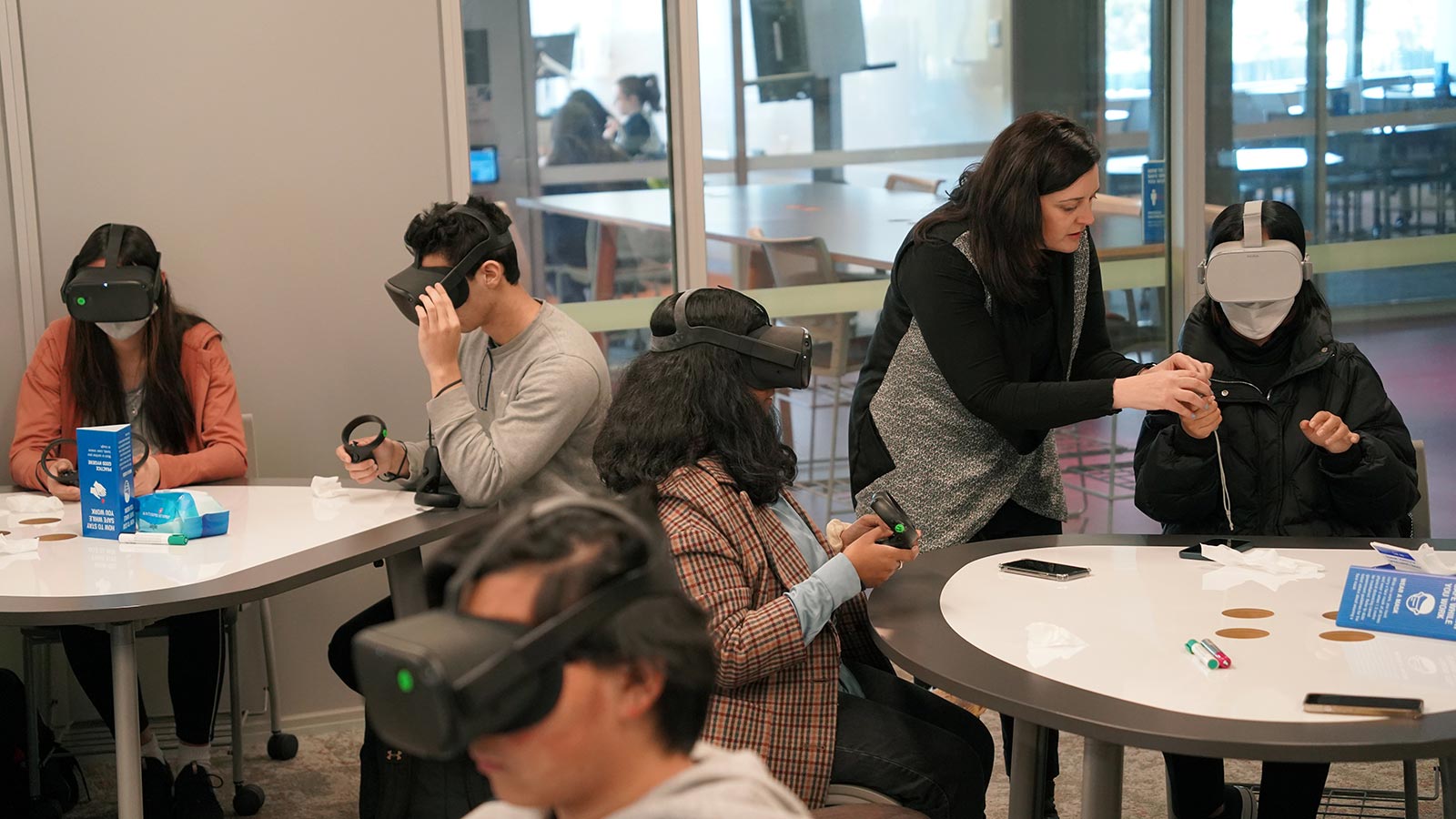
Through this iterative and reflective process, emergent theories will be challenged and refined at each stage of the research. This research employs a mixed-method design and will engage with students from the Master of Teaching program in their second and final year of study. Students in this course will have completed 2 school placements and so will be familiar with Australian classrooms. This prior experience is hoped to enable students to more readily focus on the inclusive practices of the virtual classroom rather than be overwhelmed by the complexity and business of an average classroom.
