
Insights from our Fifth (& Final) Professional Learning Day

Insights from our Fifth (& Final) Professional Learning Day
For Phase 3 of #theSTEMproblem, we have been co-developing a pedagogical framework for PBL in STEM Education with expert teachers. To create this framework, our final two professional learning days have been designed to support teachers in discussing and documenting their insights from implementing problem-based learning (PBL) in STEM education in their schools.
We held our fifth and final professional learning day in August (Melbourne) and September (Brisbane) this year, facilitated by three of our lead investigators, Assoc. Prof. Kathy Smith and Dr. Jen Mansfield from Monash Education, and Dr. Peter Ellerton from the University of Queensland. At our workshop in Melbourne, we had the support of Prof. Nicoleta Maynard from Monash Engineering, along with Shelley Waldon from Melbourne Archdiocese Catholic Schools (MACS), and research assistants - Dr Tanya Stephenson and Tabetha Spiteri from Monash Education. In Brisbane, we had the support of Dr Charlotte Pezaro, Carly Millichap, and Rochelle Smith from Brisbane Catholic Education (BCE).
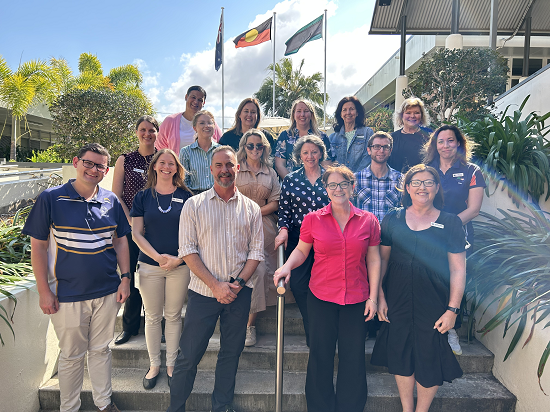
The aim of our fifth PL day was to support teachers in telling the ‘story’ of their school, which will form the basis of their Illustration of Practice - stories of the challenges and opportunities for implementing PBL in STEM within their schools.
The day was split into three sessions:
Session 1: Illustrations of Practice - What’s your story?
In early August, members of our team captured footage from three of our participating schools (St Paul the Apostle, St Peter’s Primary School, and St Jude the Apostle). These videos were shown to teachers during the first session to give a sense of what their school’s Illustration of Practice could look like. These videos were then used by the teachers as a springboard to develop ideas for their own Illustrations of Practice and to consider their key takeaways.
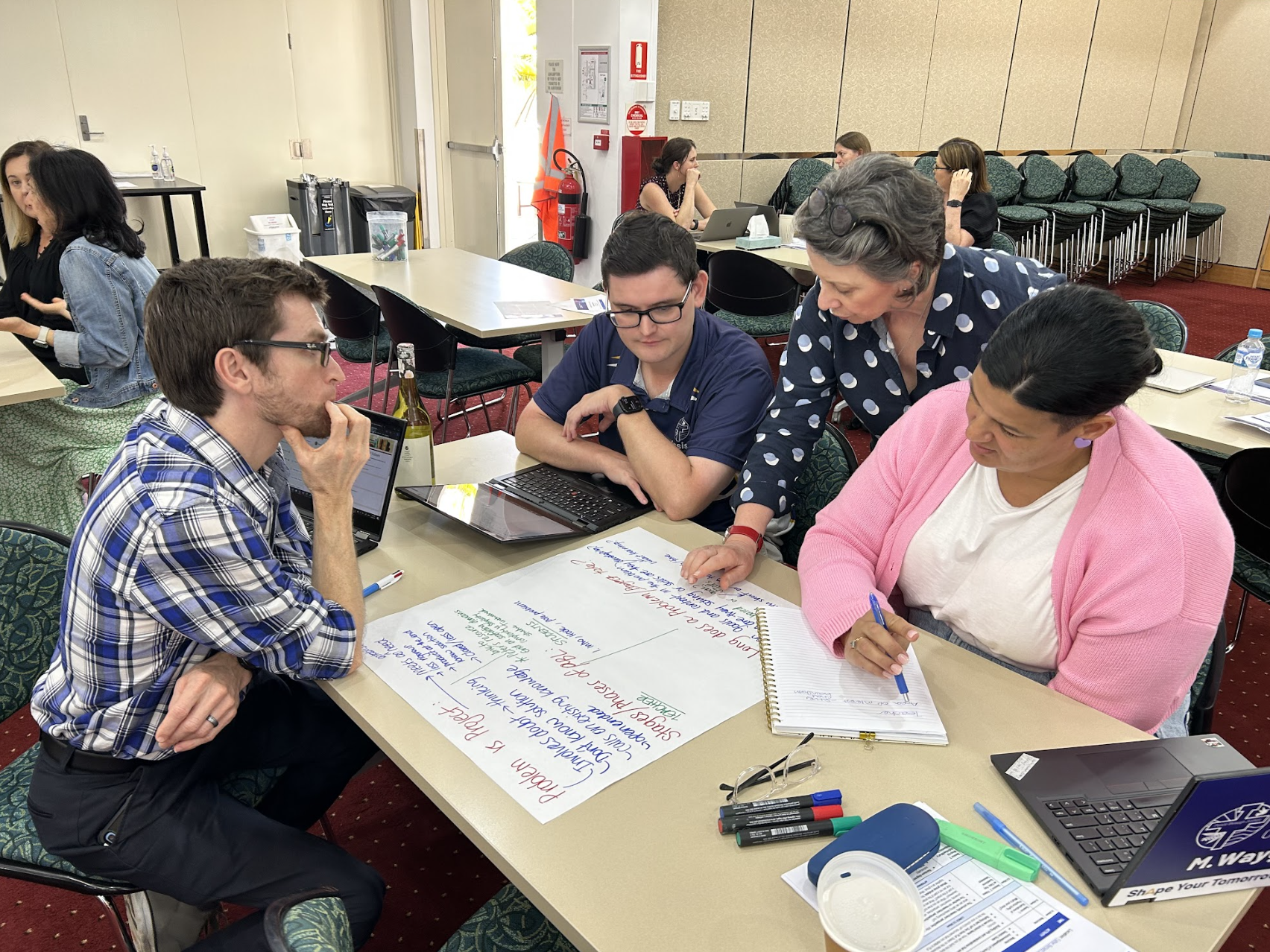
Session 2: Videos as Data
After watching the videos from our three ‘pilot’ schools, our academics and teachers discussed their key ‘takeaways’ about these videos as a group. Key takeaways included insights into:
- The development of ‘pedagogical expertise’ for teachers (making meaning from PBL in STEM, and the K-12 curriculum)
- What teachers see as ‘research’ in their classrooms
- How to support teachers that are new to PBL in STEM education
- The development of ‘employability skills’ for students through PBL in STEM (such as 21st century skills)
- Promoting a sense of ‘psychological safety’ for students (such as feeling comfortable taking risks, making mistakes, collaboration between teachers and students)
- How to assess PBL in STEM (assessing the ‘process’ of PBL rather than the outcome)
This helped generate some key questions that could help teachers who are not a part of the project implement PBL in STEM. These were then developed into Frequently Asked Questions’, with teachers working together to develop answers to these questions. These will be further refined and made available on our project website as part of the suite of resources for the project.
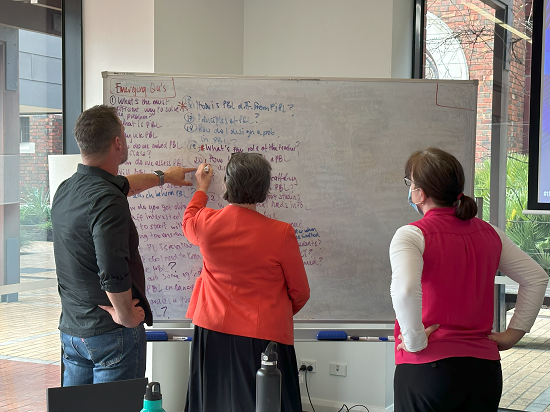
Session 3: Case-writing
For our final session, teachers viewed samples of teacher case writing to help generate ideas for our upcoming Writing Day, which involves each participating teacher unpacking a critical moment in their PBL approach.
Some ideas included:
- What school-based factors are important for implementing PBL in STEM?
- How to assess PBL in STEM education?
- The importance of taking risks as a teacher when implementing PBL in STEM
- The challenge of changing roles as a teacher (e.g., to more of a guide or facilitator)
- Including voice of students and teachers

Teachers in Melbourne and Brisbane expressed how their thinking has shifted in relation to their current practice over the course of these professional learning workshops:
I am more confident now in the ability of my students to demonstrate their knowledge and to succeed. More patient. I understand the learning process more now and have confidence that failure is a journey on the step to success.
We have developed very well integrated units that cover a range of different learning areas at a range of levels of complexity and skill. Students are supported in developing collaborative and problem-solving skills. Students have autonomy but understand the goals well. We have developed assessment tools that allow us to evaluate students’ capacity to collaborate.
I’m more comfortable now, than ever before, in letting students lead the directions [that] projects go. I’m enjoying up-skilling where needed and being a guide more than an instructor in the learning process.
What’s next at #theSTEMproblem?
The remainder of 2023 will be focused on developing a suite of resources that can be used by other teachers interested in implementing PBL in STEM within their schools.
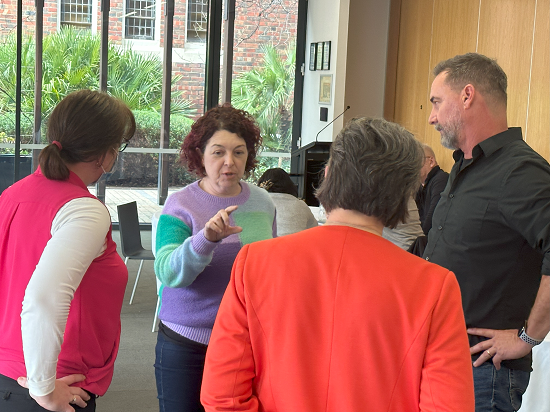
Each participating school’s illustrations of practice will now be co-constructed, showcasing the work of participating teachers in implementing PBL in STEM within their schools. Participating teachers will also attend a Teacher Writing Day in November this year, where they will they will receive support from the project team to develop and refine their writing in relation to a critical moment in their PBL approach. This writing day serves as a valuable professional learning opportunity for teachers as they can critically reflect on their practice and share their experiences with others.
The Illustrations of Practice for each participating school will be made available on the project website and will support the development of a sustainable pedagogical framework to support school-based STEM education.