
John NIEUWENHUYSEN (1937-2024)
Foundation Director, Monash Institute for the Study of Global Movements (2002 - 2011)
Emeritus Professor John Nieuwenhuysen, who died on December 8 2024 aged 87 years, had a privileged upbringing on a South African farm as the grandson of a prosperous Irish 'potato king,’ which set his academic life in motion.
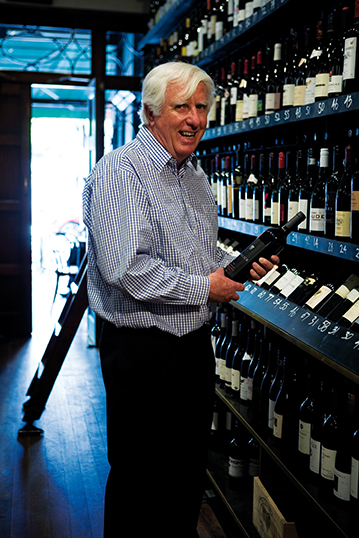
Growing up, he became increasingly aware of how his lifestyle contrasted starkly with the impoverished ones of the farm’s workers and their families. When he left the land of his birth, driven out by his loathing of apartheid, he dedicated his academic career as an economist, academic and public administrator, to promoting immigration, multiculturalism, and global understanding.
At Monash, Professor Nieuwenhuysen was the inaugural Director of the Institute for the Study of Global Movements from 2002 to 2011. He was responsible for providing leadership in the advancement of innovative research, developing relationships and research collaborations within and beyond the University. He was also actively involved in helping to establish the South African campus and providing mentorship to others. In 2012, he was appointed the fourth Director of the Monash Centre in Prato, Italy, and later chair of the board of the Centre’s Bill Kent Foundation.
Professor Nieuwenhuysen was renowned for combining ideas for projects with donors willing to back them and matchmaking these with research scholars. He was equally adept at capitalising on the University’s outward-looking vision to integrate work with international scholars, especially through the international campuses. In the 1990s he co-founded the International Metropolis Project – a network of experts and practitioners from academic institutions and governmental, international and non-governmental organisations with an interest in international migration and its effects on societies – and organised the 2007 International Metropolis Conference in Melbourne, the largest migration conference in the world, hosted by Monash.
During his career, Professor Nieuwenhuysen developed a reputation for untangling complicated legislative knots. He chaired four Victorian State Government Inquiries, three of which were translated into legislation.
Of particular note was the Nieuwenhuysen Review in 1986, an 800-plus page study of the liquor licensing laws in Victoria which turned the hospitality scene on its head. Before his reforms, Victoria was dominated by “vertical-style” drinking confined to hotels, but Professor Nieuwenhuysen’s vision was to create a café culture and a European-style model where people didn’t just go out for a drink; a glass of wine could accompany a meal or just a slice of cake. The Victorian Liquor Act 1988 led to a radical and liberalising overhaul of the State’s liquor laws and Melbourne suddenly became a magnet for celebrity chefs and small restaurateurs alike. Today’s abundance of choice over where and when you can choose to dine is down to his efforts to loosen up the sector, declared by then-Premier John Cain as “the most sweeping and sensible reform of liquor licensing law since the abolition of the six o’clock swill”. In recognition, the Victorian food and wine industry granted him the rare title: “Special Legend” in 2000.
John Peter Nieuwenhuysen was born in Kroonstad, in the Orange Free State, South Africa, the son of Johan, of Dutch descent, and Iris (née McPherson), whose father was a soldier with the Royal Irish Fusiliers in the Boer War. In his autobiography, Ngoanyana: A South African Story, John created a vivid portrayal of growing up as a white boy on the family homestead in the apartheid era, recalling a lush garden filled with birdsong and the vast starlit sky of the veld.
He studied at Christian Brothers’ College Kimberley and the University of Natal (now KwaZulu-Natal) in Durban, where he graduated with a Bachelor of Arts (Honours), a Master of Arts in 1960, leaving with a sound piece of advice from a high school principal ringing in his ears – you must always grab new opportunities with open arms.
As a student, he was associated with Alan Paton’s Liberal Party, which further opened his mind to the iniquities of apartheid. Such was his distaste for the regime and the racism it inflicted, he felt he could no longer live in the country of his birth. He moved to London to study at the London School of Economics, where life in the UK capital opened his eyes to a new world of intellect, literature, diversity, history, architecture, art and music from which he never tired.
In 1963, following the completion of his doctoral thesis, The Development of the African Reserves in South Africa, he migrated to Australia, where he continued to maintain an active anti-apartheid position.
John spent the next 26 years based at the University of Melbourne, holding temporary posts at the University of Pittsburgh (1966, 1971), the International Labour Office, Geneva (1967), the British Department of Industry and Trade (1972), and the University of Natal (1979). He was a visiting professor at King’s College London, and served as Deputy Chancellor at RMIT University from 2002 to 2005. For the Committee for Economic Development of Australia (CEDA), John was Research Director from 1982 to 1989, CEDA Chief Executive from 1996 to 2002, and later made an Honorary Life Trustee.
He was Foundation Director for the Commonwealth Bureau of Immigration, Multicultural and Population Research from 1989 to 2006. He was also a member of the Board of the Australian Multicultural Foundation.
In 2003 he was appointed a Member of the Order of Australia (AM) for services to independent public and private sector research, for liquor law reform, and for his contribution to the debate on immigration, cultural diversity, equity and Indigenous issues. Other plaudits included becoming a Fellow of the Academy of Social Sciences in 1996, and being granted an Honorary Fellowship Award from Monash in 2017. He was appointed Emeritus Professor at Monash in 2011.
John was beloved across his numerous circles in academia, government and non-government organisations, and business. Common to his networks was a capacity for building genuine friendship and nurturing relationships, to the benefit of all he met. As a colleague wryly noted, even taxi trips were an opportunity for John to befriend drivers and learn from the richness of their experience, elongating even the shortest of journeys.
He had a lifelong dream of writing an autobiography which finally came true in 2016. Named after the family farm on which he grew up, it was the most personal and poignant piece in his extensive bibliography. Written at the age of 80 when approaching life’s horizon, he felt compelled to record the family’s heritage, quoting J.M. Coetzee’s book Boyhood, in which the author asks “If I do not remember all the stories, who will?’’
By this stage he was only too aware that the place of his childhood was irrevocably lost, yet it remained a lodestar throughout his life. He used his early bittersweet experiences to fuel his ambition, and as a result, made distinguished contributions to Australian life.
John married Sue Kininmonth in 1970, with whom he had two daughters, Sarah and Anna.
Edited version of article published 11 December 2024.